Table of Contents
Categories

KOLISTI Team
1. About Tournament Pickleball Balls
Why Quality Matters in Competitive Play
The pickleball market isn’t just growing—it’s downright exploding. With courts popping up faster than food trucks in a college town, this once-niche sport is now mainstream, drawing everyone from seasoned athletes to curious retirees. As a result, the demand for quality equipment is rising with the tide, and paddles have become a central battleground for brand innovation.
Market Growth and Global Brand Interest
Pickleball isn’t just America’s backyard darling anymore—it’s gone global, and it’s growing like wildfire. From Tokyo to Toronto, international markets are embracing the sport, and that’s sent global brands scrambling to lock in reliable, tournament-grade gear. With surging demand comes a sharp eye on sourcing, quality control, and long-term product integrity.
The Rise of OEM/ODM Manufacturing in Asia
OEM (Original Equipment Manufacturing) and ODM (Original Design Manufacturing) models in Asia, particularly China, have become the backbone of scalable, customizable production. These operations provide unmatched flexibility, high-volume output, and technological know-how at competitive prices. It’s no surprise that major brands have shifted to these trusted partnerships to stay nimble and dominate emerging markets.
2. What Sets Tournament Pickleball Balls Apart
Performance Standards for Tournament Approval
To earn that “tournament-grade” badge, a ball has to pass a gauntlet of performance tests. Governing bodies like USA Pickleball look at bounce height, hardness, weight, and more—with zero wiggle room for inconsistency. It’s the equivalent of passing inspection with a white glove in a NASA cleanroom.
Key Specifications: Weight, Bounce, and Durability
Tournament balls must sit squarely within tight tolerances—26.0 to 26.5 grams in weight, a uniform bounce height between 30 and 34 inches, and a balanced wall thickness for rotational symmetry. But numbers alone don’t tell the whole tale. Durability under tournament-level stress—think slams, spins, and 100-degree heat—separates the amateurs from the elite.
Indoor vs. Outdoor Ball Requirements
Indoor balls are lighter and have larger holes to deal with low air resistance, while outdoor balls are heavier with smaller, precisely drilled holes to handle wind and rougher surfaces. One size definitely does not fit all. The real challenge for manufacturers? Producing both with equally high standards, without compromise.
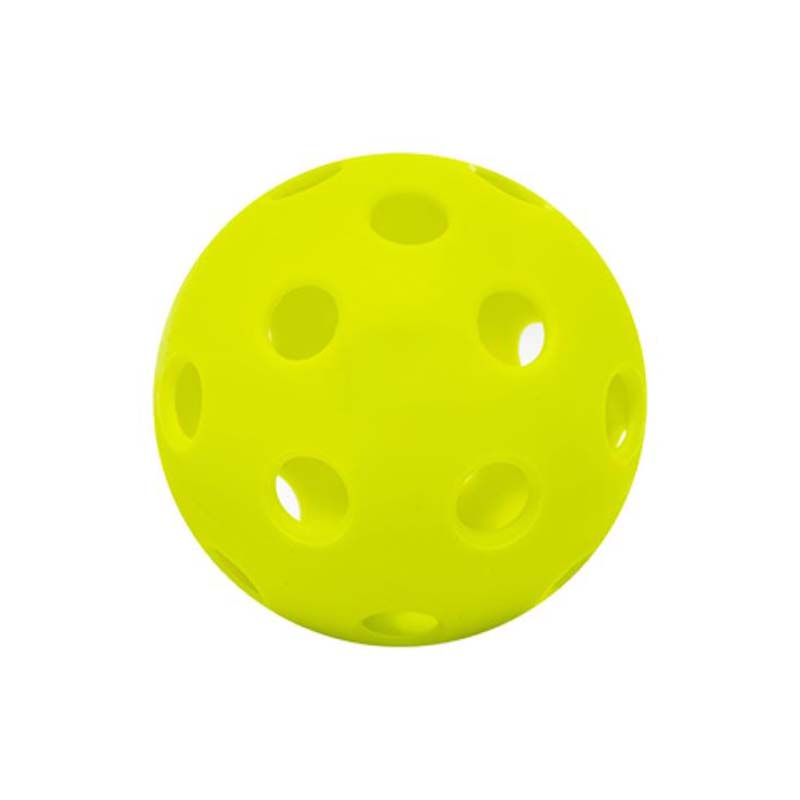
Indoor Pickleball ball X26
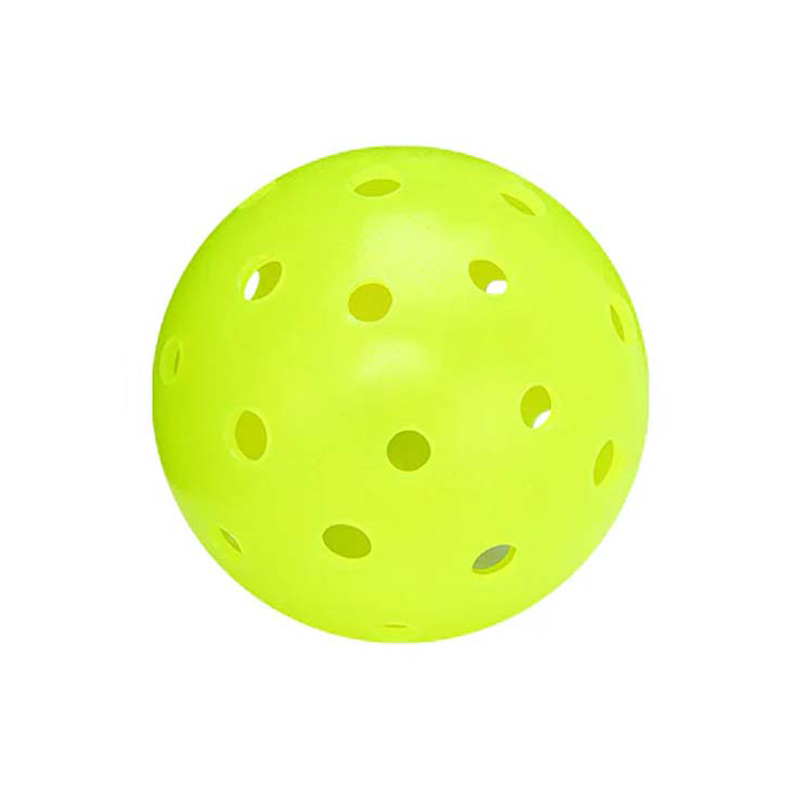
Indoor Pickleball ball X40
3. Why Global Brands Trust Proven Manufacturers
Consistency in Quality and Supply
Reliability isn’t just a nice-to-have—it’s the whole enchilada for procurement pros. Leading manufacturers offer laser-focused consistency, batch after batch, which means fewer surprises and happier end-users. It’s this predictable excellence that earns the trust of top-tier global brands.
Scalable Production Capacity
When a retailer places a 100,000-unit order with only a six-week lead time, there’s no time for hand-wringing. Proven OEMs operate with advanced capacity planning, running lean but powerful production lines that can scale fast. Whether it’s a boutique launch or a global rollout, volume is never a bottleneck.
Long-Term Partnerships with Compliance Assurance
Trust isn’t just built on delivering a quality ball—it’s built on doing it over and over, with every shipment hitting regulatory marks and landing on time. Established OEMs provide full documentation, pass audits with flying colors, and maintain ISO-level transparency. This is the stuff that procurement dreams are made of.
4. Inside the Manufacturing Process
Advanced Molding Technologies Used
High-end manufacturers use rotational and precision injection molding to produce balls with uniform wall thickness and perfectly balanced centers. These aren’t your run-of-the-mill factory molds—they’re CNC-machined with microscopic accuracy. It’s industrial craftsmanship meeting mechanical finesse.
In-Process Quality Checks and Testing
At every stage—pre-mold, post-mold, and post-cooling—there are quality checkpoints. Automated vision systems catch defects invisible to the naked eye, while human inspectors test for roundness, bounce height, and surface consistency. The ball may be small, but the standards loom large.
Final Inspection and Packaging Precision
Before the balls hit the box, they go through a final QC gauntlet—batch sampling, random drop tests, compression checks. Then comes brand-aligned packaging, designed not just for protection, but also to impress retail buyers and stand out on shelves. It’s where manufacturing meets marketing.
5. Materials Used in Tournament-Grade Balls
High-Grade Thermoplastics for Durability
Tournament pickleballs aren’t made from your average plastic—they’re crafted from specialized thermoplastics engineered to resist cracking and splitting. Think polypropylene blends with impact modifiers that keep their integrity even after hours of brutal gameplay. It’s the kind of material resilience that sets tournament balls apart from their rec-league cousins.
Impact Resistance and Performance Stability
Repeated high-impact shots from composite paddles can destroy low-grade balls in minutes. Tournament balls, on the other hand, are designed with stress-dissipating materials that hold shape and maintain bounce characteristics through extended play. This means fewer in-game failures and better brand perception.
Eco-Friendly and Recyclable Options
More manufacturers are stepping up their sustainability game, integrating recyclable thermoplastics and using closed-loop production systems to reduce waste. With consumer preference leaning green, brands can offer premium balls without compromising environmental values. It’s a win-win—for the player and the planet.
6. OEM/ODM Customization for Brand Buyers
Custom Logo Printing and Color Options
Whether it’s a signature neon lime or a stealthy matte black, custom colors help brands stand out. Add high-precision logo printing, and you’ve got a ball that’s instantly recognizable on any court. Customization isn’t just cosmetic—it’s a strategic branding tool.
Tailored Packaging for Retail and Wholesale
Retail boxes, clamshells, hang tags, bulk sleeves—whatever the distribution channel, packaging is critical. ODM suppliers work closely with procurement teams to ensure brand consistency across SKUs and markets. The right packaging can elevate perception and drive sell-through at point-of-sale.
Engineering Adjustments for Unique Brand Specs
Need a slightly softer polymer for a niche market? Want to tweak hole patterns for a signature spin? Custom engineering adjustments are where ODM suppliers shine. They collaborate with brands to prototype, iterate, and dial in exactly what the market demands.
7. Certifications That Matter for Global Distribution
USA Pickleball Approval and International Compliance
No certification, no play—especially at the tournament level. USA Pickleball compliance is the gold standard, but serious manufacturers also meet EU standards, CE marks, and other country-specific regulations. It’s the ticket to getting product on courts around the world.
ISO and Quality Management Certifications
An ISO 9001-certified facility doesn’t just sound impressive—it actually ensures that every process is documented, repeatable, and accountable. For procurement pros, this means fewer quality issues and tighter control. It’s one of the most reliable indicators of a serious manufacturing partner.
Environmental and Safety Standards Adherence
From RoHS compliance to non-toxic inks and child-safe packaging, today’s standards go beyond performance. Leading factories stay ahead of regulations, not behind them, ensuring smooth customs clearance and peace of mind. In a global market, compliance is the cost of admission.
8. Logistics and Global Fulfillment Capabilities
Flexible Shipping Options and Lead Time Control
Fast, slow, air, sea—you name it, OEMs offer it. With consolidated shipments, flexible Incoterms, and real-time tracking systems, lead time becomes a lever, not a liability. Brands gain predictability and control, no matter the destination.
Inventory Management and Warehouse Support
Some manufacturers now offer bonded warehousing, drop-shipping support, and demand-driven inventory strategies. This reduces capital tied up in stock and keeps brands nimble. It’s logistics with brains behind the brawn.
Coordinated Delivery for Multiple Regions
Whether it’s DDP to Australia or FOB to Long Beach, advanced fulfillment networks can handle it. Coordinated delivery ensures timely product flow across continents, with documentation to match. It’s how trusted suppliers eliminate bottlenecks and keep shelves stocked.
9. Key Considerations for Procurement Professionals
Balancing Cost, Quality, and Lead Time
Procurement isn’t just about finding the lowest bidder—it’s about striking the perfect trifecta: cost efficiency, product integrity, and reliable timing. Experienced buyers know that chasing pennies can cost dollars if quality tanks or delays stack up. Long-term value always wins over short-term savings.
Supplier Transparency and Communication
Clear, real-time communication with suppliers is non-negotiable. The best manufacturers offer multilingual teams, 24/7 access, and digital project management tools. Transparency builds trust—and trust keeps orders flowing smoothly.
Evaluating Samples and Pilot Runs
Before you go full throttle, pilot runs let you test materials, branding, and packaging in real-world scenarios. A good supplier not only provides samples but helps refine them based on feedback. It’s a smart way to de-risk major purchases and dial in excellence.
10. Case Examples of Successful Brand Partnerships
A North American Brand Scaling with Private Label
One fast-growing U.S. brand partnered with a Chinese OEM to launch a full private-label ball line. With consistent product quality and smart packaging design, they broke into major retailers within six months. Sales skyrocketed, and their pickleball division doubled in a year.
European Brand Launching Exclusive Ball Line
A European fitness brand leveraged ODM services to develop a signature ball with unique texture and spin dynamics. With EU packaging compliance and local warehouse support, they achieved market penetration without logistical headaches. Today, their branded balls are used in regional tournaments across the continent.
Asian Distributor Expanding with ODM Design
In Southeast Asia, a regional distributor sought a tournament-level ball to match local humidity and court conditions. The manufacturer co-developed a custom material blend and branded packaging for multilingual markets. The result? A standout product that dominates regional sales.
Conclusion
Tournament pickleball balls aren’t just products—they’re brand ambassadors. Every bounce on the court reflects a brand’s commitment to quality, performance, and reliability. Trusted OEM and ODM partners empower global brands to deliver tournament-level excellence at scale, without compromise.
As the sport continues its meteoric rise, procurement professionals who align with proven manufacturers will be the ones setting the pace. In this fast-evolving game, the right ball—and the right supplier—can be a game-changer.
Related Posts
How to Convert a Tennis Court to Pickleball Courts

Can You Put a Pickleball Court on a Driveway? A Complete Guide
How to Install Roll-Out Pickleball Court Flooring