Table of Contents
Categories

KOLISTI Team
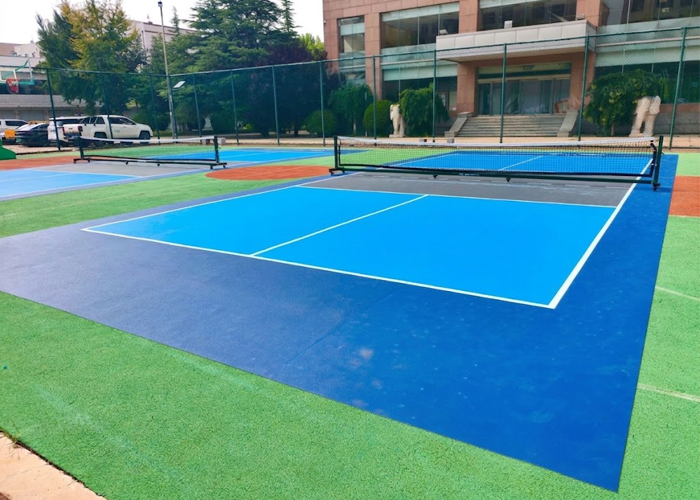
Choosing outdoor pickleball court flooring is not simply a matter of finding the lowest price per square meter. For brand procurement professionals, the real equation includes playing performance, outdoor durability, installation requirements, logistics, quality consistency, and the supplier’s ability to support repeat orders as the business grows.
With several flooring systems available on the market, it is easy to get lost in specifications and marketing claims. The following sourcing considerations can help buyers compare products more objectively and choose a flooring solution that makes commercial sense over the long run.
Define Your Outdoor Flooring Requirements
Identify the Application and Climate
Start with the environment where the flooring will actually be used. A permanent outdoor pickleball facility in a hot, sunny climate has different requirements from a temporary court used at events, schools, resorts, or multi-purpose sports facilities. Climate matters because prolonged UV exposure, rain, humidity, temperature fluctuations, and surface moisture can gradually affect flooring performance. Before requesting quotations, buyers should provide suppliers with information about the intended application, location, frequency of use, and whether the court will remain outdoors year-round.
Confirm Subfloor Compatibility
The existing subfloor is just as important as the flooring itself. Concrete and asphalt are common bases for pickleball courts, but their condition, flatness, cracks, drainage, and moisture levels should be assessed before installation.
A good flooring system cannot compensate for a seriously uneven or structurally unstable substrate. For roll-out flooring, the base should generally be sufficiently smooth, clean, dry, and level so that the flooring can lie flat and provide consistent ball response and player movement.
Set Key Technical Specifications
Procurement teams should establish the essential specifications before comparing suppliers. Thickness, weight, roll dimensions, surface texture, slip resistance, dimensional stability, seam treatment, and warranty terms are all worth putting on the comparison sheet.
Avoid getting hung up on one specification in isolation. A slightly heavier or thicker product is not automatically better if its surface performance, installation method, or outdoor durability does not match the intended application.
Compare Materials and Outdoor Performance
Compare Acrylic, Polypropylene, and Roll-Out Flooring
There is no single flooring system that is perfect for every project. Acrylic surfaces are widely used for permanent courts, polypropylene modular tiles offer convenient installation and drainage characteristics, while roll-out synthetic flooring can provide a practical alternative when portability, storage, or rapid deployment is important.
The right choice depends heavily on the business model. For a facility looking for a permanent court surface, a conventional acrylic system may be appropriate; for a multi-purpose venue that needs to convert a basketball or other sports area into pickleball courts, removable roll-out flooring can be particularly attractive.
Evaluate UV, Weather, and Wear Resistance
Outdoor flooring has to withstand more than players running and changing direction. Sunlight, rain, humidity, temperature changes, dirt, and repeated cleaning can collectively accelerate surface degradation, so outdoor suitability should be supported by technical information rather than vague claims such as weather resistant.
Ask for relevant test data, product specifications, and warranty conditions, and clarify whether the stated warranty applies specifically to outdoor use. A product designed primarily for indoor applications may look perfectly adequate in a sample room yet behave very differently after months of outdoor exposure.
Check Surface Performance and Water Management
For pickleball, surface characteristics directly influence the playing experience. Adequate traction is important for controlled movement, while excessive slipperiness can become a serious concern when moisture is present. Water management is another key consideration, particularly for outdoor roll-out systems. Where flooring uses multiple rolls, properly treated seams can help reduce the possibility of water entering beneath the surface; for permanent installations, the underlying court drainage system remains equally important.
Evaluate the Supplier, Not Just the Product
Verify Manufacturing and OEM/ODM Capabilities
A competitive sample does not necessarily mean a competitive supplier. Brand buyers should understand who actually manufactures the flooring, where production takes place, what customization is available, and whether the supplier has sufficient experience with international orders. For brands developing their own product line, OEM/ODM capability can become especially important. Logo printing, customized colors, packaging, specifications, and product modifications may matter just as much as the base flooring itself.
Review Certifications and Test Reports
Certificates can provide useful evidence, but procurement teams should look beyond a logo or certificate number on a sales presentation. Ask what property was tested, which product was tested, when the test was conducted, and whether the report corresponds to the product currently being offered.
Relevant information may include slip resistance, wear performance, dimensional stability, material composition, and other characteristics appropriate to the intended application. In short, trust the paperwork that can be verified, not just the paperwork that looks impressive.
Assess Quality Control and Production Consistency
For a brand, consistency is often more important than the performance of a single sample. A product may pass an initial evaluation but create headaches if color, thickness, surface texture, dimensions, or material characteristics fluctuate significantly between batches.
Ask suppliers how raw materials are controlled, how production is inspected, and how finished products are checked before shipment. A reliable quality-control process helps reduce customer complaints and makes future replenishment much less of a roll of the dice.
Calculate the Real Landed Cost
Compare More Than the Unit Price
The quoted price per square meter is only the starting point. A lower-priced flooring system can become considerably more expensive after installation materials, labor, accessories, packaging, and transportation are added. Procurement teams should therefore compare the complete project cost rather than simply putting supplier quotations side by side. This is especially important when comparing flooring systems with fundamentally different installation methods.
Calculate Freight, Duties, and Installation Costs
International buyers should calculate the landed cost based on the actual destination. Freight, import duties, customs clearance, local delivery, and installation can materially change the final economics of a flooring project.
Roll-out flooring can offer a logistical advantage in certain applications because it can be rolled, packed, transported, removed, and stored without treating the court as a permanent construction project. For venues that frequently change layouts, the ability to reuse the flooring may be worth considering alongside the initial purchase price.
Consider Long-Term Maintenance and Replacement Costs
The cheapest product at the time of purchase is not necessarily the most economical product over its service life. Maintenance requirements, repairability, replacement difficulty, and the availability of future supplies should all be considered.
This is where procurement should think beyond the first purchase order. If a flooring system can be removed and reused when a facility changes its layout, that flexibility may have tangible commercial value that is not reflected in the initial price per square meter.
Test Samples Before Placing a Bulk Order
Evaluate Playing Performance
Samples should be tested under conditions that resemble actual use rather than simply examined by hand. Pay attention to traction, surface feel, ball response, movement, and how the flooring behaves during repeated lateral changes of direction. If possible, allow experienced players or court operators to evaluate the sample. Their feedback can reveal practical issues that a technical data sheet simply cannot capture.
Test Durability and Installation
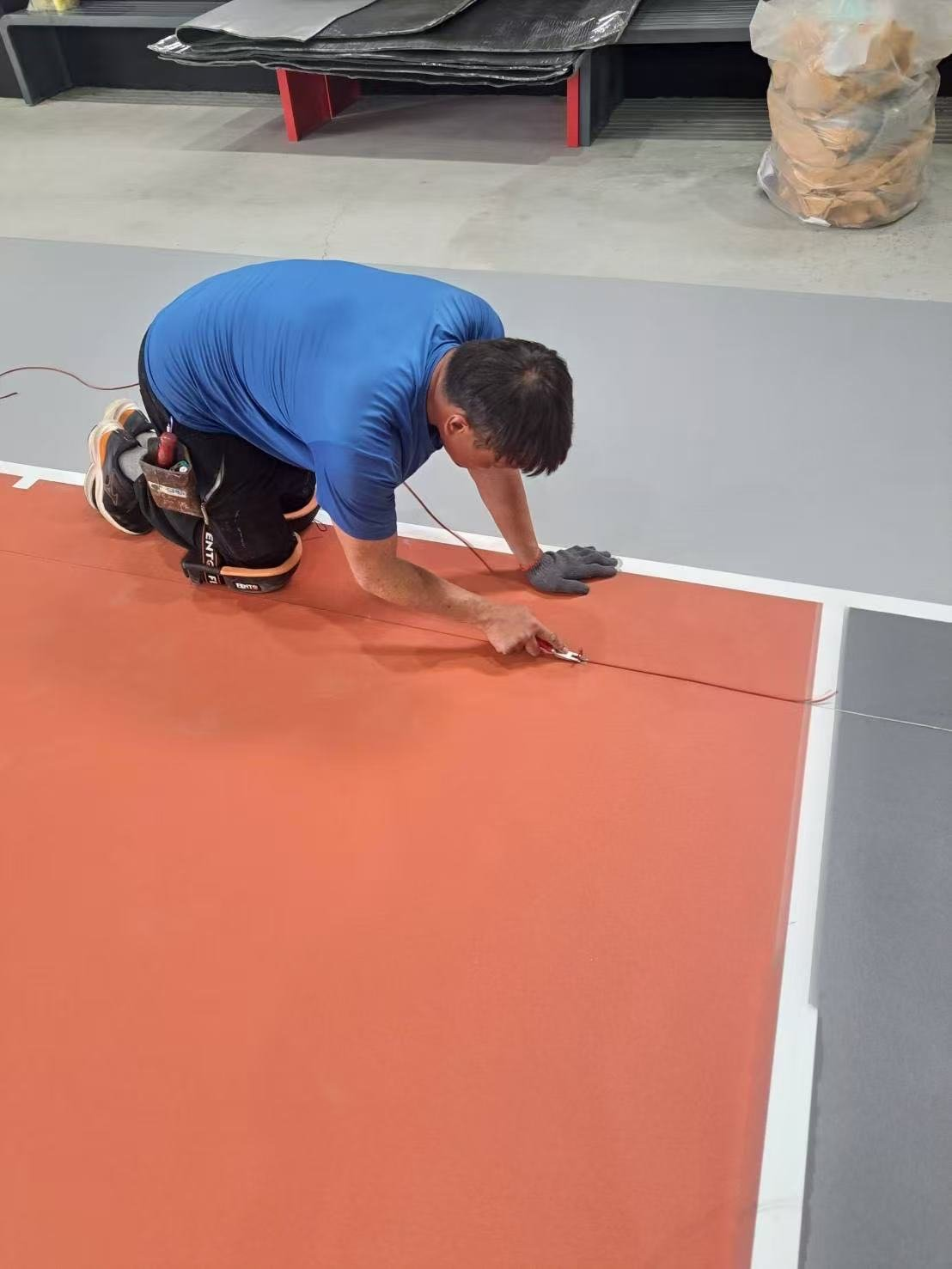
Installation should also be part of the sample evaluation. Check how easily the material can be positioned, joined, secured, removed, and stored, and determine whether special tools or trained installers are required.
For roll-out flooring, buyers should pay particular attention to how the rolls lie after deployment and how seams are handled. Outdoor applications may benefit from hot-welded seams, which can create a more secure connection and help reduce water penetration between sections.
Check Branding and Product Consistency
If the flooring will be sold under a private brand, test the actual branded sample before approving mass production. Check logo placement, printing quality, color accuracy, packaging, labels, and overall appearance.
Do not assume that a supplier can reproduce every detail of a prototype indefinitely without controls. Clear specifications, approved samples, and documented production standards provide a much stronger foundation for repeat orders.
Choose a Supplier for Long-Term Growth
MOQ, Lead Time, and Production Capacity
A supplier should fit the brand’s current requirements while also having enough capacity to support future growth. Minimum order quantities, production lead times, peak-season capacity, and replenishment schedules should be discussed before the first bulk order. This becomes particularly important for brands entering multiple markets. A flooring supplier that can reliably support both small initial orders and larger repeat purchases may be more valuable than one offering a slightly lower opening price.
Evaluate Communication and After-Sales Support
Good communication is an underrated part of sourcing. Technical questions should receive clear answers, quotations should be transparent, and installation or product issues should have a defined channel for resolution.
For international procurement, time-zone differences and language barriers can make communication challenging, so responsiveness and technical competence are worth evaluating during the initial sampling stage. If problems occur after delivery, a supplier that responds quickly can save considerably more money than a supplier that simply offered the cheapest quotation.
Customization and Future Product Development
A long-term flooring partner should ideally be capable of evolving with the brand. Custom colors, logos, packaging, dimensions, accessories, and other product adjustments can help a brand create a more distinctive market position.
For companies targeting portable or multi-purpose sports facilities, roll-out flooring can offer an additional layer of flexibility. It combines a recognizable court-flooring solution with the ability to roll up and store the material when the playing area needs to be used for another purpose.
Final Thoughts
Sourcing outdoor pickleball court flooring requires a broader perspective than comparing price lists. The most suitable solution should balance playing performance, outdoor durability, installation method, logistics, landed cost, quality consistency, and supplier reliability.
For permanent facilities, conventional acrylic or modular systems may remain the right choice depending on the site and project requirements. For brands supplying portable courts, temporary venues, multi-purpose facilities, or customers who value fast deployment and storage, roll-out flooring deserves serious consideration because its removability can provide a practical advantage beyond the flooring material itself.
The best sourcing decision is ultimately not about finding the cheapest square meter. It is about finding a flooring system and supply partner that can deliver consistent performance, predictable costs, and dependable support throughout the product’s commercial life.
Related Posts
How to Convert a Tennis Court to Pickleball Courts
Can You Put a Pickleball Court on a Driveway? A Complete Guide
How to Install Roll-Out Pickleball Court Flooring