
Table of Contents
Categories

KOLISTI Team
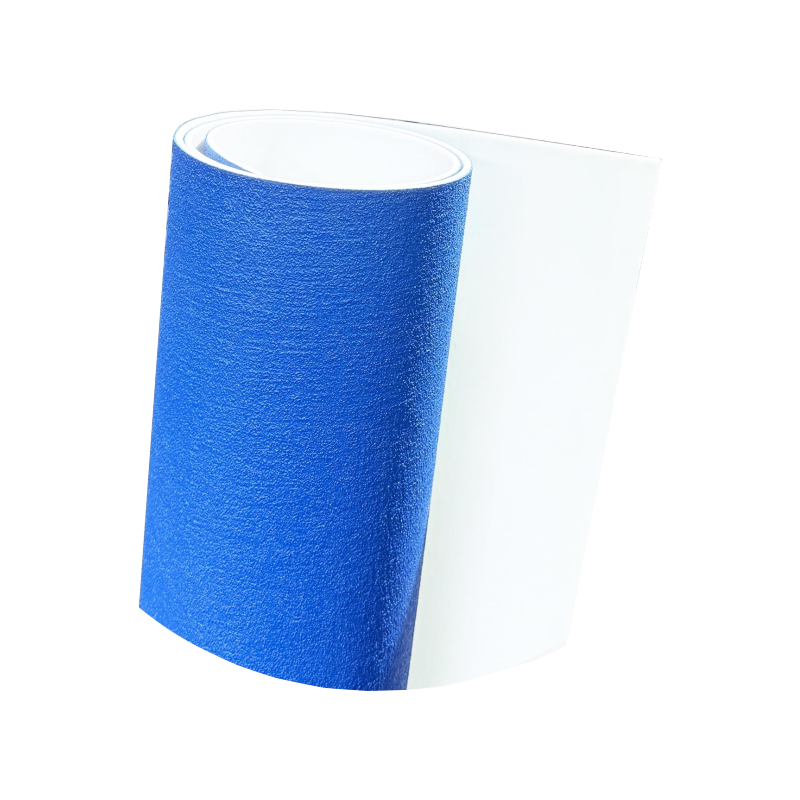
As pickleball continues its global expansion, court flooring is becoming more than a functional surface—it is increasingly a product category with implications for player experience, facility positioning, and brand profitability. For global brands sourcing cushioned pickleball courts, the challenge is not simply finding a surface that feels comfortable underfoot, but identifying a flooring system that combines performance, durability, manufacturability, customization, and commercial viability. A well-chosen supplier can help transform a court-flooring product from a commodity purchase into a scalable, differentiated offering.
Understanding Cushioned Pickleball Court Flooring
What Is a Cushioned Pickleball Court?
A cushioned pickleball court uses a flooring system engineered to provide a degree of impact attenuation between the player’s foot and the underlying hard subfloor. Rather than relying solely on concrete, asphalt, or a thin conventional coating, cushioned systems incorporate resilient materials or specialized layers designed to moderate impact forces and improve underfoot comfort. Depending on the construction, the cushioning effect may come from foam, resilient polymers, elastic layers, or a combination of multiple materials.
For players who spend several hours on court, this distinction can be significant because repeated lateral movement, abrupt stops, pivots, and split steps place continual mechanical stress on the lower body. A properly engineered cushioned surface can create a more forgiving playing environment while maintaining the traction and stability necessary for fast-paced pickleball. In other words, the sweet spot is not maximum softness—it is controlled resilience.
How Cushioned Flooring Differs from Standard Court Surfaces
Traditional pickleball courts are commonly built over concrete or asphalt and finished with acrylic coatings, producing a relatively firm playing surface. These systems can deliver excellent ball response and durability, but the rigid substrate provides comparatively little inherent cushioning. Cushioned flooring introduces an additional performance dimension by modifying the interface between the athlete and the underlying structure.
The difference is particularly relevant when comparing products intended for commercial facilities, training centers, clubs, and multipurpose venues. A cushioned system may offer greater perceived comfort without fundamentally changing the dimensions or visual language of a regulation-style court. However, product construction varies considerably, so the word “cushioned” should never be treated as a blanket guarantee of equivalent performance.
Why Cushioning Matters for Players, Facilities, and Brands
For players, cushioning can contribute to a more comfortable experience during repeated movement, particularly during long sessions or high-frequency training. For facilities, a premium surface can become part of the venue’s value proposition, helping differentiate the playing environment rather than competing solely on court rental prices. That makes flooring a strategic asset rather than an afterthought.
For brands, the opportunity is even broader because cushioned court flooring can support premium positioning and product segmentation. A supplier capable of delivering consistent specifications, custom branding, and scalable production gives a brand room to build its own market identity. When the product performs well and the supply chain remains dependable, everybody wins.
Key Cushioning Technologies and Flooring Structures
Multi-Layer Construction and Shock-Absorbing Systems
Many cushioned court systems employ multilayer architecture, with each layer assigned a particular function rather than attempting to make one material do everything. A typical configuration may incorporate a wear-resistant playing surface, a structural or stabilizing layer, and one or more resilient components responsible for impact attenuation. This functional stratification allows manufacturers to fine-tune characteristics such as resilience, traction, dimensional stability, and abrasion resistance.
For B2B buyers, understanding the layer structure is more useful than simply comparing total thickness. Two products can have identical overall thickness while exhibiting very different mechanical behavior because their material composition and layer distribution differ. A serious sourcing evaluation should therefore examine what each layer does, what material it uses, and how the layers are bonded or integrated.
Cushion Thickness, Resilience, and Surface Performance
More cushioning is not automatically better. Excessive softness can compromise stability, alter movement characteristics, or produce an undesirable sensation during quick directional changes, whereas insufficient cushioning may provide little meaningful benefit. The objective is an engineered equilibrium between compliance and structural integrity.
Resilience is equally important because a flooring system needs to recover efficiently after deformation rather than remaining permanently compressed. Buyers should consider how the manufacturer evaluates compression, recovery, surface hardness, and repeated-use performance. The best product is not necessarily the thickest one on the specification sheet; it is the one whose material architecture produces the desired playing characteristics consistently.
Balancing Comfort, Ball Response, Traction, and Durability
Pickleball flooring must satisfy several competing requirements simultaneously. Players expect adequate grip for acceleration and deceleration, predictable ball behavior, and a stable platform for rapid footwork, while facility owners expect the surface to withstand continuous traffic and routine maintenance. A product optimized exclusively for softness could fall short in other dimensions.
This is why flooring development is fundamentally an exercise in compromise management. The surface must feel comfortable without becoming unstable, provide traction without becoming excessively abrasive, and remain resilient without sacrificing longevity. For global brands, this balance should be assessed through physical samples and documented performance data rather than marketing terminology alone.
Performance Factors Global Brands Should Evaluate
Shock Absorption and Player Comfort
Shock absorption is one of the principal reasons a brand may choose cushioned flooring over a conventional hard court. Evaluation should consider how the flooring manages repeated impacts and whether the cushioning remains consistent across different areas of the court. A credible supplier should be able to explain the technology behind the cushioning rather than simply claiming that the product is “soft” or “comfortable.”
Player comfort should also be assessed practically. Walking, jogging, lunging, jumping, and lateral movement on a sample can reveal characteristics that are invisible in a technical datasheet. When possible, testing should involve multiple users because individual perceptions of cushioning and firmness can vary considerably.
Wear Resistance, Surface Stability, and Long-Term Performance
Commercial pickleball courts can experience thousands of movement cycles, frequent cleaning, equipment traffic, and occasional impacts from movable sports equipment. Consequently, abrasion resistance and surface stability deserve the same attention as initial comfort. A surface that feels fantastic on day one but deteriorates prematurely can quickly become an expensive false economy.
Look for evidence concerning wear resistance, dimensional stability, adhesion between layers, and resistance to common maintenance procedures. Repeatability is also crucial: a global brand needs confidence that the fiftieth production batch will resemble the first batch, not merely that one laboratory sample performed well.
Outdoor and Indoor Environmental Resistance
Indoor and outdoor installations expose flooring to markedly different environmental stresses. Outdoor products may encounter ultraviolet radiation, rain, temperature fluctuations, humidity, and thermal expansion, while indoor installations can experience intensive foot traffic, cleaning chemicals, and fluctuations in building conditions. A product designed for one environment should not automatically be assumed suitable for another.
Global brands should therefore define the intended application before selecting the flooring specification. Questions about UV resistance, moisture behavior, temperature tolerance, drainage, installation conditions, and substrate requirements should be addressed early in the sourcing process. Cutting corners here can create headaches later, particularly when products are distributed across multiple climate zones.
Material and Product Specifications to Compare
Surface Materials, Base Layers, and Reinforcement Options
The material composition determines much of a flooring system’s personality, from tactile response to durability and dimensional stability. Surface layers may use acrylic, PVC, polyurethane, rubber, or other engineered materials, while underlying layers can be configured to provide structural support, resilience, or dimensional reinforcement. Each architecture involves different manufacturing considerations and performance trade-offs.
A procurement team should request a clear layer-by-layer specification rather than accepting a generic material description. Information about thickness, density, bonding method, reinforcement, and surface treatment can reveal meaningful differences between apparently similar products. This level of scrutiny is particularly important when developing an OEM product under a proprietary brand.
Thickness, Weight, Dimensions, and Installation Formats
Physical specifications influence not only performance but also logistics and installation economics. Thickness and weight affect handling, packaging, freight costs, and storage requirements, while roll width or modular dimensions can influence installation efficiency and waste. For international distribution, these seemingly mundane details can have a surprisingly large effect on landed cost.
Installation format should therefore be considered as part of the product design rather than a separate issue. Roll-out systems, tiles, sheets, and permanently installed surfaces each have different implications for transportation, labor, replacement, and venue flexibility. A product that is easy to ship and deploy may create a stronger commercial proposition than one that performs similarly but requires cumbersome installation.
Color, Texture, Branding, and Customization Capabilities
A global brand rarely wants a product that looks indistinguishable from every competitor’s offering. Color matching, surface texture, logo application, packaging, labeling, and other customization options can help transform a generic flooring system into a recognizable commercial product. These details are particularly valuable for distributors and brands building a coherent sports-equipment portfolio.
Customization should, however, be evaluated alongside production feasibility. A supplier may offer extensive theoretical customization but impose high minimum quantities or long lead times for relatively minor changes. The ideal manufacturing partner can explain which specifications are genuinely customizable, which require tooling or development, and which can be adjusted economically at scale.
OEM and ODM Sourcing for Cushioned Pickleball Courts
OEM vs. ODM: Choosing the Right Manufacturing Model
OEM generally means producing according to the buyer’s specifications, branding, or established product requirements, whereas ODM typically involves adapting or developing an existing manufacturer platform into a customized commercial product. Neither model is inherently superior; the appropriate choice depends on the brand’s technical resources, market strategy, and desired degree of differentiation.
For newer brands, ODM can shorten the path from concept to market because the manufacturer already possesses production know-how and an established material architecture. More technically mature brands may prefer OEM arrangements that provide tighter control over specifications and intellectual property. The key is to define responsibilities clearly before production begins.
Private Label, Custom Specifications, and Brand Development
Private-label flooring enables a brand to sell a professionally manufactured product under its own identity without owning a production facility. This can be particularly attractive for sports distributors, court contractors, and equipment companies seeking to expand their product portfolio without making a substantial capital investment in manufacturing infrastructure.
Beyond logos and packaging, genuine product differentiation can involve custom colors, dimensions, surface characteristics, layer configurations, and installation accessories. The more extensive the customization, however, the more important technical documentation becomes. Specifications should be written down and approved rather than left to informal conversations, where details can easily become lost in translation.
Minimum Order Quantities, Sampling, and Production Scalability
MOQ is one of the first commercial questions a sourcing team should clarify. A low MOQ can make market testing easier, while larger production quantities may unlock better unit economics once demand has been validated. Samples should be treated as a technical checkpoint, not merely a visual preview.
A sensible progression is to evaluate samples, conduct field testing, approve specifications, place an initial commercial order, and then scale gradually as market demand develops. This approach reduces the risk of committing substantial capital before the product has demonstrated commercial traction. As the brand grows, the supplier should be capable of increasing production without sacrificing consistency.
How to Evaluate a Cushioned Pickleball Flooring Manufacturer
Manufacturing Experience, Quality Control, and Production Capacity
A capable manufacturer should demonstrate more than a polished catalog. Buyers should investigate production experience, quality-control procedures, equipment, workforce capabilities, material sourcing, inspection routines, and actual production capacity. These factors provide a clearer picture of whether the supplier can support sustained commercial demand.
Capacity should also be interpreted intelligently. A manufacturer claiming extremely high output is not necessarily the best choice if its quality-control system is weak. For global brands, reliable repeatability often matters more than impressive headline capacity.
Certifications, Testing Reports, and Product Compliance
Certifications and laboratory reports can provide valuable third-party evidence of product characteristics, but their relevance depends on what exactly was tested and under which standard. Buyers should verify the issuing organization, test method, product model, test date, and whether the document applies to the current formulation. A certificate bearing a familiar logo should never substitute for due diligence.
Different markets may also impose different regulatory or safety requirements. A supplier experienced with international business should be able to identify the documentation normally required for the destination market and explain any limitations. Transparent documentation is a sign of a mature supply chain.
Sample Evaluation, Factory Verification, and Supplier Communication
A physical sample can expose details that a brochure conveniently leaves out: surface feel, dimensional tolerance, odor, layer bonding, edge quality, flexibility, and installation practicality. Factory verification can add another layer of confidence by allowing buyers to observe production, inspection, storage, and packaging processes directly or through a qualified third party.
Communication quality is equally consequential. If technical questions receive vague answers before an order, the situation rarely becomes magically clearer afterward. A dependable supplier communicates specifications, limitations, lead times, corrective actions, and commercial terms with sufficient precision to keep everyone on the same page.
Cost, Logistics, and Profitability Considerations
Comparing FOB Prices and Total Landed Costs
FOB price is important, but it is only one component of the commercial equation. Freight, insurance, customs duties, taxes, inland transportation, warehousing, installation accessories, and other destination costs can materially change the final economics. Comparing suppliers solely by FOB price is therefore a classic case of being penny-wise and pound-foolish.
A proper sourcing comparison should calculate total landed cost for a realistic order quantity. This makes it possible to compare suppliers on an apples-to-apples basis rather than being seduced by a low factory price that later becomes expensive after transportation and import costs are added.
Shipping, Packaging, Lead Times, and Order Volume
Flooring is relatively bulky compared with many sporting goods, so packaging efficiency and freight planning can have a meaningful impact on profitability. Roll dimensions, palletization, container utilization, gross weight, and packaging protection should all be considered before placing a large international order. Damage during transit can erase the savings achieved through a lower purchase price.
Lead time should also include realistic production scheduling rather than relying on optimistic estimates. Brands should understand the difference between manufacturing lead time, shipping transit time, customs clearance, and final delivery. A predictable supply chain is often more valuable than a supplier who promises an unrealistically fast turnaround.
Calculating Product Margins Without Sacrificing Quality
A healthy margin is essential for distributors and brands, but aggressive cost cutting can eventually undermine the very product being sold. Reducing material quality, eliminating necessary testing, or choosing an unsuitable construction simply because it is cheaper can result in complaints, returns, reputational damage, and lost customers.
Instead, margin optimization should focus on the entire value chain. Better packaging, efficient shipping, sensible MOQs, standardized components, and accurate forecasting can reduce costs without degrading the product itself. The goal is not to buy the cheapest cushioned court flooring available; it is to create the strongest sustainable margin around a product that customers are willing to trust.
Building a Reliable Long-Term Supply Partnership
Quality Consistency Across Repeat Orders
The true test of a manufacturer often begins after the first order. Maintaining consistent color, thickness, dimensions, surface characteristics, bonding quality, and packaging across repeated production runs is essential for any brand selling internationally. Customers expect the replacement product they purchase months later to perform like the original.
Quality agreements and approved reference samples can help establish objective benchmarks. Where appropriate, production batches should be inspected against agreed specifications before shipment. Consistency is not glamorous, but in global B2B commerce, it is the quiet engine behind repeat business.
After-Sales Support, Warranty, and Technical Assistance
Even a well-engineered flooring product can encounter installation questions, substrate issues, transportation damage, or unusual site conditions. A supplier that provides installation guidance, troubleshooting, warranty support, and technical documentation gives the brand a stronger safety net when problems arise.
Warranty terms should be explicit about duration, coverage, exclusions, and claim procedures. Technical support should likewise be practical rather than ceremonial, with clear instructions that installers and distributors can actually follow. When something goes sideways, responsive support can make the difference between a manageable issue and a disgruntled customer.
Scaling From Initial Samples to Global Market Distribution
The ultimate objective of sourcing is not merely to secure a successful sample—it is to establish a repeatable commercial system. Once the product has passed technical evaluation and initial market testing, the next stage may involve larger orders, regional distribution, private labeling, multiple colors, or expansion into additional countries. The supplier must therefore be capable of scaling alongside the brand.
A strong long-term partnership combines technical competence with commercial flexibility, transparent communication, dependable quality, and realistic production planning. For global brands, the winning formula is straightforward: choose a cushioned pickleball court product that performs on the court, choose a manufacturer that performs in the supply chain, and build the commercial model around both. In a rapidly developing pickleball market, that combination can turn a flooring purchase into a durable competitive advantage.
Related Posts

Temporary vs. Permanent Pickleball Court Flooring for Sports Facilities

Pickleball Flooring for Commercial Sports Facilities: What Owners Should Consider
How to Convert a Tennis Court to Pickleball Courts