Table of Contents
Categories

KOLISTI Team
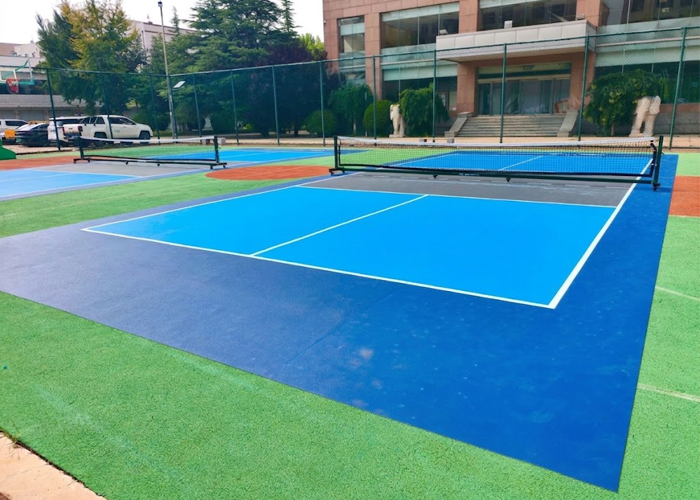
For many homeowners across the United States and Canada, the driveway can be more than a place to park the car—it can become a convenient spot for recreational pickleball. If the surface is reasonably flat, structurally sound, and large enough, you may be able to create a playable court without building a completely new slab. The key is to evaluate the space, surface, slope, and installation method before you start.
Can You Put a Pickleball Court on a Driveway?
Why Driveways Can Be Suitable for Pickleball
Driveways are often made from concrete or asphalt, two common hard surfaces that can provide a practical base for pickleball. Because the foundation already exists, there is no need to excavate and construct an entirely new playing area. For casual games, family recreation, or a temporary court, putting pickleball on an existing driveway can be a real win.
What Makes a Driveway Suitable
A suitable driveway should provide enough usable space for the court and reasonable movement around it. The pavement should also be stable, without major deterioration that could affect safety or the performance of the playing surface. A relatively flat profile with adequate drainage is important because excessive slope or standing water can turn a good-looking driveway into a troublesome court.
When a Driveway May Not Be Suitable
A driveway with severe cracking, potholes, major settlement, or crumbling pavement may require substantial repair before it can be used. Excessive slope can also affect ball bounce and player movement, particularly when the court is used regularly. If garages, retaining walls, landscaping, parked vehicles, or other obstructions leave insufficient clearance, another location may be the better call.
How Much Space Do You Need for a Driveway Pickleball Court?
Official Pickleball Court Dimensions
A standard pickleball court measures 20 feet wide by 44 feet long (6.1m x 13.41m), including the playing lines. The net is positioned across the center of the court, dividing it into two 22-foot halves. Remember that these dimensions describe the court itself, not the additional space players need outside the boundaries.
Recommended Space Around the Court
It’s recommended to apply a court with Min. 30 feet wide by 60 feet long (approx. 9m x 18m), which is USA pickleball’s recommended sizes.
Additional clearance behind the baselines and outside the sidelines makes the court safer and more comfortable to play on. Players frequently move beyond the painted boundary when chasing a lob, digging out a fast drive, or scrambling for a difficult shot. The more room available around the court, the less likely players are to collide with vehicles, walls, landscaping, or other hard objects.
Measuring Your Driveway Before Installation
Measure the full usable length and width rather than simply looking at the driveway’s overall footprint. Mark fixed obstacles such as garage doors, steps, utility equipment, fences, landscaping, and neighboring structures before deciding where the court will sit. Also consider whether you still need to drive vehicles into the garage or use part of the driveway for parking.
Is Your Driveway Surface Suitable for Pickleball?
Concrete Driveways
Concrete is a popular foundation because it is rigid, durable, and generally provides a stable base for court surfaces or roll-out flooring. However, expansion joints, cracks, uneven sections, and surface deterioration should be inspected before installation. Minor imperfections may be manageable, but significant defects should be repaired so they do not compromise the playing surface.
Asphalt Driveways
Asphalt can also provide a usable foundation, particularly when it is relatively smooth, stable, and free from serious deformation. In hot weather, asphalt can soften and expand more noticeably than concrete, so its condition should be assessed carefully. Older asphalt with potholes, pronounced cracking, or substantial surface movement may need repair or resurfacing first.
Surface Flatness, Cracks, and Drainage
A pickleball surface does not need to be perfectly laboratory-flat, but large bumps, depressions, and abrupt transitions can affect ball bounce and player footing. Inspect cracks, potholes, low spots, and drainage paths before installing anything over the driveway. Water should be able to drain away naturally without creating persistent puddles across the playing area.
How Much Slope Can a Driveway Pickleball Court Have?
Why Court Slope Matters
Some slope is useful for drainage, but excessive slope can create noticeable differences in ball bounce and player movement. A strongly inclined court may also make one end feel substantially different from the other during rallies. Recreational driveway courts can tolerate conditions that would not be appropriate for a high-level or tournament-oriented court, but excessive slope remains a practical concern.
How to Check the Slope
A long spirit level, laser level, or other suitable measuring tool can help identify changes in elevation. Measure several points across the proposed court area rather than checking only one location, because a driveway may have both longitudinal and crosswise slope. This broader assessment gives a much clearer picture of whether the surface is suitable.
What to Do If the Driveway Is Too Sloped
If the slope is excessive, possible solutions include localized repairs, leveling work, resurfacing, or rebuilding the base. The appropriate solution depends on the severity of the problem and the intended use of the court. If correcting the driveway would require extensive construction, moving the court to another suitable area may make more sense.
How Do You Turn a Driveway Into a Pickleball Court?
Clean and Prepare the Existing Surface
Start by removing dirt, leaves, gravel, oil, loose debris, and anything else that could interfere with installation or traction. Repair significant cracks and damaged areas before installing court materials. The surface should be clean, dry, stable, and sufficiently smooth for the chosen installation method.
Choose a Court Surface and Installation Method
A permanent court can use painted or coated court lines, while temporary courts can use removable markings or other portable solutions. Another option is roll-out pickleball court flooring, which can be installed over a suitable existing hard surface. The right choice depends on how often the court will be used and whether the driveway must remain available for normal household use.
Install the Net and Court Layout
Position the net across the center of the 44-foot court and carefully establish the sidelines, baselines, non-volley zone, and centerline. Measure the layout twice before applying permanent markings because a small error at the beginning can become surprisingly obvious once the court is finished. Finally, check the complete court from several angles to make sure the dimensions and alignment are consistent.
Can You Use Roll-Out Pickleball Flooring on a Driveway?
How Roll-Out Flooring Works on Existing Hard Surfaces
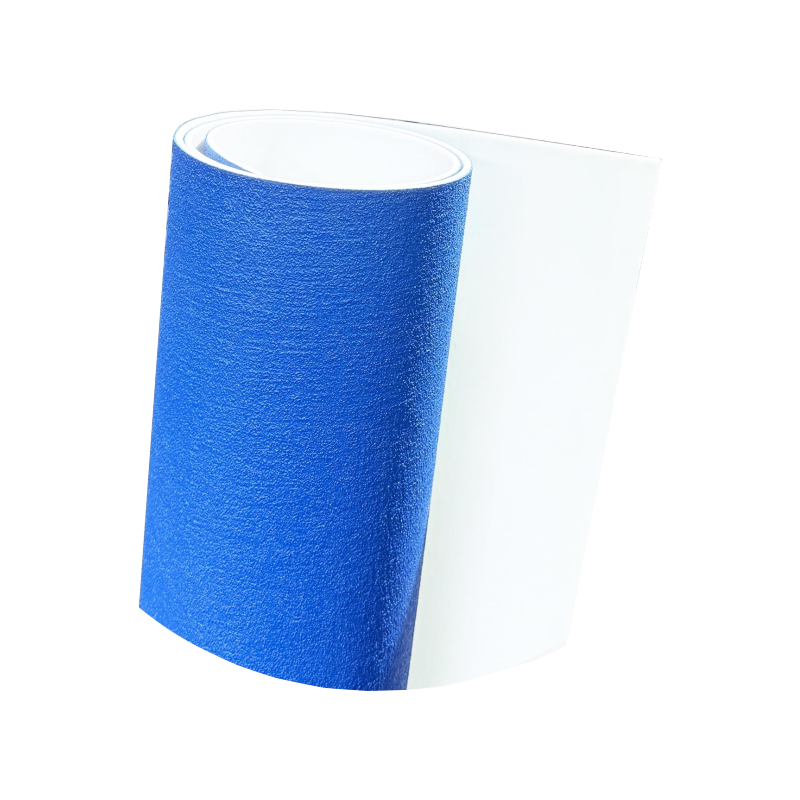
Roll-out flooring can create a dedicated pickleball playing surface over a suitable concrete or other hard base without rebuilding the entire driveway. The flooring is supplied in rolls that can be positioned and joined to form the required court area. This approach can be particularly useful when the driveway needs to serve another purpose after pickleball time is over.
Installation Options for Driveway Courts
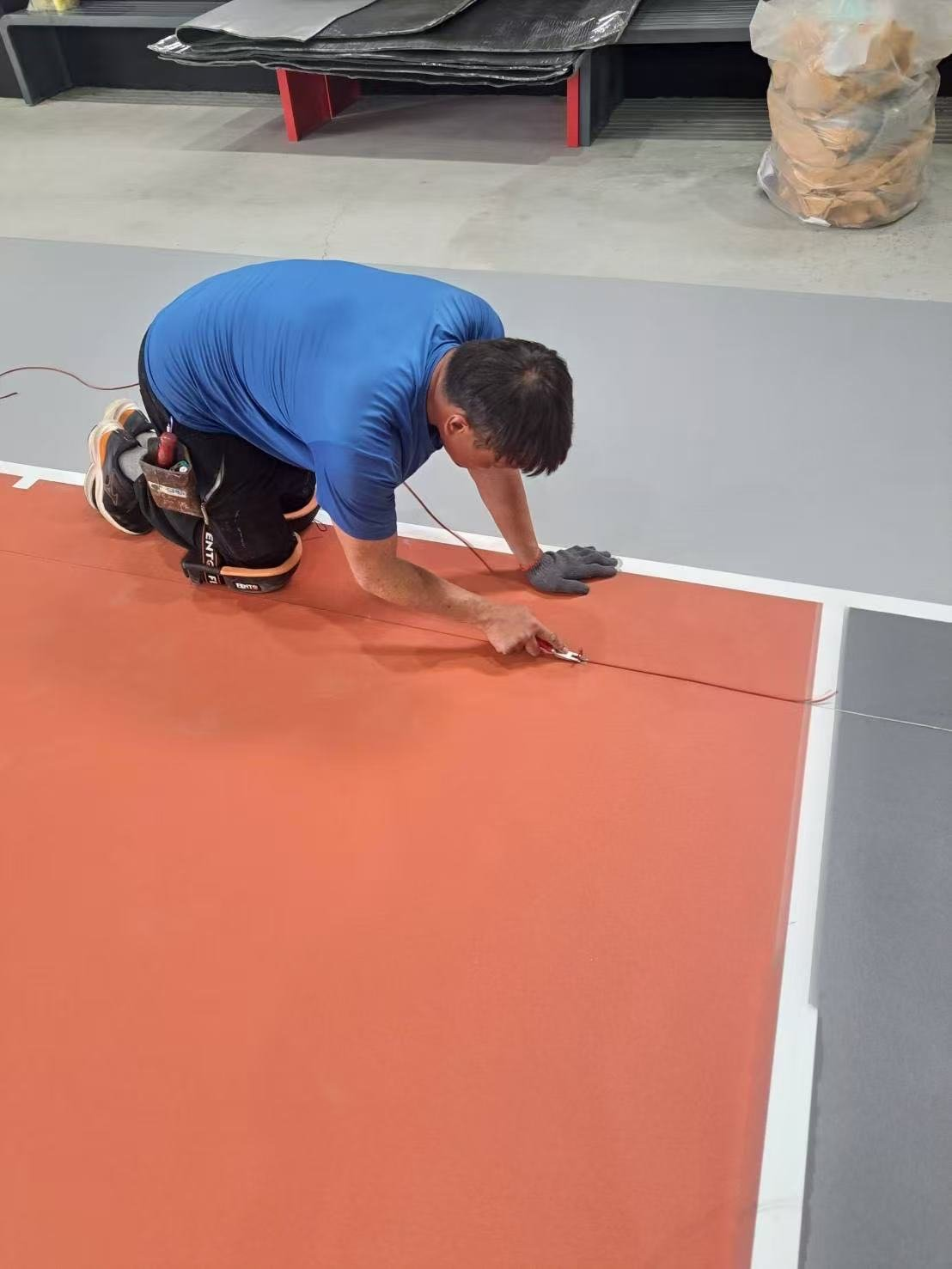
For temporary applications, double-sided tape can be used to help secure the flooring to a properly prepared base. For more permanent installations, adjoining rolls can be connected using hot-melt welding, creating a more integrated surface. The exact installation method should be selected according to the base condition, expected usage, climate, and whether the flooring needs to be removed later.
Benefits and Limitations
Roll-out flooring can reduce installation time and avoid the disruption associated with constructing a completely new pickleball court. It can also provide a practical pathway for converting an existing hard area into a dedicated court while retaining the option of removal or relocation. However, it is not a magic carpet: the underlying driveway still needs to be reasonably flat, clean, structurally sound, and properly prepared.
Permanent vs. Temporary Driveway Pickleball Courts
Permanent Court Installation
A permanent installation may involve painted or coated court surfaces, fixed net posts, and dedicated court equipment. This approach makes sense when pickleball is a long-term fixture and the driveway does not need to return to its original function. Property appearance, drainage, maintenance, and local requirements should all be considered before committing to permanent modifications.
Temporary Court Installation
A temporary court can use a portable net, removable markings, or roll-out flooring that can be taken up when the driveway is needed for parking. This arrangement offers considerably more flexibility for households that want pickleball without permanently sacrificing driveway space. For many recreational players, that flexibility can be the sweet spot.
Which Approach Fits Your Situation?
Consider how frequently the court will be used, how much installation work is acceptable, and whether vehicles need regular access to the driveway. A family that plays several times a week may prefer a more durable setup, while occasional players may favor a removable solution. The goal is to create a court that works with the property rather than fighting against it.
Important Things to Consider Before Building a Driveway Pickleball Court
Safety and Property Considerations
Keep adequate separation from vehicles, garage doors, walls, fences, landscaping, and pedestrian pathways. If the court will be used after dark, appropriate lighting can improve visibility while minimizing glare toward neighboring properties. Good planning matters because a beautifully marked court is not much fun if every errant shot lands beside a parked car.
Local Rules and Neighborhood Requirements
Before making permanent changes, check applicable HOA rules, municipal requirements, and residential property restrictions in your area. Noise can also become a consideration, particularly in closely spaced neighborhoods where pickleball play may be audible to nearby residents. Local requirements vary considerably across the U.S. and Canada, so checking the rules that apply to the specific property is essential.
Final Driveway Court Checklist
Before installation, confirm the 20 × 44-foot court dimensions, available clearance, driveway condition, slope, and drainage. Choose the surface and installation method based on whether you want a permanent or removable court and whether normal driveway access must be preserved. With the right preparation, an ordinary driveway can become a surprisingly capable pickleball space without turning the entire property upside down.
Related Posts
Can You Put a Pickleball Court on a Driveway? A Complete Guide
How to Install Roll-Out Pickleball Court Flooring
Cushioned Pickleball Courts: Sourcing Guide for Global Brands