Table of Contents
Categories

KOLISTI Team

Pickleball is becoming an attractive addition to commercial sports facilities, including indoor sports halls, fitness centers, schools, community recreation centers, and multi-purpose venues. For facility owners, introducing pickleball can create new opportunities to attract visitors, expand sports programs, and make better use of existing indoor space.
However, choosing the right pickleball flooring involves more than selecting a suitable color or purchasing a court kit. The existing floor condition, intended use, installation method, available space, and long-term operating costs all influence the final decision.
For facilities that need to accommodate multiple sports or change their layouts regularly, removable court flooring may be worth considering. This guide explains the main factors to evaluate before investing in pickleball court flooring for a commercial sports facility.
Identify Your Facility Type and Intended Use
Before comparing flooring products, consider how pickleball will fit into your facility’s daily operations.
Different venues have different priorities, and the best flooring solution depends on how frequently the courts will be used and whether the space serves other purposes.
Commercial Sports Centers
Commercial sports centers may operate pickleball courts throughout the day, with scheduled sessions, memberships, tournaments, or group bookings. These facilities should prioritize playing consistency, durability, ease of maintenance, and the ability to accommodate regular use.
If pickleball is a permanent part of the business, a dedicated court area may be appropriate. If the facility offers several sports, a removable flooring system may provide greater flexibility.
Schools and Community Recreation Centers
Schools and community centers often use the same indoor space for different activities, such as basketball, badminton, assemblies, and recreational programs.
In these environments, a permanent court surface may not always be practical. A removable pickleball flooring system can help facilities introduce the sport while preserving the ability to use the space for other activities.
Storage space, setup time, and the amount of labor required to install or remove the flooring should be considered before making a purchase.
Multi-Purpose Indoor Venues
Convention halls, event spaces, and other large indoor venues may host pickleball sessions, temporary sports programs, or special events.
For these applications, flooring that can be installed when needed and removed afterward may be particularly useful. However, the product must be suitable for the existing floor, and the venue should have a practical plan for handling, storage, and transportation.
Evaluate the Existing Floor Surface
The condition of the existing floor is one of the most important factors in choosing pickleball flooring.
A suitable flooring system cannot compensate for a poorly prepared subfloor. Before ordering materials, inspect the surface for uneven areas, cracks, moisture, dust, loose coatings, and other conditions that could affect installation or performance.
Concrete Floors
Concrete is a common foundation in indoor sports facilities and commercial buildings. It can provide a suitable base for roll-out pickleball flooring when the surface is properly prepared.
The concrete should generally be hard, dry, clean, and sufficiently level. Dust, loose material, moisture, and significant surface irregularities should be addressed before installation.
The facility should also confirm whether the flooring can be used over the existing coating, sealant, or painted finish.
Existing Hardwood and Sports Floors
Some sports halls have hardwood or other finished sports flooring. Before installing an additional surface, confirm that the proposed product is compatible with the existing floor.
Important considerations include the flooring manufacturer’s installation requirements, the possibility of surface marking, the behavior of the existing floor under load, and whether adhesive or tape could damage the finish.
For removable installations, use an approved fixing method and test a small area when appropriate. Do not assume that every roll-out flooring product is suitable for every hardwood or synthetic sports floor.
Subfloor Preparation
Even when a facility plans to use removable flooring, preparation remains important. A clean and level base helps reduce movement, uneven contact, and installation problems.
If the floor has moisture issues, significant cracks, or uneven areas, these should be assessed before the new flooring is installed.
Ask the supplier for specific subfloor requirements rather than relying on general statements that a product can be installed over concrete or other hard surfaces.
Choose Between Permanent and Removable Court Setups
One of the first decisions is whether pickleball courts will remain in place or need to be removed regularly.
Permanent Pickleball Courts
Permanent installations can be suitable for dedicated pickleball facilities or venues where the courts are used frequently and the layout rarely changes.
Depending on the project, permanent solutions may include a purpose-built sports surface or a coating system applied directly to a prepared base. These approaches require consideration of surface preparation, installation conditions, curing time where applicable, and future maintenance.
They may be less suitable when the venue needs to restore the original floor for other sports or events.
Removable Pickleball Flooring
Roll-out court flooring can offer an alternative for facilities that need to switch between activities.
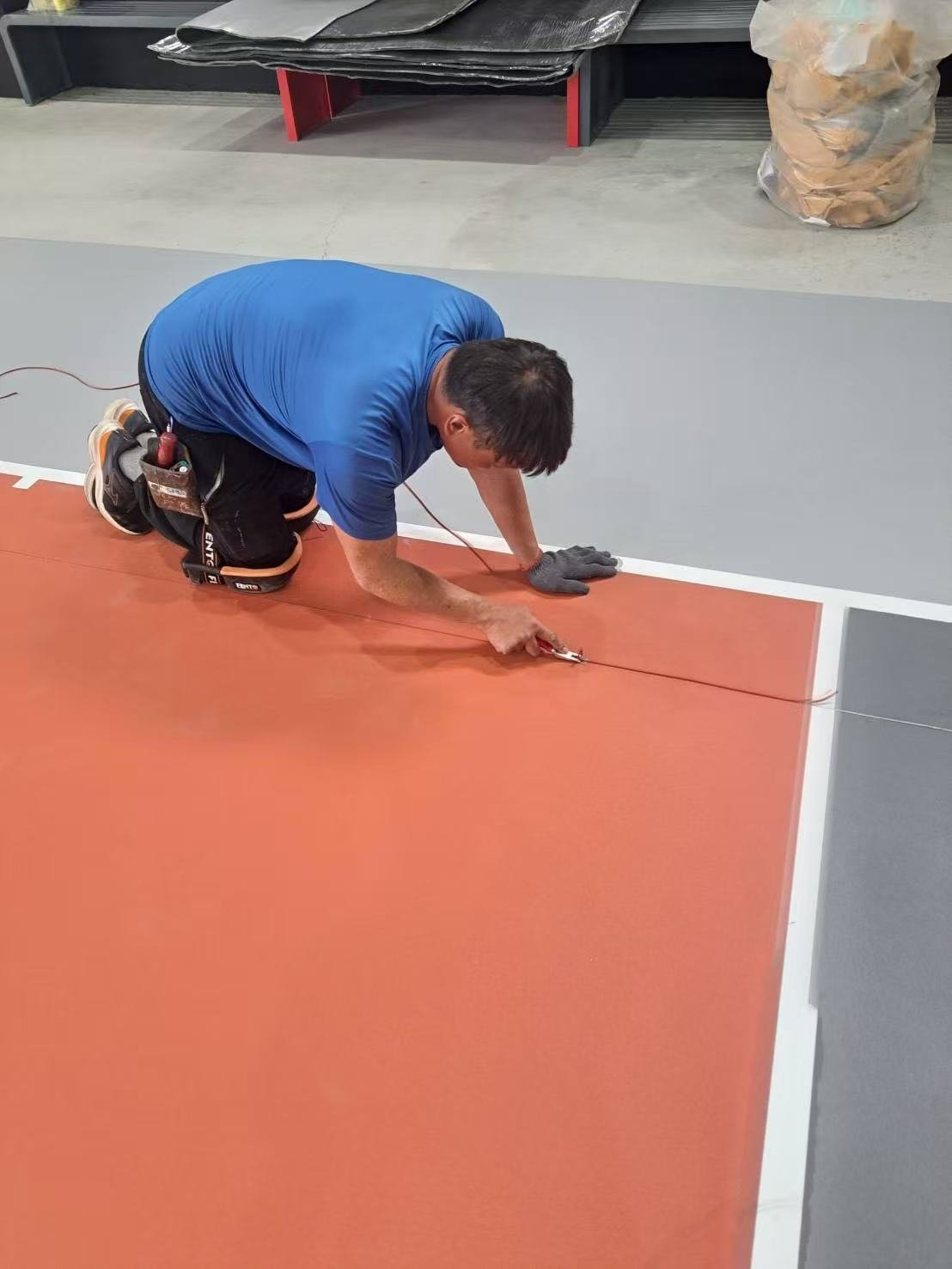
The flooring is delivered in rolls, installed over a compatible base, and removed when the space is required for another purpose. Depending on the product and installation method, the surface may be secured with suitable tape or joined using a more permanent seam-welding process.
Removable flooring can be useful for temporary courts, shared sports halls, and facilities that want to test demand before committing to a permanent conversion.
However, removal does not necessarily mean effortless handling. Roll weight, roll dimensions, installation labor, seam connections, and available storage space all affect practical usability.
Modular Interlocking Tiles
Modular tiles are another option in the pickleball flooring market. They consist of individual pieces that connect to form a playing surface.
They may be appropriate for certain indoor or outdoor applications, depending on the product design and subfloor. Before comparing them with roll-out flooring, evaluate the intended playing experience, installation requirements, surface characteristics, maintenance, and suitability for the venue.
There is no single flooring system that is best for every facility. The decision should be based on actual operating needs rather than appearance alone.
Consider Playing Performance and Player Comfort
A commercial sports facility needs a playing surface that meets the expectations of its users. Flooring performance can influence the playing experience, the types of programs a venue offers, and customer satisfaction.
Ball Bounce Consistency
Start by checking the condition of the current tennis court. Look for cracks, uneven areas, loose material, drainage problems, and other defects that could affect play or installation.
The requirements depend on the conversion method. A court intended for permanent line marking may need different preparation from one receiving roll-out flooring. For roll-out acrylic flooring, the underlying concrete, asphalt, or other approved base should be dry, clean, and level, in accordance with the product’s installation requirements.
If the surface has significant defects, address them before proceeding. A new playing surface will not automatically correct problems in the underlying base.
Traction and Player Movement
Players need a surface that supports controlled movement and changes of direction.
Surface texture, material composition, cleanliness, footwear, and installation conditions can all affect traction. A surface that is too slippery or excessively abrasive may not be appropriate for the intended use.
Ask for product-specific information and test the flooring in the conditions in which it will be used. Avoid assuming that a surface suitable for one sport or environment will automatically perform well for pickleball.
Player Comfort and Surface Construction
Some flooring systems incorporate cushioning or other features intended to influence impact response and comfort. These properties vary considerably by product.
Facility owners should compare the actual construction and available test results instead of relying solely on terms such as “professional,” “cushioned,” or “high performance.”
For venues expecting frequent use, the flooring’s durability, stability, and maintenance requirements are also important considerations.
Plan Court Layout and Facility Capacity
Leave Enough Space Around Each Court
A suitable flooring product is only one part of a successful pickleball project. The court layout must also fit the available building space and meet the needs of players and facility staff.
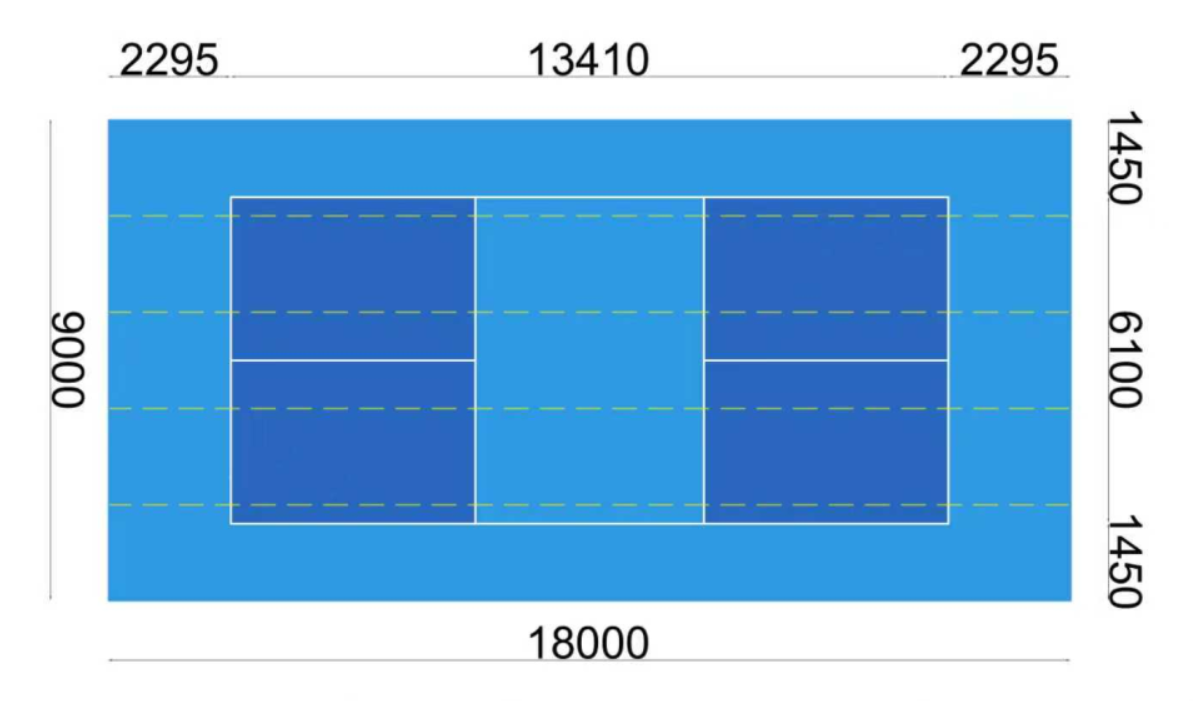
A standard pickleball playing area measures 20 feet wide by 44 feet long, including the lines of the court. However, this is the playing area, not necessarily the total space required for a usable court. Additional clearance is needed around the playing area for player movement, access, and safety.
The appropriate amount of surrounding space depends on the venue, intended level of play, applicable requirements, and available building dimensions.
Based on USA Pickleball’s recommendations, a court measuring 30 feet wide by 60 feet long (approx. 9m x 18m) offers an excellent playing experience while ensuring player safety.
Consider Multiple-Court Layouts
Facilities planning several courts should evaluate the total floor area, spacing between courts, walkways, entrances, and access to equipment storage.
Before placing an order, confirm the proposed court dimensions and the flooring supplier’s available roll sizes. A layout drawing can help identify potential issues before materials are produced or delivered.
For a multi-court installation, ask whether the supplier can provide a layout plan or review the proposed dimensions.
Check Ceiling Height and Lighting
Indoor pickleball requires adequate overhead clearance and lighting for comfortable play. Low ceilings, hanging fixtures, structural beams, and other obstructions may limit the suitability of certain areas.
Lighting should also allow players to track the ball without excessive glare. These considerations are particularly important when converting an existing gymnasium or multi-purpose hall.
Plan Installation, Removal, and Storage
Choose an Appropriate Installation Method
The fixing method depends on the flooring system, the base surface, and whether the court will be removed regularly.
For the installation of roll-out systems, suitable double-sided tape may be used for temporary or indoor installations. Other projects may require seam welding or a different approved joining method.
Confirm the recommended installation procedure with the supplier. Using an unsuitable adhesive or joining method may affect the floor underneath, the seams, or the flooring warranty.
Estimate Setup Time and Labor
The time required to install or remove a court depends on roll dimensions, total floor area, the number of seams, equipment, and the experience of the installation team.
For multi-court facilities, it is worth planning the process in advance. Consider who will handle the rolls, how the flooring will be transported across the building, and whether trained personnel or specialist tools are needed.
If the courts must be removed after every session or event, the labor involved may become an important operating cost.
Make Sure Storage Is Practical
Roll-out flooring needs suitable storage when it is not in use. Consider the weight and dimensions of each roll, the number of courts, available storage space, and the manufacturer’s handling instructions.
The flooring should be stored in accordance with the supplier’s recommendations to help protect it from deformation, damage, dirt, and unsuitable environmental conditions.
A removable court is only truly practical when the facility can manage installation, removal, and storage efficiently.
Calculate the Total Project Cost
Comparing flooring quotations based only on the price per square meter can lead to an incomplete assessment.
Can You Play Pickleball on a Tennis Court Without Changing the Original Lines?
Yes. Pickleball can be played on a suitable tennis court without permanently changing the original markings. Temporary lines and portable nets are common options for facilities that want to preserve tennis use.
The layout should still provide adequate playing space and clear boundaries. Existing tennis lines can sometimes cause confusion, so plan the markings carefully before regular play begins.
Flooring Materials and Shipping
Start by confirming the quantity of flooring required for each court and whether the quotation includes accessories or only the flooring material.
For imported products, clarify the shipping method, freight charges, port of delivery, customs clearance responsibilities, import duties, applicable taxes and local delivery cost.
A quotation based on FOB terms, for example, does not mean that international freight and destination charges are included in the quoted product price.
Installation and Subfloor Preparation
Include any necessary subfloor repairs, cleaning, leveling, installation labor, seam joining, and fixing materials in the budget.
If a facility intends to use removable flooring, consider the cost of repeated installation and removal as well as the initial setup.
Accessories, Maintenance, and Replacement
Depending on the project, additional costs may include portable nets, court equipment, storage arrangements, cleaning supplies, and replacement materials.
Ask about expected maintenance requirements, warranty coverage, and the procedure for addressing damaged sections.
The most economical option is not necessarily the one with the lowest initial price. A better comparison considers the full cost of operating the court over the period in which the facility expects to use it.
Conclusion: Choose Flooring That Fits Your Facility
Introducing pickleball can help commercial sports facilities make better use of their available space and offer another activity to members, visitors, and local communities. The right flooring choice depends on more than the material itself. Existing floor conditions, playing performance, court layout, installation requirements, storage, and total project costs all deserve careful consideration.
For facilities that need to switch between pickleball and other activities, roll-out court flooring may offer a practical alternative to a permanent installation. The key is to confirm that the product is compatible with the subfloor and suitable for the intended operating conditions.
KOLISTI provides roll-out acrylic pickleball court flooring solutions for commercial and multi-purpose sports applications. If you are planning to add pickleball courts to an indoor sports facility, school gymnasium, recreation center, or event venue, we can help you review your project requirements and identify a suitable flooring configuration.
Contact us to discuss your project:
Email: sales@kolistisports.com
Website: https://www.kolistisports.com
Share your facility location, existing floor type, planned court quantity, and intended usage so we can better understand your requirements. DM us for a free assessment or flooring samples.
Related Posts
Pickleball Flooring for Commercial Sports Facilities: What Owners Should Consider
How to Convert a Tennis Court to Pickleball Courts
Can You Put a Pickleball Court on a Driveway? A Complete Guide