
Table of Contents
Categories

KOLISTI Team

1. Introduction to Pickleball Indoor Court Sourcing
The Global Rise of Pickleball and Indoor Court Demand
Pickleball has become a global sensation currently, with large amount of players day by day. As recreational centers, gyms, and private clubs scramble to meet demand, indoor pickleball courts have become the new “must-have” facility upgrade. For brands and procurement professionals, this surge represents a golden opportunity to tap into one of the fastest-growing sports industries on the planet.
Why Sourcing Quality Courts Matters for Brand Success
In the pickleball world, the playing surface can make or break the player experience. A poorly made court not only shortens product life but also damages a brand’s reputation faster than a mis-hit dink. Global brands understand that sourcing quality courts ensures longevity, player safety, and that unmistakable “pro-level feel” athletes crave. When you supply premium courts, you’re not just selling a product—you’re selling performance and trust.
Key Challenges in Global Pickleball Court Procurement
Procurement teams often face a minefield of challenges—ranging from fluctuating material costs to inconsistencies in manufacturing standards. Add in international logistics, quality assurance hurdles, and language barriers, and you’ve got a complex sourcing equation. The key lies in partnering with reliable OEM/ODM manufacturers who understand both global standards and the unique dynamics of the pickleball industry.
2. Understanding Pickleball Indoor Court Specifications
Standard Court Dimensions and Layout Requirements
A regulation indoor pickleball court measures 20 feet wide by 44 feet long, complete with designated service zones and non-volley areas. Layout precision matters—just a few centimeters off can disrupt gameplay and compliance with tournament standards. Brands that emphasize accurate engineering win favor with facility managers and professional players alike.
Surface Materials and Performance Characteristics
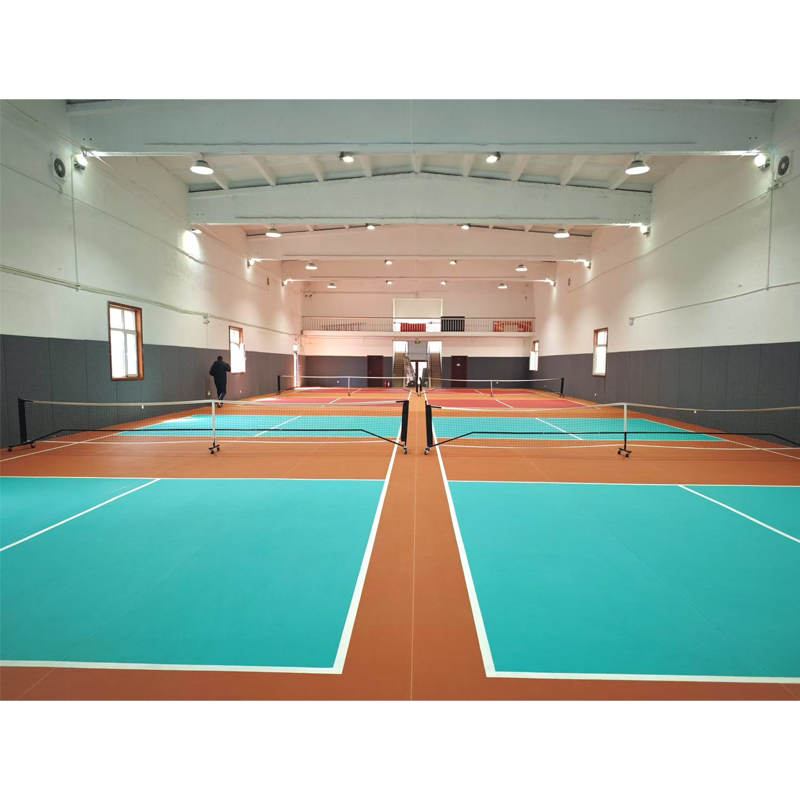
Court surfaces dictate everything from ball bounce consistency to joint impact. Materials such as polypropylene tiles, rubberized vinyl, and the emerging pre-cured acrylic pickleball court roll-out flooring are transforming the market. The pre-cured acrylic option, in particular, delivers high elasticity, low maintenance, and an ultra-smooth, fast-playing surface that rivals permanent installations.
Durability, Safety, and Compliance Considerations
Every serious buyer knows that longevity and safety go hand in hand. Courts must endure heavy foot traffic, fluctuating temperatures, and intense play without warping or cracking. Ensuring compliance with ASTM and ISO standards safeguards your brand against liability while reassuring clients they’re investing in top-tier reliability.
3. Evaluating OEM and ODM Manufacturing Options
The Difference Between OEM and ODM Partnerships
OEM (Original Equipment Manufacturer) partnerships provide production based on your brand’s specific designs, while ODM (Original Design Manufacturer) solutions offer ready-to-customize templates. OEM gives you full creative control, whereas ODM accelerates time-to-market with proven designs. Understanding these dynamics helps global buyers tailor sourcing to their brand’s development cycle.
When to Choose OEM vs. ODM for Your Brand Strategy
OEM sourcing is ideal for established brands seeking distinctive design and material customization. In contrast, ODM works wonders for startups or brands testing new market segments without extensive R&D budgets. Many brands adopt a hybrid approach—starting ODM for speed, then transitioning to OEM as their market matures.
Assessing Manufacturer Capability and Experience
Evaluating a manufacturer’s credentials requires more than a glossy brochure. Inspect factory certifications, production capacity, and track records with global clients. Seasoned suppliers often have streamlined processes for private labeling and an engineering team fluent in both design translation and performance testing.
4. Key Materials and Technologies in Court Production
Popular Flooring Materials and Their Pros and Cons
Traditional indoor courts often use polypropylene, polyurethane, or PVC flooring. Each comes with trade-offs: PVC is affordable yet prone to discoloration; polyurethane offers great shock absorption but higher costs. The latest innovation—pre-cured acrylic roll-out flooring—combines modular convenience with professional-grade playability, allowing rapid installation and superior surface consistency.
Advanced Coating and Anti-Slip Technologies
Surface coatings now feature micro-textured layers that balance traction and glide. Modern anti-slip formulations use silica-infused acrylics that resist moisture and wear. These advancements ensure players can move with agility and confidence, even under high humidity or heavy indoor lighting conditions.
Environmental and Sustainability Innovations
Green manufacturing isn’t just a buzzword anymore—it’s a market expectation. Recycled polymers, water-based coatings, and energy-efficient curing systems are leading the charge. Brands that adopt sustainable court technologies gain both eco-credibility and a competitive procurement advantage.
5. Quality Control and Product Testing Standards
Essential Performance and Safety Certifications
Top manufacturers comply with international standards such as ASTM F2772 for shock absorption and ISO 9001 for quality management. Certifications aren’t mere paperwork—they’re indicators of reliability and consistent production excellence. Global brands should insist on these credentials before signing any contract. Our pre-cured acrylic roll-out flooring is ITF (International Tennis Federation) certified.
Quality Assurance Processes During Production
A strong QA process includes raw material inspection, in-line monitoring, and post-production performance testing. Every batch of flooring should undergo bounce, slip, and tensile strength tests. Transparency in these processes assures buyers that the courts shipped are exactly as promised.
Final Inspection and Third-Party Testing Best Practices
Third-party verification serves as an unbiased quality gatekeeper. Independent labs can validate safety and performance claims before products leave the factory. Such diligence prevents brand-damaging returns or costly warranty disputes down the road.
6. Cost Factors and Pricing Strategies
How Raw Materials and Labor Affect Pricing
Material composition, global resin prices, and skilled labor availability all influence final costs. The recent popularity of pre-cured acrylic flooring has stabilized pricing by reducing material waste and installation labor. Bulk orders and long-term supply contracts often yield significant cost efficiencies.
Comparing Full Turnkey vs. Component Sourcing Models
Turnkey sourcing means the manufacturer handles everything—from design to packaging—while component sourcing allows brands to manage certain parts themselves. Turnkey models simplify logistics but may reduce flexibility. Component sourcing gives more control but demands closer coordination and in-house expertise.
Negotiation Tips for Maintaining Cost Efficiency
Effective negotiation blends transparency with foresight. Discuss lead times, payment milestones, and quality clauses upfront. Leveraging volume commitments and long-term contracts can also unlock favorable pricing while maintaining supplier loyalty.
7. Logistics and Supply Chain Management
Shipping, Packaging, and Storage Best Practices
Proper packaging ensures your flooring arrives ready for installation, not repair. Manufacturers should use reinforced pallets, moisture barriers, and climate-controlled containers. Custom labeling also simplifies warehouse handling and end-client distribution.
Managing Lead Times and Production Schedules
Timing is everything when launching a large facility rollout. Clear communication on production windows and shipping schedules avoids costly delays. Reliable partners offer digital tracking and flexible production slots for high-priority clients.
Risk Management in Global Supply Chains
From freight congestion to geopolitical shifts, risks are inevitable. Diversifying shipping routes and maintaining buffer inventory are smart strategies. Trusted Chinese OEMs often have backup logistics networks to mitigate these disruptions effectively.
8. Customization and Branding Opportunities
Incorporating Brand Identity into Court Design
Your court can be a canvas for your brand’s identity. From custom color palettes to embedded logos in surface coatings, personalization elevates visibility and prestige. The new pre-cured acrylic flooring allows for seamless color layering without compromising texture uniformity.
Value-Added Features That Enhance Brand Perception
Add-ons like shock absorption layers, LED boundary lighting, or noise-dampening undersurfaces can transform a basic court into a premium experience. Buyers who offer such features command higher margins and stronger customer loyalty.
Private Labeling and Packaging Customization
Private labeling extends beyond packaging—it’s a statement of exclusivity. Tailored branding on flooring rolls, documentation, and installation kits reinforces market presence. Smart packaging design also reduces waste while adding professional appeal.
9. Sustainability and Environmental Responsibility
Eco-Friendly Materials and Energy-Efficient Production
Leading manufacturers have embraced renewable raw materials and low-VOC coatings. Pre-cured acrylic flooring exemplifies this shift by minimizing solvent use during production. Such innovation aligns with international sustainability benchmarks without compromising performance.
Waste Reduction and Recycling Initiatives
Modern plants recycle trimming waste and repurpose manufacturing byproducts. Some even integrate take-back programs for used flooring materials. These practices not only reduce environmental impact but also enhance corporate social responsibility credentials.
Communicating Sustainability to Brand Partners
Brands that clearly articulate their green efforts build stronger trust with clients and institutions. Transparency through lifecycle reports and eco-label certifications adds measurable value. Environmental storytelling, when backed by real metrics, transforms sustainability from marketing fluff into business advantage.
10. Choosing the Right Manufacturing Partner in China
Criteria for Evaluating Reliable Chinese Manufacturers
A credible supplier should showcase transparent documentation, modern facilities, and multilingual communication channels. Look for long-standing export experience and testimonials from established global brands. Partnering with an ISO-certified plant ensures consistency in every production run.
Site Visits, Audits, and Sample Evaluations
On-site audits reveal far more than online catalogs ever could. Evaluate their raw material storage, curing process, and final inspection areas. Always request pre-shipment samples—these are the true reflection of workmanship quality.
Building Long-Term, Transparent Partnerships
The best supplier relationships are built on mutual growth, not one-off deals. Open dialogue, shared market insights, and joint R&D initiatives keep both parties competitive. Trust, once established, becomes the cornerstone of scalable brand success.
11. Future Trends in Pickleball Indoor Court Manufacturing
Smart Court Technology and IoT Integration
The future is digital—smart courts with embedded sensors are tracking every bounce and step. These IoT-enabled systems provide analytics that help players refine performance and facility owners monitor wear in real time. Integrating this tech will soon be the new baseline for high-end installations.
Modular and Portable Court System Innovations
Demand for portable courts is surging as sports centers seek flexible layouts. Modular systems, especially those built from pre-cured acrylic rolls, allow quick setup and relocation without sacrificing quality. This agility gives brands a foothold in events, pop-ups, and temporary venues worldwide.
Emerging Markets and Global Expansion Opportunities
Emerging economies in Asia, South America, and the Middle East are now embracing pickleball. These markets are ripe for entry with cost-efficient, durable indoor flooring solutions. Brands that act early can position themselves as pioneers before competitors even take the court.
12. Conclusion and Action Plan for Global Brands
Key Takeaways for Successful Court Sourcing
Success hinges on aligning quality, customization, and sustainability with dependable manufacturing partnerships. Investing in innovations like pre-cured acrylic flooring ensures your brand delivers both performance and prestige. Smart sourcing today safeguards profitability tomorrow.
Steps to Start Your Sourcing Process Efficiently
Begin by defining technical specifications and identifying certified OEM/ODM partners. Request samples, verify certifications, and negotiate clear production milestones. A well-planned sourcing roadmap eliminates delays and maximizes long-term ROI.
Long-Term Strategies for Brand Growth and Innovation
To stay ahead, brands must continually adapt—embracing new materials, eco-trends, and technological integrations. Building sustainable partnerships and reinvesting in R&D keeps your offerings fresh and future-proof. In the fast-evolving world of pickleball, those who innovate don’t just play the game—they define it.
Related Posts

Temporary vs. Permanent Pickleball Court Flooring for Sports Facilities

Pickleball Flooring for Commercial Sports Facilities: What Owners Should Consider
How to Convert a Tennis Court to Pickleball Courts