Skip to content
Table of Contents
Categories

Rambo
1. Understanding the Rise of Indoor Pickleball
Global Growth Trends and Indoor Expansion
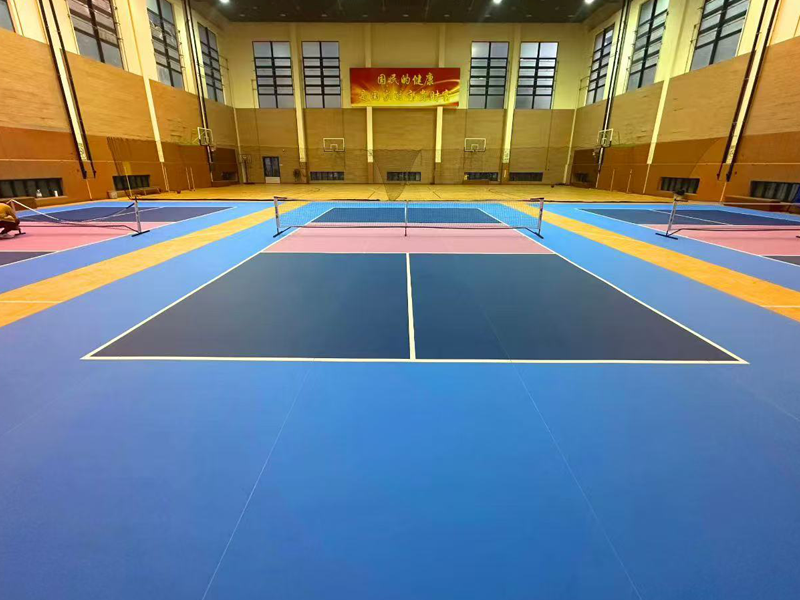
Pickleball isn’t just a backyard pastime anymore. The sport is seeing explosive global growth, with indoor facilities popping up from New York to New Delhi. As national associations push for structured leagues and international competitions, brands are scrambling to supply the surging demand for indoor-ready gear.
The Role of Urbanization and All-Weather Play
Urban centers are short on outdoor space but rich in abandoned warehouses and repurposed gyms. Indoor pickleball solves both spatial and seasonal limitations, offering year-round accessibility regardless of rain, heat, or snow. For brands, this opens doors to higher frequency of play and continuous product turnover.
Why Brands Are Investing in Indoor Gear
Retailers are catching wind that indoor gear brings in higher margins due to longer shelf life and controlled conditions. Unlike outdoor gear, indoor products face less wear and tear, which also appeals to budget-conscious clubs and schools. OEM suppliers who can deliver fast and flexibly are capturing this shift in momentum.
2. What Makes Indoor Pickleball Different from Outdoor
Ball Material and Bounce Consistency
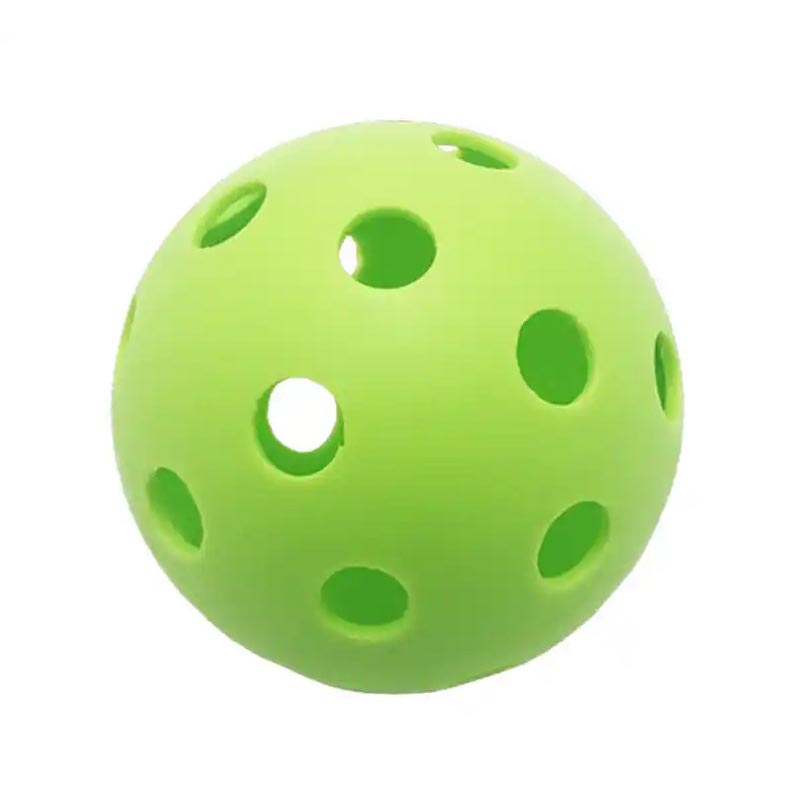
Indoor balls are crafted from softer plastics and tend to have fewer holes to create a controlled, consistent bounce. Unlike outdoor balls, they minimize skidding and offer a slightly slower pace, ideal for wooden and composite floors. Brands must ensure material specs align with surface behavior.
Paddle Design Preferences for Indoor Courts
Players indoors lean toward paddles that emphasize control over power. OEM suppliers are engineering midweight paddles with textured surfaces and honeycomb cores to achieve optimal precision. Grip designs are also tailored for sweat management under climate-controlled environments.
Noise-Reduction and Court Surface Compatibility
Some cities regulate indoor sports by decibel levels, so quieter gear is a must. Noise-reduction innovations in paddles and balls help comply with facility rules while enhancing user comfort. The OEMs that understand surface-court interactions can offer products that won’t damage floors or amplify noise.
3. Key Product Categories in Indoor Pickleball
Indoor Pickleball Paddles and Customization Options
OEMs offer a range of paddles with options for material, weight, surface finish, and edge guard design. Branding customization—from embossed logos to unique colorways—is standard practice. Targeting club-level and amateur players, brands can differentiate with mid-tier price points and superior aesthetics.
Durable Indoor Pickleballs for Consistent Performance
High-grade indoor balls need to maintain shape and bounce after hundreds of rallies. Materials like EVA blends or soft TPU ensure low rebound variance. Brands often request lab testing for compression and recovery to validate indoor durability.
Portable Indoor Pickleball Nets and Court Kits
With the flexibility of pop-up gyms and multi-use spaces, portable nets are crucial. OEM options include lightweight aluminum frames with quick-set bases and regulation dimensions. Some kits even bundle boundary lines, paddles, and balls for all-in-one packages.
4. OEM vs ODM: Choosing the Right Model for Your Brand
Definition and Differences Between OEM and ODM
OEM means the manufacturer builds your product to your exact specs. ODM, on the other hand, involves tweaking an existing design from the supplier’s catalog. The choice hinges on how differentiated your brand strategy needs to be.
When to Choose OEM for Scaling Efficiency
OEM is ideal when a brand already has strong product concepts and wants full control over design and branding. This path allows large-scale production with consistent quality. For indoor pickleball lines, OEM solutions can accelerate volume rollout without design compromise.
When ODM Fits Better for Brand Innovation
ODM models reduce development time and cost, great for brands entering new markets or launching seasonal SKUs. If your strategy values speed over originality, ODM lets you white-label proven designs. Some hybrid models even allow partial customization.
5. How OEM Manufacturing Supports Rapid Scaling
Fast Turnaround for Bulk Production
Top-tier OEMs operate on short production cycles and maintain buffer stock for popular SKUs. Automated tooling and multi-shift operations allow large orders to be filled in weeks, not months. That kind of agility is a lifeline for scaling brands.
Flexible Tooling for Multiple Product Lines
Modern OEM factories leverage CNC machining, injection molds, and modular assembly lines to pivot quickly between models. Whether it’s a paddle handle change or new ball colorway, flexible tooling trims both cost and time. That responsiveness makes line expansion smooth.
Scalable Infrastructure for Growing Demand
From raw material warehousing to finished goods inspection, scalable OEMs offer end-to-end capacity. They scale manpower and machinery without sacrificing consistency. For procurement professionals, this means long-term reliability under aggressive timelines.
6. Customization Capabilities for Brand Differentiation
Logo Printing and Branding on Paddles and Gear
Silkscreen, UV-print, laser engraving—OEMs provide multiple options for branding impact. Whether minimalist or vibrant, logo visibility is a key consumer touchpoint. Paddle bags, grips, and accessories also offer valuable real estate for branding.
Packaging Solutions Tailored to Retail or Online
Logo Printing and Branding on Paddles and Gear
Retail-ready packaging emphasizes design, while DTC boxes prioritize compactness and protection. OEMs assist with dielines, inserts, and compliance labeling. QR code-enabled packaging is trending for interactive unboxing experiences.
Color Matching and Materials Selection
Pantone-accurate color matching ensures visual consistency across SKUs. OEMs offer swatch libraries and material consultation to help hit brand tone. For premium segments, material selection includes UV coatings, carbon overlays, and faux leather trims.
7. Material Choices for Indoor Pickleball Equipment
Best Polymers for Indoor Pickleballs
TPU and PE blends dominate for their bounce stability and impact resistance. Softer compounds reduce rebound noise and floor abrasion. OEMs often fine-tune wall thickness and mold geometry for maximum performance.
Wood vs Composite vs Carbon Fiber Paddles
Wood paddles are low-cost but lack finesse. Composite options with fiberglass skins or polymer cores offer a balance of affordability and playability. Carbon fiber paddles cater to competitive players seeking edge and control.
Anti-Slip Grip Materials for Indoor Environments
Indoor sweat and polished floors call for grippy handles. OEMs use rubberized EVA, PU leather wraps, and ventilated silicone to enhance control. Textured patterns and moisture-wicking layers are added for high-comfort grip.
8. Certifications and Standards in Indoor Pickleball
Meeting USAPA and International Standards
USAPA specs dictate ball diameter, paddle dimensions, and net height. OEMs align their engineering processes to pass approval easily. International markets may have slight deviations, which require adaptive design.
Safety Compliance and Material Testing
Testing for BPA, lead, and phthalates is non-negotiable for big-box retail. OEMs provide RoHS, REACH, and ASTM test reports. Structural integrity tests are also run to ensure play safety.
Retail Market Requirements Across Regions
European markets require CE marking, while North America leans on CPSIA and FCC. OEM partners often help brands compile technical files and declarations. Failing to meet these can block entire container shipments.
9. Design and Engineering Support from OEM Suppliers
In-House R&D and Product Design Services
Competitive OEMs don’t just manufacture—they innovate. Internal R&D teams provide mockups, material testing, and performance simulations. This allows brands to co-develop exclusive features quickly.
CAD Prototyping and Performance Testing
CAD software accelerates precision during design. 3D-printed prototypes let you test grip ergonomics and surface texture before final tooling. Functional tests measure aerodynamics, impact absorption, and ball control.
Intellectual Property Protection for Designs
Trustworthy OEMs support NDAs, tooling ownership clauses, and design patents. They discourage parallel production and enforce IP safeguards. This is critical for brands building unique market identity.
10. Packaging and Fulfillment Solutions for Global Brands
Private Label Packaging for Retail Presentation
OEMs offer clamshells, blister packs, and printed boxes aligned with visual branding. Retail-ready SKUs increase shelf appeal and drive premium positioning. Low MOQ custom packaging is now widely available.
Multi-Language Labeling and Barcode Support
Regional compliance often requires translation, hazard warnings, and barcodes. OEMs integrate this at the packaging stage to streamline customs clearance. Brands save on post-production relabeling.
Drop Shipping and Warehousing Options
Some OEMs offer B2B warehousing near shipping ports or provide drop-ship services. This benefits brands operating on just-in-time models. It also reduces lead time for e-commerce launches.
11. MOQ and Lead Time Considerations
Typical Minimum Order Quantities by Product Type
MOQ varies by item: paddles often start at 500 units, balls at 1,000, and nets at 200. Mixed container programs help smaller brands start lean. OEMs may offer tiered pricing based on volume.
Lead Time from Sampling to Mass Production
Initial sampling takes 2–3 weeks, with mass production ranging 30–45 days. Rush orders can compress timelines, but may carry a surcharge. Clear specs and approvals reduce back-and-forth delays.
Strategies to Reduce Production Delays
Early forecast sharing and pre-booking raw materials helps avoid bottlenecks. Brands can also pre-approve packaging to cut turnaround. Communication is key to synchronized scaling.
12. Cost Optimization Strategies in OEM Supply Chain
Material Sourcing and Economies of Scale
OEMs buy polymers, composites, and textiles in bulk, passing savings to brands. Group sourcing also enables access to premium materials at lower cost. Cost-down initiatives are common for long-term partners.
Efficient Labor and Automation Practices
Labor-intensive steps like gluing or screen printing are being replaced with robotics. This reduces human error and speeds up cycles. Smart factories lower unit costs without hurting quality.
Shipping and Logistics Cost Control
OEMs near major ports reduce inland freight costs. Palletized packing, cubic optimization, and consolidation cut logistics spend. Brands should look for FOB-ready facilities with logistics expertise.
13. Top Markets and Sales Channels for Indoor Pickleball
Growth in North America, Europe, and Asia
The U.S. dominates in participation, but Europe and Asia are catching up fast. Japan, Germany, and South Korea are seeing school and gym adoption. OEMs with multi-market experience can advise on channel fit.
Retail vs DTC vs Distributor Models
Retail demands high packaging polish and strict labeling. DTC prioritizes fulfillment efficiency and product education. Distributors seek margin-friendly SKUs with broad appeal.
Positioning Indoor Pickleball for Niche Markets
Yoga studios, wellness resorts, and college gyms are embracing pickleball. Portable indoor kits can unlock these micro-markets. OEMs can tailor SKUs for niche bundles.
14. Trends Driving Product Innovation in Indoor Pickleball
Sustainable and Eco-Friendly Materials
Bio-based plastics and recycled composites are gaining traction. Bamboo paddles and compostable packaging are under active development. Brands seeking eco-conscious positioning should act fast.
Smart Paddles and Sensor-Enabled Products
IoT-enabled paddles track swing speed, contact angle, and reaction time. OEMs collaborate with tech firms to integrate sensors and data chips. Fitness gamification is a rising trend.
Modular Court Kits for Compact Spaces
Foldable nets, adjustable line markers, and collapsible gear bags are in demand. Urban gyms and rec centers value storage-friendly equipment. OEMs innovate with space-efficient designs.
15. Choosing the Right OEM Partner for Your Brand
Vetting Factories and Quality Control Systems
Not all OEMs are created equal. Brands should inspect factory certifications, SOPs, and audit results. Quality hinges on documentation, not just promises.
Communication and Transparency During Production
Weekly updates, order tracking portals, and sample approvals streamline progress. Transparent communication builds trust and prevents surprises. Some OEMs assign dedicated project managers to every client.
Post-Sale Support and Reorder Processes
Efficient OEMs offer reorder templates, after-sale defect reporting, and warranty handling. They track inventory levels and seasonal trends. This continuity ensures reliable scaling.
16. Case Studies: Brands That Scaled with OEM Solutions
Example of a Startup Brand Scaling to Retail
A U.S. DTC brand used OEM services to break into chain stores in under 12 months. Rapid prototyping, branded packaging, and consistent quality drove retailer trust. Their line expanded from 2 SKUs to 12 within a year.
How OEM Improved Cost Margins and Quality
A Canadian firm shifted from domestic to offshore OEM to cut COGS by 35%. Their paddle consistency improved, and returns dropped by 50%. The savings enabled larger marketing investment.
Lessons from Successful Indoor Pickleball Launches
Speed-to-market, reliable QC, and flexible MOQs were cited by several brand managers. OEM agility proved vital in test launches and seasonal replenishments. Long-term supplier alignment was the common thread across success stories.
Related Posts
Removable Sports Flooring to Reduce Total Cost
Roll Out Gym Flooring Buyers Trust for Fast Scaling

Indoor Pickleball Court Flooring That Cuts Landed Cost