 Skip to content
Table of Contents
Categories

Charles Wong
1. Various Applications of Pickleball Court
Six Application Scenarios Explained
Roll-out acrylic pickleball court flooring is designed to provide fast installation, flexible use, and professional playing performance.
Unlike traditional poured acrylic courts, this prefabricated flooring system can be installed on various flat surfaces and adapted to different usage scenarios.
Below is a general installation process, followed by six common application scenarios and recommended fixing methods.
2. General Installation Steps
Step 1. Prepare the Surface
Ensure the surface is flat, clean, and free of debris such as sand, dust, or sharp objects.
Suitable surfaces include concrete, asphalt, wood, and other stable flat bases.
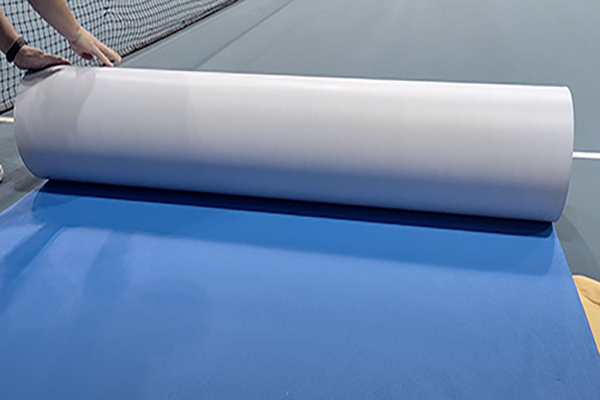
Step 2. Unroll the Flooring
Unroll the flooring rolls onto the prepared surface in sequence, making sure all edges are properly aligned.
Step 3. Fix the Seams
Depending on whether the court is temporary or permanent, seams can be secured using double-sided tape or heat welding.
Step 4. Install the Pickleball Net
Once the flooring is in place, install the pickleball net according to standard court requirements.
Step 5. Ready to Play
The court is ready for immediate use after installation. Just pick up your pickleball paddles and balls and enjoy the play!
3. Six Typical Application Scenarios
Roll-out acrylic pickleball court flooring can be used in the following six scenarios:
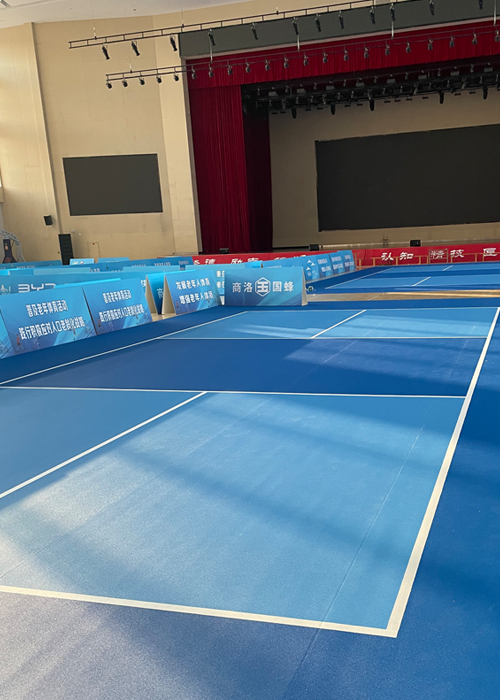
1). Indoor Temporary Use
Ideal for gyms, events, training sessions, or short-term setups.
Recommended fixing method: Double-sided tape
Easy to install and remove
No permanent impact on the existing floor
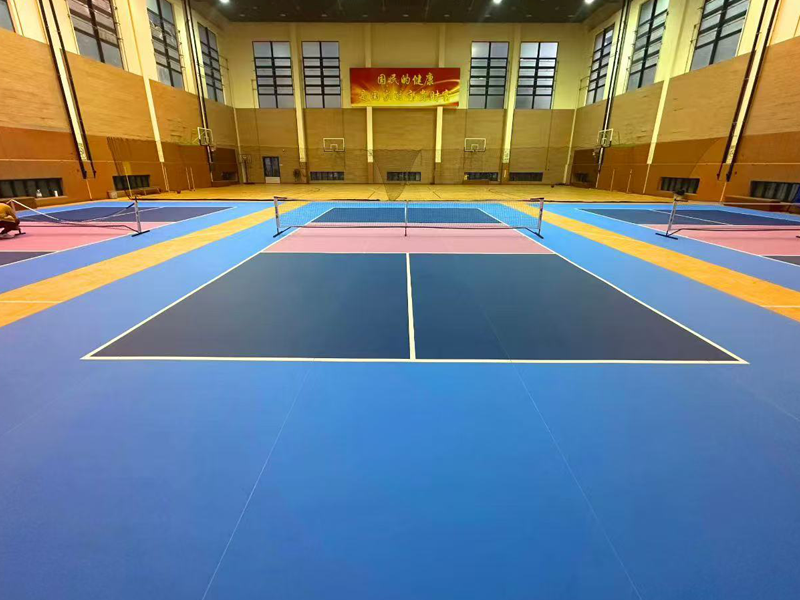
2). Indoor Permanent Use
Suitable for clubs, schools, and dedicated indoor pickleball facilities.
Recommended fixing method: Double-sided tape
Provides stable long-term performance
Allows future replacement or relocation if needed
3). Outdoor Temporary Use
Used for events, promotions, or temporary outdoor courts.
Recommended fixing method: Double-sided tape
Quick installation and removal
Best for short-term outdoor exposure
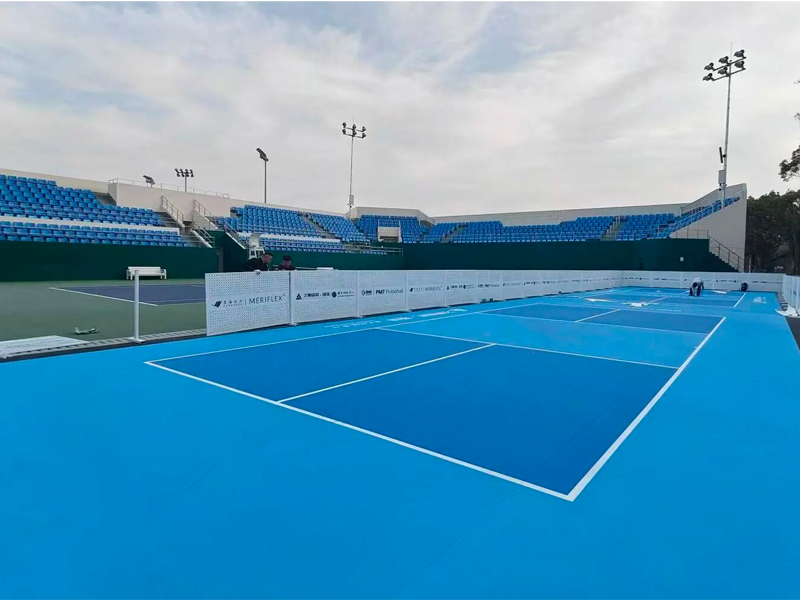
4). Outdoor Permanent Use
Designed for fully exposed outdoor courts with long-term use.
Recommended fixing method: Heat welding
Strong seam bonding for weather resistance
Highly recommended for durability and stability
5). Semi-Outdoor Temporary Use
For courts with a roof or canopy, with or without wind barriers.
Recommended fixing method: Double-sided tape
Protection from rain and direct sunlight
Flexible setup for temporary use
6). Semi-Outdoor Permanent Use
Common in covered outdoor facilities and sports complexes.
Recommended fixing method: Double-sided tape
Heat welding can be applied if additional durability is required
Balanced solution between flexibility and stability
Choosing the Right Installation Method
Double-sided tape & Heat welding
Double-sided tape is suitable for all temporary installations and most indoor or semi-outdoor permanent courts.
Heat welding is strongly recommended for fully outdoor permanent installations to ensure long-term performance.
Selecting the appropriate installation method ensures safety, durability, and optimal playing experience.
The video below shows a typical on-site welding process.
How to find a heat welding contractor?
You can contact a local sports flooring or construction company that installs badminton courts. These contractors are experienced in heat welding and can handle on-site welding work professionally.
Need Help Selecting the Right Solution?
Every project has different requirements.
If you’re planning a pickleball court project and would like guidance on installation or application scenarios, feel free to contact us.
Related Posts
Removable Sports Flooring to Reduce Total Cost
Roll Out Gym Flooring Buyers Trust for Fast Scaling

Indoor Pickleball Court Flooring That Cuts Landed Cost
The roll-out acrylic flooring system is a fantastic solution for both temporary and permanent pickleball courts. I love how it can be adapted to different surfaces, and the choice of fixing methods really helps cater to different needs, whether you’re setting up for a short event or a long-term facility.