Skip to content
Table of Contents
Categories

Charles Wong

1. Introduction to Pickleball Flooring for Scaling Brands
The Booming Pickleball Market and Facility Expansion
Pickleball isn’t just a pastime anymore—it’s a tidal wave of participation, and brands are racing to catch the crest. As this uniquely American mashup of tennis, badminton, and ping-pong picks up steam across the globe, demand for new courts is outpacing supply in both urban rec centers and suburban club builds. Flooring, often overlooked, sits at the very foundation—literally and figuratively—of how quickly and effectively a brand can scale.
Flooring’s Role in Supporting Brand Growth
A brand’s expansion trajectory is only as stable as the surface it’s built on. Smart procurement pros know that flooring directly impacts athlete satisfaction, facility longevity, and maintenance budgets. Whether it’s a community center or a pro-level training hub, the right flooring enables a consistent brand experience across all touchpoints.
Aligning Infrastructure with Strategic Brand Goals
Infrastructure isn’t just bricks and mortar—it’s a reflection of brand DNA. Scalable flooring solutions ensure that every new site launch aligns with operational goals, aesthetic expectations, and long-term fiscal planning. A streamlined flooring strategy reduces friction during expansion and protects brand equity as growth accelerates.
2. Identifying the Needs of Scaling Brands
High-Volume Usage and Multi-Site Consistency
Scaling brands aren’t building for boutique traffic—they’re designing for 12-hour play cycles, clinics, and back-to-back tournaments. Flooring must handle repeated footfall, paddle drops, and aggressive pivoting without showing fatigue. Consistency across sites is non-negotiable; customers expect the same feel in Phoenix as they do in Philadelphia.
Fast Rollouts with Minimal Downtime
Time is money, especially when court bookings and memberships are on the line. Procurement teams need flooring solutions that install swiftly, cure quickly, and let players back on the court in record time. Fast deployment means more court hours and less revenue interruption.
Balancing Aesthetics with Performance
A court’s surface is often the first brand impression a player receives—make it count. The best pickleball flooring walks the tightrope between eye-catching design and elite-level playability. Visual appeal draws players in, but traction, bounce, and comfort keep them coming back.
3. Types of Pickleball Flooring Options
Modular Polypropylene Court Tiles
These interlocking titans are the go-to for portable and semi-permanent builds. Lightweight yet durable, they snap together like LEGO bricks and bring reliable ball response with a bit of cushion. Modular tiles are ideal for brands needing rapid court setup with minimal surface prep.
Cushioned Vinyl and PVC Sheet Systems
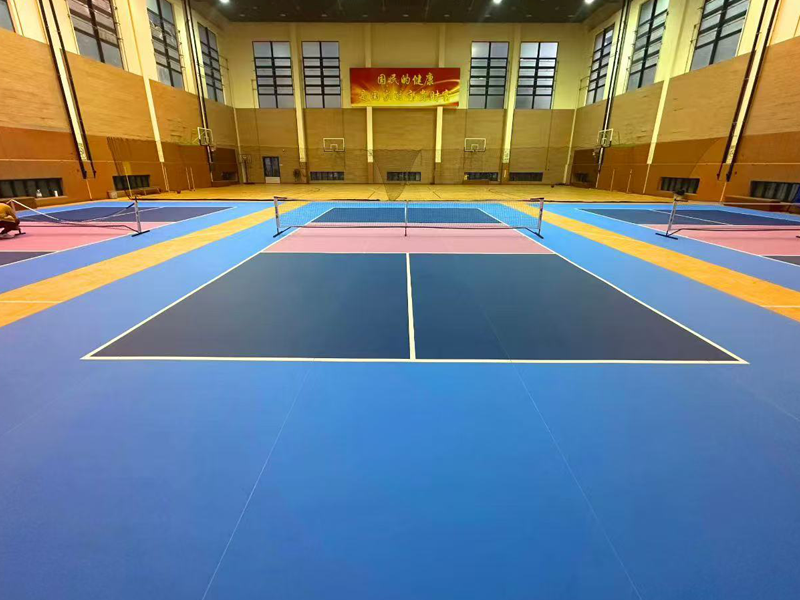
Vinyl and PVC flooring offers a seamless surface with added give—think high school gym floors but engineered for the lateral quickness of pickleball. They’re often preferred for indoor use due to their excellent shock absorption and sleek appearance. With the right backing layer, they feel plush without being sluggish.
Textured Acrylic Surfacing on Asphalt or Concrete
When permanence and outdoor exposure are priorities, nothing beats the tried-and-true acrylic-over-asphalt setup. Acrylic coatings provide color, grip, and water resistance, while the underlying slab offers unwavering support. It’s the gold standard for outdoor facilities aiming for tournament-grade specs.
4. Indoor vs Outdoor Flooring Considerations
Weather Resistance vs Climate Control Requirements
Outdoor courts need to stand up to everything from blazing sun to torrential downpours. UV stability, water runoff, and freeze-thaw durability are vital. Indoors, the focus shifts to temperature regulation, moisture barrier systems, and HVAC compatibility.
Surface Feel and Player Experience by Environment
Indoor floors often feel softer underfoot and offer a controlled bounce, while outdoor courts may have a crisper response but tougher feel. Each environment shapes player expectations and performance, so flooring must align with the location’s use-case profile. Balancing comfort and competitiveness is key.
Installation Differences and Location Logistics
Outdoor installs require site grading, weatherproof layers, and drainage planning. Indoors, it’s all about subfloor prep, moisture control, and leveling. Brands scaling globally need flooring that accommodates diverse geographies without reinventing the wheel every time.
5. Performance Attributes That Impact Player Experience
Traction, Ball Bounce, and Responsiveness
If the court feels slick, dead, or unpredictable, players will take their business elsewhere. Flooring must offer the right coefficient of friction, true bounce characteristics, and fast response time for quick changes in direction. These micro-details shape the macro perception of quality.
Cushioning for Joint Protection
Aching knees and sore backs kill return visits. Proper cushioning—through foam underlayments, spring-back layers, or engineered tile flex—reduces impact stress without dulling performance. Players may not see it, but their joints will thank you.
Sound Absorption and Acoustic Behavior
Court echo and paddle pop can turn a facility into a racket. Acoustic-friendly flooring helps dampen harsh reverberations and improves the indoor auditory experience. For upscale or multi-use centers, this subtle feature makes a world of difference.
6. Durability Requirements for High-Traffic Facilities
Wear Layer Thickness and Impact Resistance
Commercial-grade flooring needs a thick enough wear layer to endure everything from dragging benches to rolling ball carts. Impact zones, especially around the kitchen and baseline, demand reinforced materials that won’t scuff or crack under pressure. Longevity isn’t just a perk—it’s an expectation.
UV Stability and Moisture Defense
Outdoor courts are sunbaked and rain-soaked; without proper stabilization, colors fade and materials degrade. Look for UV-stabilized polymers and water-resistant sealants that hold up under year-round exposure. Moisture resistance also prevents warping, delamination, and subfloor damage indoors.
Long-Term Performance Metrics
Procurement pros should ask vendors for tested life-cycle metrics, not just lab specs. Real-world durability is best measured in games played, not years elapsed. Flooring that maintains performance over time reduces costly re-installs and unexpected service calls.
7. Customization for Brand Consistency
Logo Placement and Court Branding
Your brand should hit the player in the eyes before the first serve. From full-court center logos to end-line branding and sideline striping, modern flooring supports high-resolution graphics baked into the surface or printed via overlays. It’s form meeting function.
Custom Color Schemes to Match Brand Palettes
Don’t settle for standard blue and green if your brand pops in orange or graphite. Color customization helps unify the aesthetic across locations and communicates a polished, cohesive identity. OEM manufacturers offer color matching that maintains consistency across large orders.
Surface Textures That Enhance Perception
Some brands lean into matte finishes for a more grounded, authentic vibe, while others prefer a high-gloss sheen that screams elite performance. Tactile feel impacts user perception as much as visual cues—choose your texture like you’d choose your paddle grip.
8. Speed of Installation and Scalability
Pre-Engineered Systems for Fast Deployment
Time-crunched builds benefit from systems designed to install over a weekend. Pre-measured, pre-mapped kits with labeled sections speed up the process and reduce install errors. Scalable solutions also mean training staff once and repeating everywhere.
Portable vs Permanent Options
Brands testing new markets might want a surface they can pick up and move later. Portable court systems let you stay flexible without compromising on play quality. For flagship facilities, permanent flooring offers higher-end finishes and stability.
Streamlining Multi-Location Installations
When you’re rolling out 20 sites in 12 months, uniformity becomes a logistical godsend. Working with flooring partners who can standardize layouts, kits, and documentation reduces headaches. Efficiency scales better than reinvention.
9. Maintenance Demands and Lifecycle Costs
Daily Care and Cleaning Routines
Some flooring types just need a sweep and a mop, others demand specialty gear. Procurement officers should evaluate daily labor and chemical compatibility before selecting a material. Low-maintenance equals low overhead.
Repairability and Component Replacement
Tiles that snap out for replacement or layered surfaces that can be recoated help facilities stay game-ready with minimal downtime. Avoid flooring that requires full tear-outs for minor blemishes. Modular solutions shine here.
Total Cost of Ownership Comparison
Initial sticker price rarely tells the full story. True value lives in the long-term: maintenance frequency, cleaning costs, repair intervals, and lifespan. Smart buyers think five years down the road, not five weeks.
10. Safety, Compliance, and Certifications
Slip-Resistance Standards and Shock-Absorption Ratings
A slick court is a lawsuit waiting to happen. Ensure your flooring meets or exceeds ASTM, DIN, or EN safety standards for coefficient of friction and impact cushioning. These aren’t just specs—they’re liabilities if ignored.
ADA and Accessibility Compliance
All players deserve access. Flooring should accommodate wheelchairs, walkers, and assistive devices where applicable. Textures, slopes, and transitions must be dialed in to ensure everyone can move freely and safely.
International Product Certifications
For global brands, certifications like CE, SGS, or ISO 9001 streamline import/export logistics and compliance. Don’t let a missing cert hold up a shipment or delay a launch.
11. OEM/ODM Customization Opportunities
Private Label Packaging and Design
For brands looking to own every inch of the user experience, private labeling is a no-brainer. Flooring manufacturers offering OEM/ODM services can deliver packaging that screams your brand’s ethos—from boxes to manuals to after-sales stickers. This custom touch not only reinforces identity but elevates perceived value in competitive B2B environments.
Tailored Materials and Tooling
Sometimes, off-the-shelf won’t cut it. Brands scaling with distinct technical requirements can work hand-in-hand with manufacturers to develop proprietary materials, whether it’s a hybrid composite tile or a custom-tread surface. Exclusive tooling also allows for unique geometries, texture profiles, or underlay structures that differentiate your offering from the pack.
Co-Development of Proprietary Flooring Systems
Forward-thinking brands are partnering with flooring engineers to co-develop systems that fit specific markets, climates, or user demographics. Whether it’s optimizing for hot climates in Southeast Asia or creating ultra-quiet floors for indoor clubs in Europe, co-development means you don’t just follow trends—you set them.
12. Sustainability and Eco-Friendly Options
Recycled Content and Green Manufacturing
Eco-conscious procurement isn’t just for PR—it’s becoming policy in many regions. Flooring solutions made from post-consumer plastics or rubber not only reduce landfill dependency but often come with improved durability. Green factories with closed-loop systems and minimal waste also make your ESG reports shine a little brighter.
Low-VOC Adhesives and Finishes
Indoor air quality matters, especially in climate-controlled clubs or wellness centers. Flooring that uses low-VOC (Volatile Organic Compound) adhesives, paints, and coatings helps maintain healthy environments for players and staff alike. It also simplifies compliance with environmental health regulations around the globe.
Meeting Global Sustainability Standards
Look for flooring systems that meet or exceed standards like LEED, BREEAM, or GREENGUARD certification. These third-party badges prove your commitment to sustainability and can even provide tax or zoning benefits in some regions. Going green isn’t just good karma—it’s good business.
13. Logistics and Fulfillment for Global Rollouts
Freight Optimization and Packaging Solutions
Shipping 10,000 square feet of flooring isn’t as simple as loading a few crates. Proper cartonization, pallet stacking, and container optimization reduce shipping costs significantly. Partnering with a flooring provider that understands freight class codes and international transport requirements saves headaches and hard cash.
Coordinated Shipments and Customs Handling
Missed customs documents can delay your rollout by weeks. Established flooring manufacturers offer full documentation kits, HS codes, and often customs brokerage support to speed border transitions. For high-volume scaling, reliable logistics is just as vital as product quality.
Regional Distribution and Lead Time Management
Strategically located distribution hubs can cut lead times in half and allow for partial shipments to arrive as needed. This just-in-time model is perfect for scaling brands juggling phased installations or staggered grand openings. The fewer the delays, the faster the profits start rolling.
14. Working with a Trusted Flooring Manufacturer
Factory Audits and Production Transparency
A reputable flooring partner should welcome audits and provide clear documentation on raw materials, batch traceability, and QA/QC protocols. You don’t want surprises—only assurances that every tile or sheet coming off the line meets spec. Transparent SOPs and clean production floors signal long-term reliability.
Customer Support and Technical Guidance
Beyond the sale, real value comes in the form of technical advice, installation guides, and on-call troubleshooting. Manufacturers that offer layout design services, substrate compatibility checks, and contractor training reduce your learning curve and ensure smoother installs.
Long-Term Partnerships and Consistent Output
Scaling fast means trusting that your supply chain can keep up. Consistency in color, texture, fit, and quality across thousands of square meters ensures that your brand delivers a uniform experience across every new location. Look for flooring partners who treat your scale like their own benchmark.
15. Real-World Case Studies from Leading Brands
Multi-Site Flooring Rollouts with Quantifiable ROI
Some of the biggest pickleball franchises in the U.S. and abroad have already cracked the flooring code. One leading chain rolled out 30+ indoor courts using modular tiles and reported a 24% reduction in install time versus previous materials. The faster the floor’s down, the faster the games—and revenues—start.
Lessons from Successful Scaling Efforts
Common threads among scaling successes include standardized specs, centralized procurement, and strong supplier communication. Many brands emphasize the value of upfront planning with their flooring partners—aligning on lead times, batch testing, and pilot installations to prevent costly revisions.
How Flooring Choices Drove Brand Performance
In more than one case, flooring wasn’t just a surface—it became a selling point. Franchises offering cushioned, color-branded courts saw a measurable increase in member retention and repeat bookings. A superior play experience builds loyalty, and loyalty builds lifetime value.
16. Final Takeaways for Procurement Professionals
Key Specs to Include in RFQs
Be specific. Include surface friction coefficients, bounce height tolerances, compression set percentages, and installation timelines. The more detailed the RFQ, the more accurate the quotes—and the fewer surprises down the line.
Questions to Ask Potential Vendors
Can they supply cross-border certifications? Do they have climate-specific variants? What’s the max weekly production capacity? Can they color-match Pantone values and provide batch continuity over time? These are the kinds of questions that separate the rookies from the rainmakers.
Building Flooring Strategy into Brand Expansion Plans
Flooring isn’t just a box to check—it’s an asset. Build it into your brand’s expansion roadmap, from budgeting and vendor selection to visual identity and facility performance. With the right surface under your feet, scaling smart isn’t just possible—it’s inevitable.
Related Posts
Removable Sports Flooring to Reduce Total Cost
Roll Out Gym Flooring Buyers Trust for Fast Scaling

Indoor Pickleball Court Flooring That Cuts Landed Cost