Skip to content
Table of Contents
Categories

Charles Wong
1. Introduction to Pickleball Paddle Sets with OEM Solutions
Growing Demand in the Global Pickleball Market
Pickleball isn’t just a backyard hobby anymore—it’s gone global, folks. From retirees in Arizona to college kids in South Korea, the sport is exploding, and with it, the demand for high-quality gear. Paddle sets, in particular, have become the go-to SKU for distributors and retailers aiming to tap into this fast-paced, community-driven sport.
Importance of Paddle Sets in Brand Portfolios
Paddle sets are the cornerstone of any credible pickleball brand. They’re the entry point for beginners and the upgrade path for seasoned players—two birds, one stone. For procurement pros, offering bundled sets opens doors to broader margins and retail placement opportunities.
OEM as a Strategic Advantage for Procurement Professionals
Original Equipment Manufacturing (OEM) isn’t just a buzzword—it’s a real game-changer. For brand buyers, OEM unlocks speed, scalability, and specialization without the headache of starting from scratch. When done right, it’s like having a ghost team manufacturing your vision with precision.
2. Understanding OEM in the Sporting Goods Industry
Definition and Benefits of OEM Manufacturing
OEM refers to a model where one company manufactures a product that another sells under its own brand. In the paddle game, this means you can focus on your branding and market reach while the factory focuses on production. This setup slashes overhead, accelerates timelines, and lets you scale with agility.
Differences Between OEM and ODM Models
OEM is all about your design, your specs—executed by someone else. ODM, or Original Design Manufacturing, involves the supplier designing the product and slapping your logo on it. OEM is tailor-made; ODM is off-the-shelf. Big difference when you’re building a lasting brand.
Why OEM is Popular for Paddle Set Production
Paddles require nuanced engineering—core density, face material, weight balance—all of which demand technical chops. Most brands don’t have that kind of in-house muscle, so OEM partners fill that gap. You get high-performance gear without the overhead of owning a factory.
3. Key Components of a Pickleball Paddle Set
Paddle Specifications and Materials
A solid paddle is more than just a slab with a handle. The magic happens in the core (polymer, nomex, or aluminum) and the face (graphite, fiberglass, or carbon fiber). A good OEM partner helps fine-tune these specs to hit the sweet spot between control, power, and durability.
Accessories Included in Standard Sets
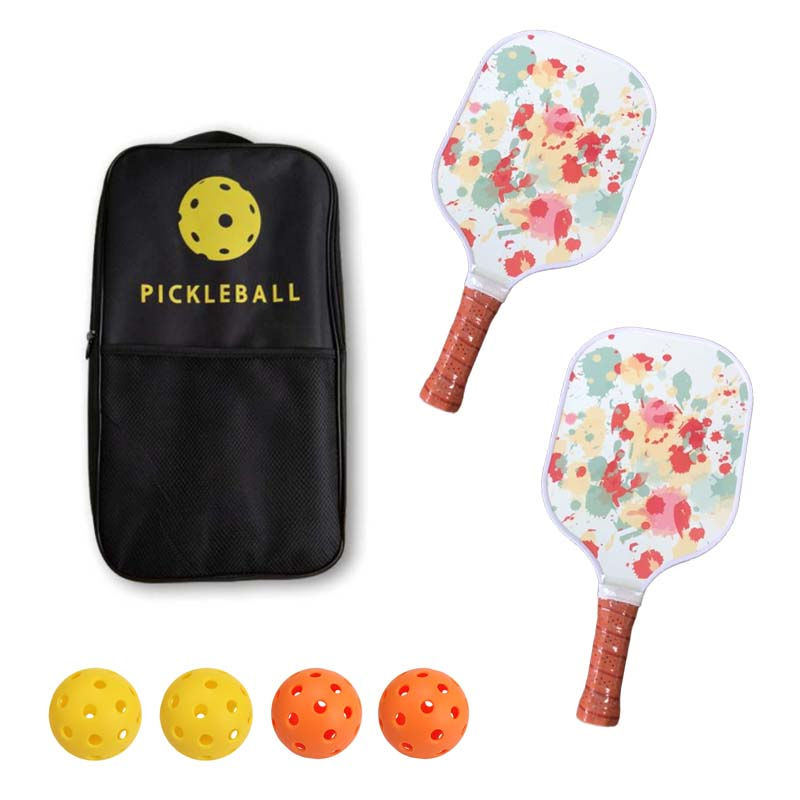
Paddle sets often come with more than just paddles—think balls, carrying cases, wristbands, and even court markers. Each item is an opportunity to elevate the brand experience. The trick is to balance functionality with price point.
Packaging and Branding Elements
First impressions matter. Packaging is your silent salesman—make it count. Custom boxes with vibrant designs and product information not only protect the gear but also build credibility on retail shelves and unboxing videos.
4. Customization Options for OEM Paddle Sets
Paddle Shape, Core, and Face Material Choices
Different players prefer different paddle characteristics—elongated shapes for reach, wide-body for control. OEM flexibility lets you mix and match shape, core density, and surface material to tailor your lineup. That level of specificity wins loyalty in a crowded market.
Handle Grip, Color, and Texture Customization
The handle is the handshake of your paddle. Customizing grip length, circumference, texture, and even color allows brands to add a unique feel. Whether it’s sweat-absorbing wraps or bold neon handles, it’s these details that drive customer delight.
Private Labeling and Logo Printing Methods
Your logo should pop—and last. OEM partners offer UV printing, heat-transfer, silkscreen, and laser engraving to meet your aesthetic and durability needs. Consistent branding across all components ensures your product line feels cohesive and premium.
5. Choosing the Right OEM Manufacturer
Evaluating Production Capabilities and Facilities
You don’t want your paddles made in someone’s garage. A reliable OEM partner will have automated lines, QC protocols, and the capacity to scale with your business. Ask for videos, virtual tours, or, better yet, hop on a plane and see for yourself.
Assessing Design and R&D Support
A real-deal OEM doesn’t just build—they innovate. Look for in-house designers, CAD teams, and prototype capabilities that can bring your ideas to life. That’s the difference between a supplier and a partner.
Quality Assurance Systems and Certifications
ISO 9001, CE, ASTM F963—if your manufacturer can’t throw these acronyms around, you’re in trouble. Strong QA means fewer returns, better reviews, and smoother logistics. Always ask to see their quality control protocols.
6. Material Innovation in OEM Paddle Manufacturing
Popular Core Materials: Polymer, Nomex, and Aluminum
Each core type brings something to the table. Polymer offers a quiet feel with strong control. Nomex is hard as nails and packs power. Aluminum is light and responsive, though less durable—ideal for entry-level players.
Surface Options: Graphite, Fiberglass, Carbon Fiber
Graphite paddles are light and nimble—great for control players. Fiberglass adds pop for aggressive play. Carbon fiber? It’s the Rolls-Royce—expensive but elite. OEM flexibility means you can offer all three under one brand umbrella.
Eco-Friendly and Sustainable Material Choices
Sustainability isn’t optional anymore—it’s a selling point. Recycled packaging, biodegradable paddles, and low-VOC coatings are not only good for the planet but also for your brand image. Progressive OEMs are already pushing green innovations.
7. Design Considerations for OEM Paddle Sets
Balancing Performance and Aesthetics
A paddle can play like a dream but if it looks like a soggy sandwich, it’s not going to sell. The ideal OEM design balances technical specs with clean lines and modern visuals. Think form meeting function in a way that excites both pros and amateurs.
Custom Artwork and Color Schemes
Art isn’t just decoration—it’s differentiation. Bold graphics, gradient finishes, and limited-edition patterns can build hype and drive impulse buys. OEMs with advanced printing tech can help bring wild ideas to life with sharp, long-lasting results.
Brand Consistency Across Different Models
A disjointed product line is a marketing nightmare. Every paddle, bag, and accessory should feel like it’s from the same family. Consistency in fonts, materials, and finishes builds trust with retailers and end users alike.
8. Packaging Solutions for OEM Paddle Sets
Custom Box Design and Printing
Custom packaging isn’t fluff—it’s function. A well-designed box protects your product and elevates perceived value. Include brand storytelling, usage tips, and QR codes for that high-end touch.
Eco-Friendly and Recyclable Packaging Options
Corrugated cardboard, soy-based inks, and compostable inserts are becoming industry standard. Retailers love it, consumers expect it, and it reduces your carbon footprint. OEMs worth their salt offer green packaging without sacrificing presentation.
Retail-Ready and eCommerce Packaging Needs
Retail and eComm packaging serve different masters. Retail requires impact and shelf appeal; eComm demands compact, protective, and easy-to-ship designs. The right OEM understands both worlds and engineers accordingly.
9. Minimum Order Quantities and Production Timelines
Typical MOQ Requirements for Paddle Sets
Most OEMs require a minimum order—usually 300 to 1,000 sets—to justify tooling and setup costs. It’s a volume game, but higher volume equals better unit pricing. Negotiate wisely and aim for scalable commitments.
Lead Time from Sampling to Mass Production
Sampling can take 2–4 weeks, and mass production often ranges from 30 to 60 days. Add in time for packaging, inspection, and shipping—it adds up. Planning ahead ensures your launch hits right on the money.
Managing Seasonal and Bulk Order Timelines
Peak season can cause bottlenecks, especially pre-summer or holiday months. Lock in your slot early and keep some wiggle room in your logistics plan. A savvy buyer works backwards from launch and builds in buffer.
10. Cost Factors in OEM Paddle Set Manufacturing
Material and Labor Cost Breakdown
Your bill of materials (BOM) includes core, face, grip, accessories, and packaging. Labor adds another layer, especially for hand-finishing and QC. Transparent breakdowns help you trim fat without gutting quality.
Tooling, Mold, and Setup Fees
Custom molds and printing plates aren’t free—they’re investments. One-time fees are common, but they pay off when amortized over large orders. OEMs may waive these for long-term clients or bulk commitments.
Shipping and Logistics Considerations
Freight costs fluctuate—fast. Ocean is cheap but slow; air is fast but pricey. DDP (Delivered Duty Paid) terms can simplify things, but make sure you understand the fine print.
11. Quality Control Processes and Standards
In-House vs Third-Party QC Inspections
In-house QC is fast and integrated. Third-party inspections are objective and often required for international buyers. The gold standard is using both—trust, but verify.
Compliance with International Standards
Paddles must meet ASTM standards in the U.S., CE in Europe, and often ISO globally. Non-compliance can kill a deal at customs or result in costly recalls. An experienced OEM builds these standards into the process.
Common Defects and How They’re Addressed
Typical issues include warped cores, loose grips, and inconsistent finishes. The best OEMs catch these during QA and implement corrective actions at the source. Don’t settle for less—defects hurt your brand more than your margin.
12. Certifications and Compliance for Export Markets
CE, ASTM, ISO, and Other Relevant Certifications
Certifications are more than red tape—they’re your passport to global markets. CE shows compliance with EU safety; ASTM proves U.S. standardization; ISO indicates global quality management. A legit OEM will have them locked and loaded.
Country-Specific Safety and Labeling Requirements
Each region has its quirks. Canada requires bilingual labeling. The EU wants REACH compliance. Australia might ask for impact test data. Your OEM should help navigate the minefield, not toss you into it.
Legal Documentation and Customs Support
From commercial invoices to HS codes, a seasoned OEM knows how to get your shipment through customs without a hitch. They’ll provide you with everything from certificates of origin to material safety sheets if needed.
13. After-Sales Support and Warranty Services
Return and Replacement Policies
Stuff happens—grips come loose, paddles crack, balls deflate. A solid OEM partner will offer clear, no-nonsense return and replacement terms that protect your bottom line and your reputation. The smoother the process, the more trust you build with your end customers.
Ongoing Technical and Product Support
After the container’s unloaded, the relationship shouldn’t stop. Whether it’s updating specs for a new version or troubleshooting a production issue, technical support is key. A responsive OEM team can be the difference between a one-time buyer and a loyal brand partner.
Building Long-Term Partnerships with Suppliers
Success in this space isn’t about placing one killer order—it’s about building reliable, repeatable systems. Treat your OEM like a partner, not a vendor. Consistent communication, feedback, and mutual respect lead to better products, better margins, and fewer sleepless nights.
14. OEM Trends in Pickleball Paddle Sets
Smart Paddles and Tech Integration
Welcome to the future—paddles with embedded sensors are already hitting the courts. They track swing speed, angle, and even spin. Forward-thinking OEMs are experimenting with Bluetooth chips and companion apps, giving brands a tech edge in a traditional market.
Biodegradable and Sustainable Paddles
Green is gold. Some manufacturers are pioneering paddles made with recycled plastics, bamboo handles, and natural resins. These eco-conscious options attract younger, values-driven consumers and open doors with eco-focused retailers.
Compact Sets for Travel and Youth Markets
Lightweight, portable, and budget-friendly sets are gaining ground—especially for family buyers and globetrotters. OEMs are designing smaller paddles, collapsible nets, and roll-up court kits for people on the go. It’s a whole new lane of opportunity.
15. Case Studies of Successful OEM Partnerships
Examples of Top Global Brands Using OEM
Some of the biggest names in sports retail rely on OEM factories to power their pickleball lines. Whether it’s a major U.S. sporting goods chain or a direct-to-consumer disruptor, the strategy is the same—leverage top-tier manufacturing while focusing on brand-building.
Unique Solutions Tailored for Niche Markets
From glow-in-the-dark paddles for night play to extra-wide sets for adaptive athletes, OEM flexibility allows brands to serve niche communities. These custom builds often have higher margins and more loyal customer bases than mainstream offerings.
Lessons Learned from Large-Scale Deployments
Scaling from 1,000 to 100,000 sets ain’t for the faint of heart. Brands that succeeded learned to build buffers into their timelines, invest in tooling early, and maintain rock-solid QC. A good OEM will grow with you—an unprepared one will buckle under the pressure.
16. Conclusion and Next Steps for Brand Buyers
Recap of OEM Benefits for Paddle Sets
OEM unlocks a trifecta: speed to market, cost efficiency, and deep customization. For buyers looking to differentiate in a red-hot pickleball market, it’s the ace up your sleeve. With the right partner, you’re not just selling gear—you’re building a brand legacy.
Tips for Selecting the Right Supplier
Vet factories like you’d vet a co-founder. Check certifications, request samples, review client references, and if possible, visit in person. A little legwork upfront saves a world of pain down the road.
Action Plan for Initiating Your Next OEM Order
Start by defining your product specs, budget, and target audience. Then request samples from 2–3 manufacturers, compare lead times, MOQs, and flexibility. Once you’ve got a match, lock in a contract and get that first PO rolling—because pickleball isn’t slowing down, and neither should you.
Related Posts
Removable Sports Flooring to Reduce Total Cost
Roll Out Gym Flooring Buyers Trust for Fast Scaling

Indoor Pickleball Court Flooring That Cuts Landed Cost