Skip to content
Table of Contents
Categories

Charles Wong
1. Introduction to Portable Pickleball Nets
Market Growth and Increased Demand
Pickleball isn’t just having a moment—it’s exploding worldwide, and the numbers back it up. As new courts pop up everywhere from rec centers to rooftop hotels, the demand for quick-deploy solutions like portable nets has skyrocketed. Procurement professionals need products that move as fast as the sport itself, and portable nets fit the bill perfectly.
Role of Portable Nets in Accessibility
Permanent courts aren’t always feasible, especially in dense urban areas or multi-use facilities. Portable pickleball nets bring flexibility to the forefront, allowing anyone to transform a parking lot or gym floor into a regulation court within minutes. That kind of accessibility is a game-changer, both for growing the sport and scaling product adoption.
Bulk Procurement in the Evolving Pickleball Space
As the sport surges across school systems, nonprofits, and commercial venues, bulk procurement of portable nets isn’t just cost-efficient—it’s strategic. Buyers who plan ahead and source in volume can outfit multiple locations, meet peak-season demand, and maintain brand consistency across markets without missing a beat.
2. Core Features of Portable Pickleball Nets
Standard Dimensions and Regulation Height
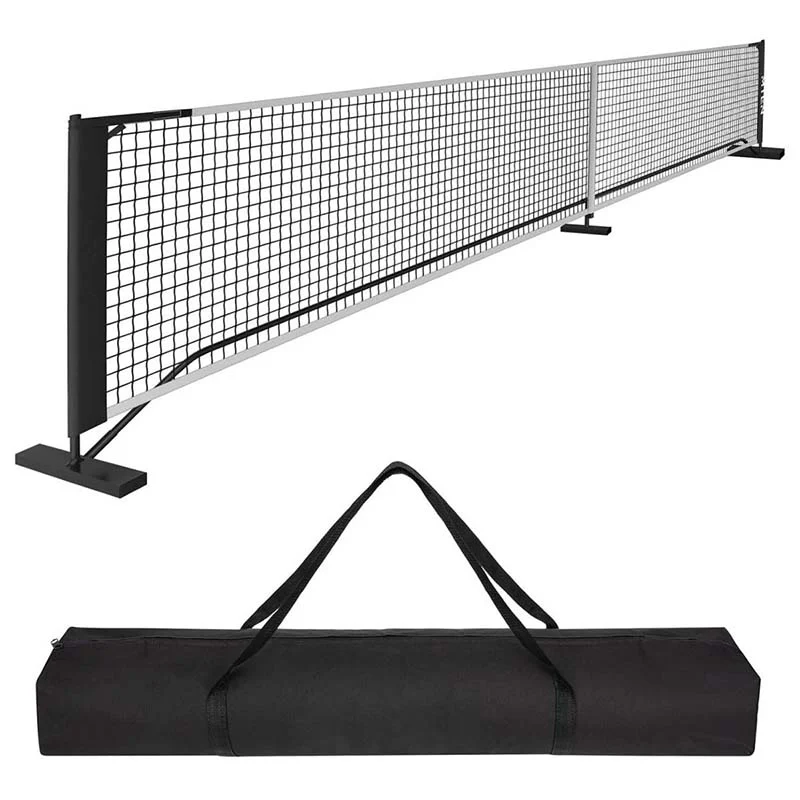
Any portable net worth its salt should comply with USA Pickleball’s specs: 22 feet wide, 36 inches high at the sidelines, and 34 inches at the center. That kind of precision matters in competitive and recreational settings alike. Consistency in dimensions builds muscle memory and credibility in your product offering.
Base Stability and Support Mechanisms
No one wants a wobbly net mid-rally. A quality base uses wide legs, low center-of-gravity tubing, or angled footings to keep things rock-solid—even on uneven asphalt. Added weight doesn’t hurt either, especially in breezy outdoor conditions where lighter builds tend to shift and sag.
Net Material and Visibility
The net itself should be a tightly woven, weather-treated mesh that resists fraying. Visibility is key—whether players are hitting dinks or drives—so net tape with contrasting trim improves tracking. Reinforced side posts help maintain tension across extended play sessions.
3. Material Composition and Build Quality
Frame Construction: Steel vs. Aluminum
Steel frames offer rugged durability and are often powder-coated to resist rust, making them ideal for high-traffic environments. Aluminum, on the other hand, delivers a lighter-weight option with easier handling and corrosion resistance, but can lack the brute strength needed in heavy-use installations. Choosing between the two comes down to use case and cost target.
Netting Materials and Weather Resistance
High-density polyethylene or polyester nets with UV treatment are the industry standard. These materials don’t just hold their own in the sun—they resist warping, mildew, and fading, even with repeated exposure to moisture. A cheap net might save money short-term, but it’ll cost you double when replacements pile up.
Fasteners, Joints, and Connection Points
The small stuff can make or break long-term satisfaction. Steel locking pins, rust-proof screws, and reinforced joints provide the kind of longevity bulk buyers should demand. Quick-latch or snap-lock designs eliminate the need for tools and reduce the likelihood of operator error during setup.
4. Ease of Assembly and Disassembly
Tool-Free Design Elements
Setup should be intuitive enough for a high schooler or volunteer to handle. Modern designs lean heavily on friction-fit joints or button locks, doing away with the need for Allen wrenches and screwdrivers. The less gear required, the more appealing it is for multi-site deployment.
Numbered or Color-Coded Parts
When you’re dealing with multiple units across various venues, intuitive assembly is non-negotiable. Numbered or color-coded tubes and net components streamline the process and reduce user confusion, minimizing training and setup time for large-scale programs.
Time-Efficient Setup Process
In bulk use scenarios—think schools, clubs, or tournament setups—time is of the essence. A well-designed net should go from bag to baseline in under five minutes. That kind of efficiency adds up fast when you’re staging a dozen courts in a morning.
5. Portability and Storage Design
Foldable or Collapsible Frame Components
Smart engineering keeps components modular and foldable, ensuring that full-size nets collapse into transport-friendly shapes. This not only saves space in shipping containers but also allows for easier storage between events or seasons.
Carry Bag Durability and Design
A flimsy carry bag will come apart at the seams—literally. Buyers should look for reinforced stitching, padded shoulder straps, and rugged zippers that can withstand repeated packing and transit. Internal sleeves or dividers help keep parts organized and prevent metal-on-metal damage.
Compact Storage Size for Transport
Whether nets are shipped cross-country or just tossed in a coach’s SUV, size matters. Smart packaging can reduce overall volume, allowing for more efficient container loading and simplified local distribution. Fold-flat or nested components are the gold standard.
6. Durability and Longevity Factors
Wear Resistance for Daily Use
Portable doesn’t mean disposable. Daily use in rec centers or schools requires abrasion-resistant netting, scuff-resistant paint, and frames that don’t warp under stress. Bulk buyers should demand lifecycle estimates based on real-world durability testing.
UV and Water Resistance
Exposure to the elements will test any product’s mettle. Look for UV-treated netting and powder-coated steel that holds up against corrosion, flaking, and mold growth. A few cents more in manufacturing can mean years more in service life.
Reinforcement in High-Stress Areas
Stress points like center supports, pole connections, and net tensioners are where failure happens first. Reinforced welds, dual-layer fabric seams, and high-tension bungee cords are indicators of a net system built to go the distance.
7. Ideal Applications for Portable Nets
Schools and Educational Programs
Pickleball is fast becoming a fixture in physical education. Portable nets let schools set up temporary courts in gyms or outdoor spaces without altering infrastructure. Their flexibility also supports inclusive programs for students of all ages and skill levels.
Clubs, Community Centers, and Rec Leagues
Not every club has a dedicated court, but every club wants to run programs. Portable nets are an affordable way to scale up capacity for lessons, ladder leagues, and round robins without making permanent alterations to shared spaces.
Events, Pop-Up Courts, and Tournaments
Tournaments, fundraisers, and branded activations benefit from gear that sets up and breaks down quickly. Portable nets are perfect for showcasing the sport at events, allowing organizers to bring pickleball to beaches, parking lots, rooftops—wherever there’s a flat surface and interest.
8. Advantages of Bulk Procurement
Cost Reductions Per Unit
Economies of scale really shine here. Buying portable nets in bulk slashes unit costs dramatically—especially when ordering direct from a factory. Larger runs also allow suppliers to amortize tooling or branding costs more effectively.
Simplified Supply for Large Programs
Whether you’re running a national youth initiative or outfitting 200 clubs, bulk orders reduce logistical headaches. A single shipment can fulfill dozens of locations with uniform equipment, making training, maintenance, and inventory tracking far simpler.
Uniform Product Quality Across Markets
When nets come from a single batch, quality control is consistent. That means less variance in build, performance, and durability—which, in turn, reduces the number of product complaints or mismatched parts during field use.
9. Customization and Branding Options
Logo Printing on Nets or Bags
Custom logos on net tape or carry bags give every setup a professional polish. OEM suppliers can handle silk screening or heat transfer methods that are both durable and eye-catching.
Custom Color Themes or Finishes
Color coordination matters—especially for programs with brand guidelines. Nets can be produced in custom colorways to match event aesthetics or organizational branding, helping you stand out on the court and in photos.
Private Label Packaging Design
Retail-ready or event-specific packaging can include custom graphics, multilingual instructions, QR codes, and co-branded inserts. It’s a simple way to elevate the unboxing experience and strengthen customer perception.
10. MOQ and Production Lead Times
Minimum Order Quantities by Spec
Some suppliers require MOQs as low as 100–200 units depending on spec complexity. Higher-end customizations may raise thresholds slightly, but strong factory relationships often allow for negotiation.
Lead Time Planning for Peak Seasons
Production cycles can tighten as the global pickleball calendar fills up. For spring and summer demand, smart buyers place orders 60–90 days in advance to avoid bottlenecks. Working off forecasts helps suppliers ramp efficiently.
Flexibility for Phased Deliveries
Bulk doesn’t have to mean all at once. Strategic procurement teams can negotiate phased shipments to align with regional rollouts, warehouse capacity, or pilot program timelines—keeping operations smooth and storage manageable.
11. Certifications and Compliance Standards
USA Pickleball Guidelines Adherence
For institutional buyers, compliance with official gameplay specs is non-negotiable. Look for nets that are USA Pickleball regulation certified or testable, especially when planning league use or resale.
Material Safety Certifications (REACH, CPSIA)
Many buyers—especially in the US and EU—require REACH or CPSIA-compliant materials to ensure safety and chemical limits. These certifications safeguard both the user and your brand reputation.
Export Documentation and Customs Readiness
Smooth border crossings start with proper paperwork. Net suppliers should be able to furnish commercial invoices, packing lists, certificates of origin, and HS codes without delay.
12. Shipping and Packaging Logistics
Flat-Pack or Pre-Assembled Configurations
Depending on destination and storage capacity, buyers may prefer flat-pack configurations for space savings or pre-assembled kits for convenience. Either way, packaging efficiency affects both freight cost and carbon footprint.
Optimizing Container Space in Bulk
Thoughtful nesting and palletization can squeeze more units per container, lowering the per-unit shipping rate. This kind of optimization is crucial for large-scale international orders.
International Freight Options and Terms
From FOB China ports to DDP delivery, a reliable supplier should offer multiple shipping options. Air freight may be available for urgent orders, but sea freight remains the king for cost-efficiency in high-volume programs.
13. Pricing Strategies and Cost Structures
Tiered Pricing by Volume
Most suppliers offer pricing tiers based on order volume. Stepping up from 200 to 500 units, for example, could unlock significant cost reductions—sometimes as much as 15–20% per unit.
Factors Affecting Total Landed Cost
Tariffs, freight, packaging upgrades, and customization all factor into your bottom line. Always request an all-in quote (EXW vs. DDP) to accurately compare vendors.
Custom Spec Impact on Unit Pricing
Unique colors, logo printing, or reinforced materials may add pennies per unit—or several dollars—depending on complexity. Understanding where costs come from allows for smarter spec decisions that protect margins.
14. Supplier Evaluation Criteria
OEM/ODM Capabilities and Past Performance
Suppliers should have documented experience producing similar net systems at scale. Request case studies or product samples to verify claims and evaluate their technical capabilities.
Factory Quality Control and Audits
On-site quality audits, ISO certifications, and established QC protocols are non-negotiables. Especially for bulk orders, you need confidence that every unit meets spec before it ships.
Communication and Responsiveness in Development
A vendor that ghosts during prototyping will be a liability in production. Fast, clear communication is a key differentiator in the sourcing game, especially when troubleshooting logistics or design issues.
15. Maintenance, Support, and Warranty
Cleaning and Upkeep Best Practices
Portable nets are low-maintenance, but not no-maintenance. Encourage clients to wipe down components post-use, store nets dry, and inspect them monthly for wear or warping.
Handling of Part Replacements
Suppliers should offer spare parts or repair kits for legs, net straps, or carry bags. This reduces waste and supports long-term use—ideal for institutional buyers managing equipment fleets.
Warranty Coverage and Service Timelines
Look for at least a one-year warranty on manufacturer defects. Clear service timelines and a responsive support team reinforce product confidence and protect the buyer’s investment.
16. Conclusion and Key Takeaways for Procurement
Summary of Product and Procurement Advantages
Portable pickleball nets offer unmatched flexibility, cost-efficiency, and scalability—making them the ideal solution for growing programs. From durable frames to branded finishes, today’s OEM options tick all the right boxes.
How Portable Nets Enable Scalable Growth
With the ability to deploy courts quickly and affordably, organizations can expand participation, test markets, and engage new communities—without the permanence of fixed installations.
Final Checklist for Sourcing Decisions
When evaluating a portable net supplier, confirm spec compliance, QC capabilities, production lead time, customization flexibility, and post-sale support. Get these right, and you’re set up for a procurement win.
Related Posts
Removable Sports Flooring to Reduce Total Cost
Roll Out Gym Flooring Buyers Trust for Fast Scaling

Indoor Pickleball Court Flooring That Cuts Landed Cost