Skip to content
Table of Contents
Categories

Charles Wong
Removable Sports Flooring to Reduce Total Cost
Why Surface Material Decisions Directly Impact Pickleball Brand Reputation
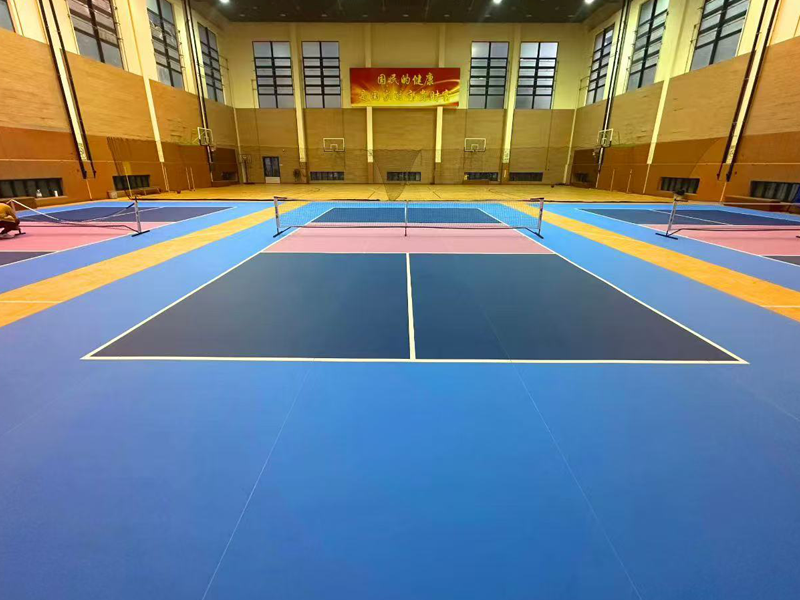
Pickleball players are not shy about what they want. They expect consistent bounce, reliable traction, and a surface that feels dialed in from the first serve to match point. In commercial facilities where players pay court fees or memberships, the tolerance for inconsistency is practically nonexistent. A removable sports flooring system must replicate the performance characteristics of professional courts, otherwise players will notice immediately—and they will talk about it. In today’s tightly networked pickleball communities, word-of-mouth spreads faster than a topspin dink.
How Surface Failures Damage Long-Term Brand Trust
Surface issues are never subtle. Dead bounce zones, seam separation, or early wear patterns send a clear signal that something was compromised during specification or sourcing. Once players begin to question the surface, they inevitably question the brand behind it. In competitive metropolitan markets like Dallas, Toronto, or Vancouver, that erosion of trust can translate into declining bookings and diminished loyalty. Fixing reputation costs far more than specifying the right removable flooring system from the outset.
Why Procurement Choices Matter More Than Short-Term Savings
Procurement decisions determine whether a project becomes a cost-saving asset or a recurring financial liability. Saving a few dollars per square meter might look attractive on a spreadsheet, but if that choice increases maintenance cycles or accelerates replacement timelines, the total cost of ownership balloons quickly. Removable sports flooring, particularly well-engineered roll-out acrylic systems, allows brands to control lifecycle expenditure rather than simply upfront expense. Smart operators know that long-term predictability beats short-term savings every single time.
Overview of Common Pickleball Court Surface Materials in the Market
Modular Tiles, PVC Mats, Rubber Rolls, and Acrylic Systems
The sports flooring market is crowded with options, each promising performance and efficiency. Modular polypropylene tiles are popular for outdoor multi-use spaces, while PVC mats and rubber rolls emphasize cushioning and temporary applications. Traditional acrylic coatings remain a staple for permanent outdoor courts. Emerging roll-out acrylic flooring systems combine factory-controlled precision with removable functionality, bridging the gap between permanence and portability.
Typical Positioning and Use Cases for Each Material Type
Tiles are often selected for community parks and recreational settings where drainage and quick installation are priorities. PVC and rubber systems frequently appear in gymnasiums or converted warehouse spaces seeking additional shock absorption. Permanent acrylic coatings dominate municipal outdoor courts across North America. Roll-out acrylic flooring, however, is increasingly specified for indoor facilities, seasonal courts, tournaments, and multi-location brands requiring standardized performance. Each category has its niche, but not all align with professional pickleball expectations.
Strengths and Weaknesses from a Brand Perspective
Modular tiles install quickly but introduce joint lines that may subtly alter ball response over time. PVC and rubber options provide comfort but can dampen bounce consistency, creating a softer-than-expected playing experience. On-site acrylic coatings deliver excellent performance but depend heavily on environmental conditions and installer skill. Roll-out acrylic systems manufactured under controlled conditions offer consistent texture and performance while remaining removable. For brands targeting serious players in the United States and Canada, that consistency is a powerful differentiator.
Performance Factors Beyond Marketing Claims
Ball Bounce Consistency and Surface Responsiveness
Pickleball is a precision sport; the polymer ball reacts instantly to surface elasticity and micro-texture. A surface that absorbs too much energy results in sluggish rebounds, while excessive rigidity can make play erratic. High-quality roll-out acrylic removable flooring is engineered to deliver calibrated firmness, preserving authentic bounce characteristics similar to tournament courts. This balance ensures that competitive players feel right at home, even in temporary or indoor installations. Consistency is not just desirable—it is fundamental.
Traction, Slip Resistance, and Player Safety Metrics
Traction must strike a delicate equilibrium. Too slick and players risk lateral slips; too aggressive and joint strain increases. Advanced acrylic surfaces incorporate micro-embossed textures that optimize the coefficient of friction without compromising fluid movement. For facility operators in litigious markets, reliable slip resistance is not optional—it is risk management. Removable sports flooring that meets safety benchmarks protects both athletes and operators.
Visual Finish and Professional Court Appearance
First impressions matter, especially in premium facilities. Uniform color saturation, crisp line markings, and consistent surface sheen create a professional atmosphere that reinforces brand credibility. Factory-produced roll-out acrylic flooring ensures chromatic consistency across multiple batches, enabling identical installations from New York to Calgary. When every location looks tournament-ready, brand identity strengthens. Players notice quality even before they take their first swing.
Durability and Lifecycle Cost Considerations
Wear Resistance Under Daily Play and Event Usage
Commercial courts endure relentless pivoting, foot drag, and equipment movement. Inferior materials quickly show scuffing, surface delamination, or fading. High-performance roll-out acrylic flooring incorporates abrasion-resistant top layers that withstand intense usage cycles. This resilience extends service life and delays resurfacing needs. In high-traffic North American facilities, durability directly correlates with profitability.
Maintenance Frequency and Operational Burden
Maintenance is where hidden costs accumulate. Some systems demand frequent panel adjustments or resurfacing layers, increasing labor expenses. Removable acrylic flooring typically requires straightforward cleaning protocols—sweeping and damp mopping suffice in most cases. Reduced maintenance complexity translates to fewer staffing hours and lower operational strain. Over time, these efficiencies compound into meaningful savings.
Replacement Risk and Total Project ROI Impact
Eventually, every surface reaches the end of its service life. Permanent systems often require invasive grinding and reapplication, leading to prolonged downtime. Removable roll-out flooring offers a more strategic approach, allowing selective section replacement without dismantling entire courts. This modular yet seamless characteristic protects cash flow and shortens disruption periods. Strong ROI emerges from minimizing catastrophic replacement events.
Installation Risk and Operational Practicality
Subfloor Tolerance and Installation Complexity
Subfloor irregularities can undermine many flooring systems. Liquid-applied coatings demand pristine substrates, often increasing preparation costs. Roll-out acrylic removable flooring tolerates minor imperfections while maintaining performance integrity, provided the base remains structurally sound. This adaptability reduces pre-installation remediation expenses. For operators converting warehouses or gymnasiums, that flexibility is invaluable.
Downtime, Rework Risk, and Scheduling Challenges
Time is revenue in commercial pickleball. Extended curing periods or weather delays associated with traditional coatings can derail launch timelines. Factory-manufactured roll-out systems arrive ready for deployment, minimizing environmental dependency. Faster installation reduces downtime and accelerates revenue generation. When expansion schedules are tight, predictable installation windows become a competitive advantage.
Portability, Storage, and Repeat Deployment Needs
Temporary tournaments, leased spaces, and seasonal conversions demand agility. Fixed coatings simply cannot adapt to evolving spatial requirements. Roll-out acrylic flooring can be removed, stored properly, and redeployed as business models shift. This portability empowers operators to test new markets without irreversible capital commitment. Flexibility reduces strategic risk while preserving performance standards.
Quality Control and Manufacturing Consistency
Quality Control and Manufacturing Consistency
Performance begins at the molecular level. Variations in resin composition or filler dispersion can subtly alter surface behavior. Factory-controlled roll-out acrylic flooring ensures formulation stability through standardized production protocols. Consistent chemical composition translates into predictable mechanical performance. For brands scaling across North America, uniformity safeguards reputation.
Thickness Control, Surface Uniformity, and Curing Standards
Thickness inconsistencies can affect bounce and durability. On-site applications are susceptible to human error and environmental fluctuation. Precision manufacturing equipment maintains calibrated thickness tolerances across entire rolls. Controlled curing environments further stabilize material properties. The result is a uniform playing field with dependable characteristics.
Inspection Records, Traceability, and Supplier Accountability
Transparent documentation reinforces procurement confidence. Detailed inspection reports and traceability records allow operators to validate material claims. Reliable manufacturers maintain rigorous quality assurance processes that extend beyond marketing brochures. Supplier accountability builds long-term trust. In professional environments, documentation is not bureaucracy—it is protection.
Why Roll-Out Acrylic Surfaces Are Increasingly Preferred for Pickleball
Factory-Controlled Production Versus On-Site Variability
Weather, humidity, and installer expertise heavily influence on-site coatings. Factory-controlled roll-out production eliminates these variables, ensuring repeatable outcomes. Each roll undergoes standardized manufacturing conditions that stabilize texture and thickness. This predictability minimizes installation surprises. For multi-location brands, that reliability is indispensable.
Consistent Performance for Indoor, Temporary, and Multi-Location Courts
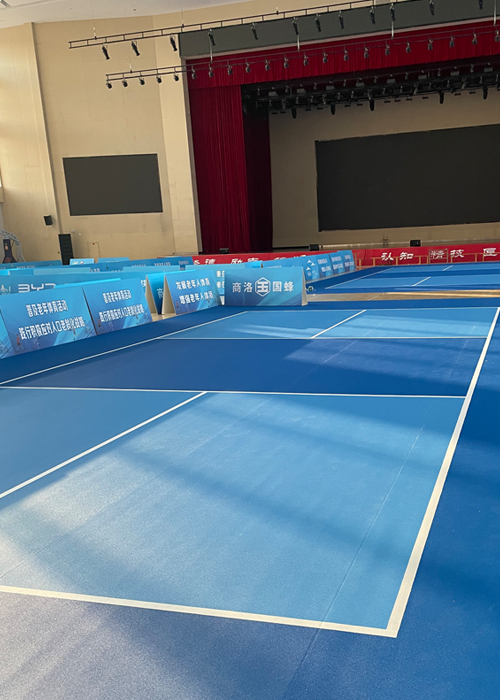
Indoor facilities across the United States and Canada increasingly demand surfaces that mimic outdoor tournament play without permanent construction. Roll-out acrylic flooring achieves authentic bounce characteristics in climate-controlled spaces. Standardized performance across locations strengthens brand identity. Players experience the same quality regardless of venue. That uniformity fosters loyalty.
Reduced Brand Risk Compared to Modular Surface Systems
Joint-heavy tile systems may introduce micro-variations in playability over time. Seamless roll-out acrylic surfaces reduce these potential inconsistencies. Fewer structural discontinuities equate to smoother ball travel and enhanced aesthetic cohesion. For brands positioning themselves at the premium end of the market, minimizing variability protects perception. Risk reduction ultimately translates into financial stability.
Building a Surface Material Selection Framework That Protects Your Brand
Defining Non-Negotiable Performance Benchmarks
Every procurement strategy should begin with clear performance criteria. Bounce consistency, slip resistance, abrasion tolerance, and visual durability must be quantified. Establishing benchmarks prevents reactive decision-making driven solely by price fluctuations. Removable sports flooring should meet these thresholds without compromise. Discipline in specification yields resilience in operation.
Matching Material Choice to Brand Positioning and Client Type
Premium training academies require tournament-caliber surfaces, while community centers may prioritize adaptability. Aligning flooring selection with brand identity ensures strategic coherence. Roll-out acrylic removable flooring provides a compelling option for operators seeking professional performance with logistical flexibility. In competitive North American markets, surface quality reinforces brand narrative. Choosing wisely ensures alignment between promise and delivery.
Working with Suppliers as Long-Term Partners, Not Vendors
The most successful projects are collaborative rather than transactional. A committed manufacturing partner offers technical guidance, quality transparency, and ongoing support. Long-term relationships foster innovation and continuous improvement. Removable sports flooring is not a one-off purchase; it is part of an evolving operational strategy. Strong partnerships transform surface selection from a cost center into a competitive advantage.
Related Posts
Removable Sports Flooring to Reduce Total Cost
Roll Out Gym Flooring Buyers Trust for Fast Scaling

Indoor Pickleball Court Flooring That Cuts Landed Cost