Table of Contents
Categories

KOLISTI Team
What Is a Roll Up Pickleball Court?
Definition of a Roll Up Pickleball Court
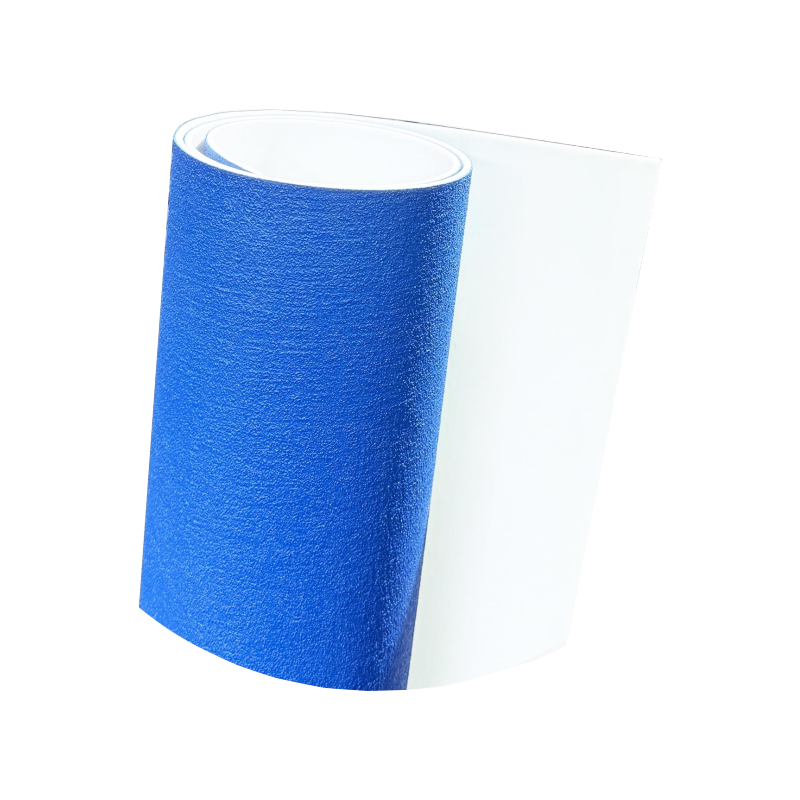
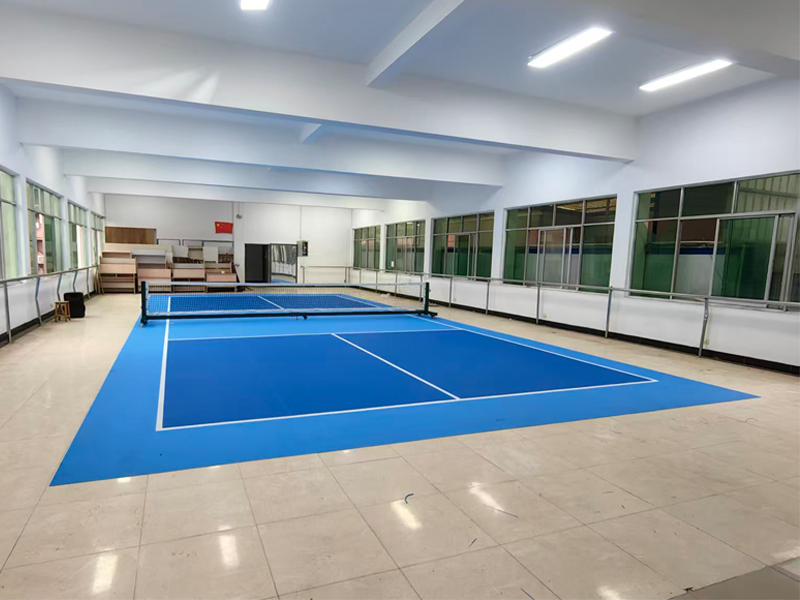
A roll up pickleball court is a portable flooring system designed to create a temporary pickleball playing surface over existing ground or indoor flooring. It is typically manufactured in flexible sections or rolls that can be deployed, flattened, secured, and used within a short setup window. Think of it as transforming almost any open space into a playable court without breaking ground or pouring concrete.
How It Differs from Permanent Pickleball Court Flooring
While a standard modular tile might suffice for a quiet cul-de-sac, it will quickly “crash and burn” under the relentless kinetic load of a high-traffic commercial hub. Professional grade flooring is distinguished by its chemical composition and structural integrity, specifically engineered to mitigate the “dead spots” that plague inferior residential alternatives. Commercial environments subject flooring to a constant barrage of lateral shear forces and high-velocity pivots that would cause thinner, non-industrial materials to delaminate or lose their coefficient of friction. Investing in top-tier surfacing ensures that the court remains a “true” playing field, preventing the catastrophic failure of material bonds that leads to costly downtime and potential litigation.
Why Roll Up Courts Are Growing in Popularity
The demand is exploding because pickleball is showing up everywhere—convention centers, hotel courtyards, schools, parking lots, and temporary tournament venues. Not every location has the luxury of constructing dedicated courts, but almost every location has unused space waiting to be activated. Roll it out, tape it down, drop in the net, and you’re in business.
Key Features of Roll Up Pickleball Court Flooring
Portable and Easy-to-Store Court Surface Design
Portability is the heartbeat of a roll up court system. Most surfaces are engineered to roll compactly for storage while remaining dimensionally stable once deployed. For operators handling multiple venues or recurring events, that portability dramatically reduces logistical friction.
Surface Materials, Texture, and Ball Response
Surface performance matters—players notice it immediately. A quality roll up court delivers dependable traction underfoot, predictable bounce, and enough surface texture to avoid slipperiness without feeling abrasive. That balance between grip and playability is where smart engineering earns its stripes.
Court Dimensions, Line Markings, and Modular Layout Options
Most roll up courts are manufactured to official pickleball dimensions, complete with permanent game lines integrated into the surface. Some systems also offer modular sizing or branding customization for event-specific layouts. That gives organizers flexibility while still preserving a professional court presentation.
Main Benefits of Using a Roll Up Pickleball Court
Fast Installation and Removal for Temporary Events
Speed matters when venue access windows are tight. Roll up systems can often be installed far faster than modular tile or painted court alternatives, which makes them ideal for short-term events or weekend tournaments. When the last point is played, the surface comes up just as fast.
Cost-Effective Alternative to Permanent Court Construction
Permanent court construction involves surfacing work, labor crews, coatings, drainage planning, and long lead times. Roll up systems eliminate much of that capital expenditure while still delivering a regulation-size playing experience. For many organizations, that lower barrier to entry makes pickleball expansion possible much sooner.
Flexible Use Across Multiple Locations and Venues
One court can serve many venues across the calendar year. It may be used at a sports expo in spring, a club tournament in summer, and a hotel activation in fall. That kind of multi-site adaptability gives owners a stronger return on investment.
Best Applications for Roll Up Pickleball Courts
Sports Events, Tournaments, and Brand Activations
Roll up courts are tailor-made for events. They help organizers create instant playable space while presenting a polished professional appearance for sponsors, spectators, and media coverage. If pickleball is the headline attraction, the flooring needs to look sharp—and play sharp.
Clubs, Recreation Centers, and Multi-Sport Facilities
Multi-use facilities often need to switch between basketball, volleyball, fitness programming, and pickleball with minimal downtime. Roll up court systems make that transition remarkably efficient. Instead of redesigning the venue permanently, operators gain flexibility without sacrificing floor utility.
Schools, Hotels, Parking Lots, and Pop-Up Pickleball Venues
This is where things get fun. Empty gymnasium? Hotel rooftop? Trade show floor? Parking lot behind a brewery? A roll up court can transform overlooked real estate into a playable pickleball destination almost overnight.
How to Install a Roll Up Pickleball Court
Preparing the Ground or Existing Floor Surface
Before installation, the underlying surface should be clean, dry, and level. Dust, moisture, or debris can affect adhesion and overall court performance. Good prep work may not be glamorous, but it makes all the difference.
Step-by-Step Roll Out and Court Setup Process
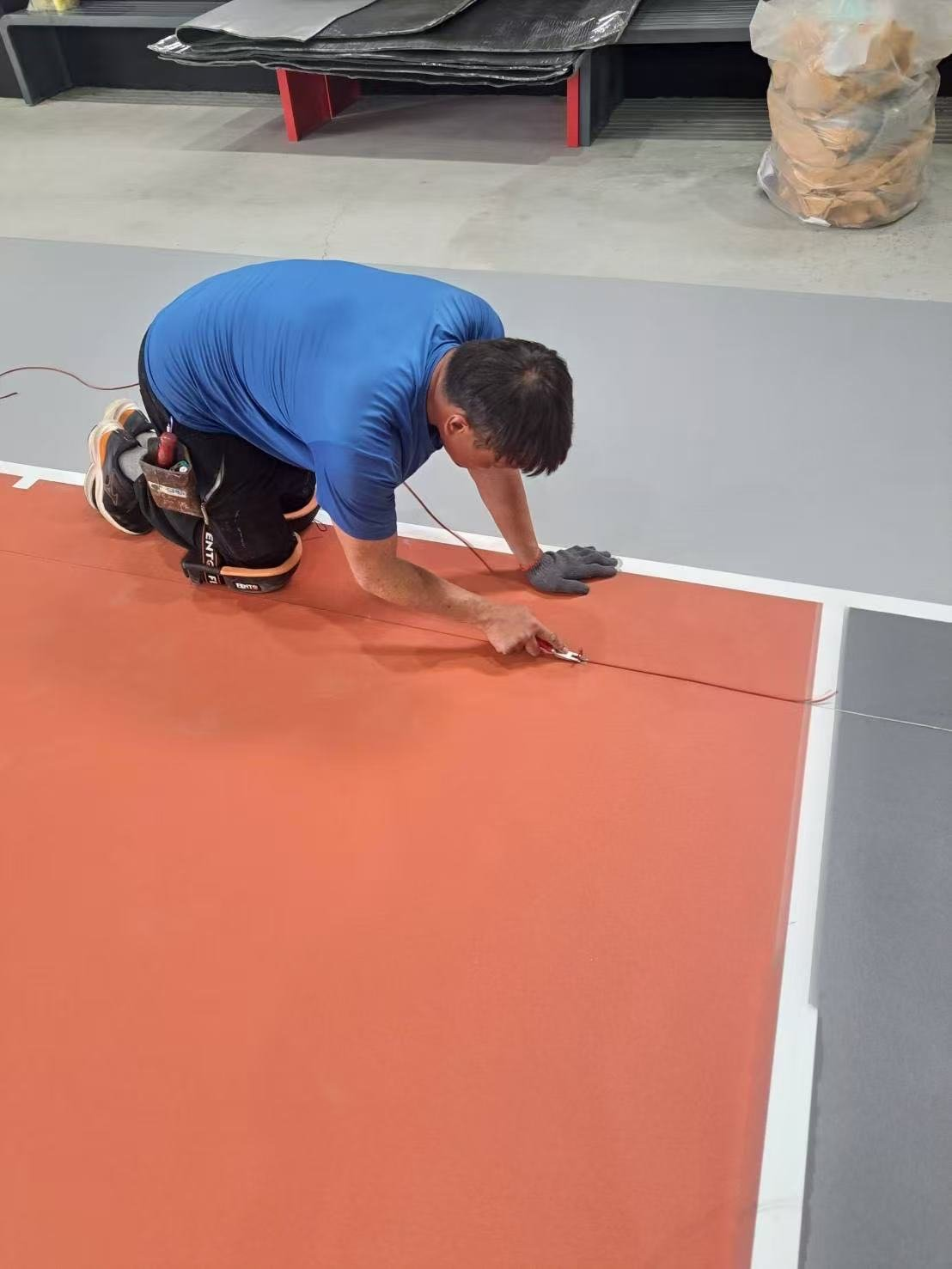
The flooring is typically positioned, unrolled, aligned, flattened, and secured according to layout markings. Nets and perimeter accessories are added after the surface settles into place. Once complete, the space goes from empty floor to match-ready court surprisingly fast.
Storage, Transport, and Reuse After Play
After the event, the court is rolled back up, packed, and moved into storage or onto transport. Quality systems are built for repeated handling without losing structural integrity. That repeat usability is one of their strongest commercial advantages.
Roll Up Pickleball Court vs Permanent Court: Which One Is Better?
Portability and Convenience Comparison
Permanent courts win in permanence. Roll up courts win in flexibility. If mobility and quick deployment matter, roll up flooring has the upper hand by a mile.
Performance, Durability, and Player Experience
Permanent courts may offer slightly more traditional feel under competitive conditions, but premium portable surfaces have closed that gap significantly. Players increasingly expect proper ball response, clean footing, and comfortable movement regardless of venue type. If the system is built well, most players settle in after a few rallies.
Budget, Maintenance, and Long-Term Value
Permanent courts require maintenance over time—resurfacing, crack repair, repainting, and weather exposure management. Roll up courts avoid much of that while adding portability and repeated reuse across events. For many facilities, the economics are extremely compelling.
How to Choose the Right Roll Up Pickleball Court
Selecting the Right Surface Material and Thickness
Material composition influences durability, portability, cushioning, and performance. Thickness should be chosen based on frequency of use, player expectations, and transport requirements. The sweet spot is where playability and practicality meet.
Indoor vs Outdoor Use Considerations
Indoor courts often prioritize consistent traction and easy storage, while outdoor applications require more resilience against temperature variation and environmental exposure. Climate matters more than many buyers expect. A court in Arizona behaves differently than one in Ontario.
Evaluating Durability, Safety, and Custom Branding Options
Facility managers increasingly look beyond performance alone. Shock absorption, slip resistance, wear resistance, and printed logos all factor into the decision. A branded court also adds visual punch for events and sponsor photography.
What to Consider Before Buying a Roll Up Pickleball Court
Venue Size, Usage Frequency, and Player Needs
Start with the basics—how much space is available, how often the court will be used, and who will play on it. Recreational players, clubs, and tournament athletes may all expect different performance characteristics. Matching the flooring to the user profile is the smart play.
Shipping, Storage Requirements, and Logistics Planning
Storage space matters. Shipping method matters. Handling frequency matters. The best court on paper becomes a headache fast if logistics are overlooked.
Choosing a Reliable Roll Up Pickleball Court Supplier or Manufacturer
Not all suppliers build to the same standard. Look for consistent surface quality, responsive communication, proven production capacity, and real project experience. A dependable manufacturing partner makes the entire process smoother from first inquiry to final installation.
Final Checklist for Facility Managers Selecting Their 2026 Pickleball Flooring System
Before placing an order, run through a practical checklist. Confirm your venue dimensions, intended use frequency, storage space, transport method, player level, and installation timeline. Review safety performance, traction, portability, and surface consistency carefully.
Then ask the big question: Will this system make operations easier while still giving players a great experience? If the answer is yes, you’re on the right track. Because at the end of the day, the best pickleball flooring doesn’t just fill a space—it creates one players want to come back to again and again.
Related Posts
How to Convert a Tennis Court to Pickleball Courts
Can You Put a Pickleball Court on a Driveway? A Complete Guide
How to Install Roll-Out Pickleball Court Flooring