Table of Contents
Categories

KOLISTI Team
Introduction: The Evolving Standards of Professional Pickleball in 2026
The shift from recreational play to high-performance commercial standards in sports centers
The rapid metamorphosis of pickleball from a backyard pastime into a global athletic phenomenon has necessitated a radical reassessment of facility infrastructure. In 2026, the era of “making do” with repurposed tennis courts or erratic concrete slabs has officially ended, replaced by a demand for high-performance commercial surfaces that can withstand the “bangers” and “dinkers” alike. Modern sports centers are now essentially laboratories of athletic performance where every millisecond of footwork and every decibel of ball impact is scrutinized by a more discerning player base. This institutionalization of the sport means that facility operators must prioritize surfaces that offer consistent kinetic feedback and elite-level durability to stay relevant in an increasingly crowded marketplace.
Defining "Professional Grade": Why residential solutions fail in commercial high-traffic environments
While a standard modular tile might suffice for a quiet cul-de-sac, it will quickly “crash and burn” under the relentless kinetic load of a high-traffic commercial hub. Professional grade flooring is distinguished by its chemical composition and structural integrity, specifically engineered to mitigate the “dead spots” that plague inferior residential alternatives. Commercial environments subject flooring to a constant barrage of lateral shear forces and high-velocity pivots that would cause thinner, non-industrial materials to delaminate or lose their coefficient of friction. Investing in top-tier surfacing ensures that the court remains a “true” playing field, preventing the catastrophic failure of material bonds that leads to costly downtime and potential litigation.
Overview of the 2026 market landscape and the importance of facility-specific flooring
The 2026 market landscape is characterized by a “quality arms race” where the caliber of the court surface is the primary differentiator for premium club memberships. Facility-specific flooring is no longer a luxury but a fundamental requirement for operators who aim to secure long-term capital appreciation and operational stability. With the influx of institutional investment into “pickle-plexes,” the industry has moved toward bespoke surfacing solutions that address unique environmental variables such as ambient humidity and acoustic resonance. Failing to select a surface tailored to the specific volumetric and ergonomic needs of a professional center is a “unforced error” that can undermine the entire commercial viability of a project.
Critical Material Specifications: Why 3mm Acrylic is the Industry Benchmark
Analyzing the shock absorption and player safety benefits of professional-grade 3mm thickness
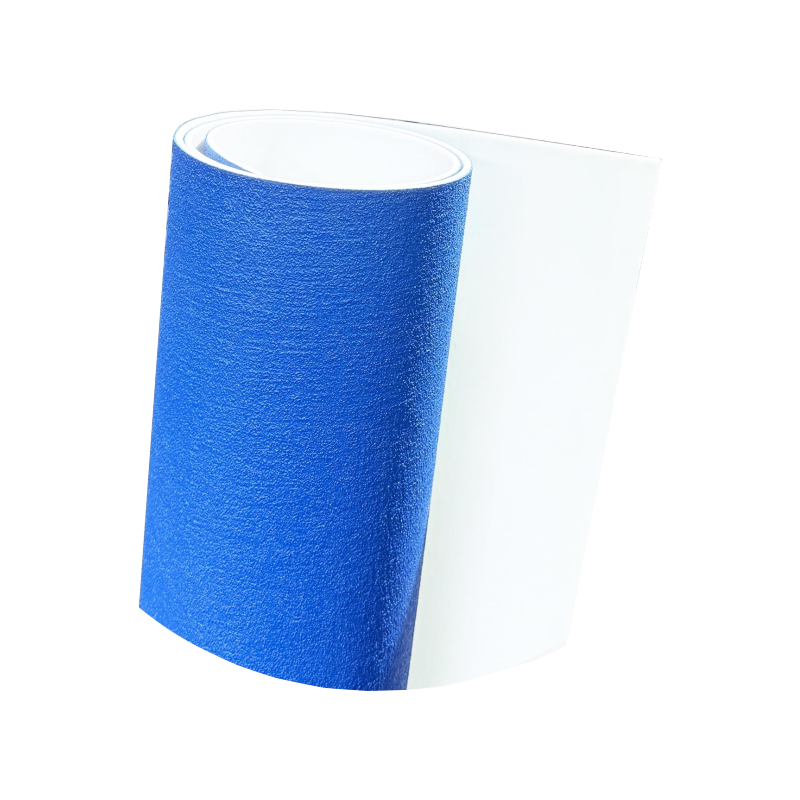
The adoption of 3mm acrylic thickness has become the non-negotiable benchmark for safeguarding the “engine rooms” of the human body—the knees and ankles. This specific depth provides a sophisticated balance of energy return and impact attenuation, ensuring that players can sustain prolonged “marathon sessions” without the debilitating joint fatigue associated with harder surfaces. By incorporating a cushioned sub-layer within this 3mm profile, the floor acts as a biological shield, absorbing the peak vertical forces of aggressive overhead slams. In the professional circuit, this thickness is the “sweet spot” that prevents the surface from feeling either too “mushy” or unforgivingly rigid, maintaining high-speed playability while prioritizing orthopedic longevity.
The science of surface texture: Balancing traction with player comfort for professional long-term use
Achieving the perfect “bite” on a pickleball court requires a meticulous calibration of silica sand aggregates within the acrylic emulsion to ensure players don’t “slip and slide” during a high-stakes kitchen rally. The science of surface texture involves managing the micro-topography of the floor to provide optimal grip for lateral lunges while remaining smooth enough to prevent abrasive “skin-burn” during accidental falls. A professionally engineered texture ensures that the ball maintains its intended trajectory and spin-rate without being prematurely slowed by excessive friction. This equilibrium is crucial for maintaining the “fast and furious” pace of the modern game while ensuring that the physical toll on the athletes remains within manageable limits.
Durability and resilience: How high-density acrylic resists wear under constant commercial rotation
High-density acrylic formulations are the “iron man” of the flooring world, specifically designed to resist the existential threat of “polishing” caused by thousands of hours of foot traffic. In a commercial center where courts are occupied eighteen hours a day, the molecular cross-linking of the acrylic must be robust enough to prevent the surface from becoming dangerously slick. This resilience ensures that the court’s aesthetic and functional properties do not degrade after a single season of heavy use, preserving the “pop” of the ball and the safety of the players. Choosing a high-resilience material is the best way to avoid the “sophomore slump” of a facility where the courts look worn and tired just as the business is hitting its stride.
Performance Certifications and Global Standards for Sports Centers
The necessity of ITF (International Tennis Federation) certifications for commercial credibility
In the global marketplace, holding an ITF certification is the “gold standard” that separates professional vendors from “fly-by-night” operations that lack rigorous technical testing. This certification provides an objective guarantee that the surface meets stringent international criteria for quality, safety, and performance consistency. For a sports center, this credential is a powerful marketing tool that reassures tournament organizers and professional athletes that the venue is capable of hosting sanctioned events. Without this “seal of approval,” a facility risks being sidelined by the major leagues, limiting its revenue potential to purely recreational play.
Ensuring consistency in ball bounce and pace ratings for competitive tournament play
Consistency is the “holy grail” of professional pickleball; players demand that a ball behaves exactly the same way in the third hour as it did in the first minute. Performance certifications verify that the “pace rating” of the court remains within a specific deviation, preventing “dead zones” that can ruin the integrity of a professional match. A certified surface ensures that the vertical rebound of the ball is uniform across the entire 20×44-foot area, eliminating the frustration of unpredictable bounces. This technical reliability allows athletes to focus entirely on their strategy and “dink” game, knowing that the floor is a stable partner in their performance.
Safety and environmental compliance: Sourcing materials that meet international VOC and health standards
The 2026 regulatory environment places a massive emphasis on indoor air quality, making it imperative to source materials that are “green” and free from toxic off-gassing. Sourcing materials that comply with international Volatile Organic Compound (VOC) standards ensures that your facility remains a healthy environment for both staff and players. High-quality acrylics are now formulated to be virtually odorless and non-toxic, preventing the “chemical haze” that often plagued older, solvent-based sports flooring. Prioritizing health compliance is not just about following the law; it’s about building a brand that cares for its community and avoids the “toxic” reputation of a poorly ventilated, low-quality gym.
Strategic Installation: From Permanent Solutions to Roll-Out Flexibility
Evaluating the ROI of permanent court surfacing versus modular roll-out pickleball mats
Choosing between a permanent liquid-applied surface and a high-end roll-out mat is a “crunch time” decision that dictates the operational flexibility of your entire facility. Permanent surfaces offer the ultimate “locked-in” feel and professional aesthetics, often resulting in higher member satisfaction for dedicated pickleball hubs. Conversely, modular roll-out mats provide a rapid Return on Investment (ROI) due to their lower installation complexity and the ability to be relocated if the business pivots. Smart operators often utilize a “hybrid” approach, installing permanent courts for their core membership while using roll-out solutions to handle “overflow” during peak seasonal demand.
The "Mobile Center" advantage: Utilizing portable courts to maximize multi-purpose facility space
The ability to transform a basketball court or convention hall into a professional pickleball arena in a matter of hours is a “game changer” for multi-purpose venues. Portable courts allow facility managers to “flex” their space based on real-time booking data, ensuring that no square foot of the building is ever “resting on its laurels.” These high-performance mats are engineered to lay flat without the “tripping hazards” associated with cheaper temporary solutions, maintaining a professional look and feel. This versatility allows sports centers to host massive regional tournaments one weekend and return to trade show or basketball configurations by Monday morning, maximizing revenue per square foot.
Professional installation techniques to ensure seamless joints and surface uniformity
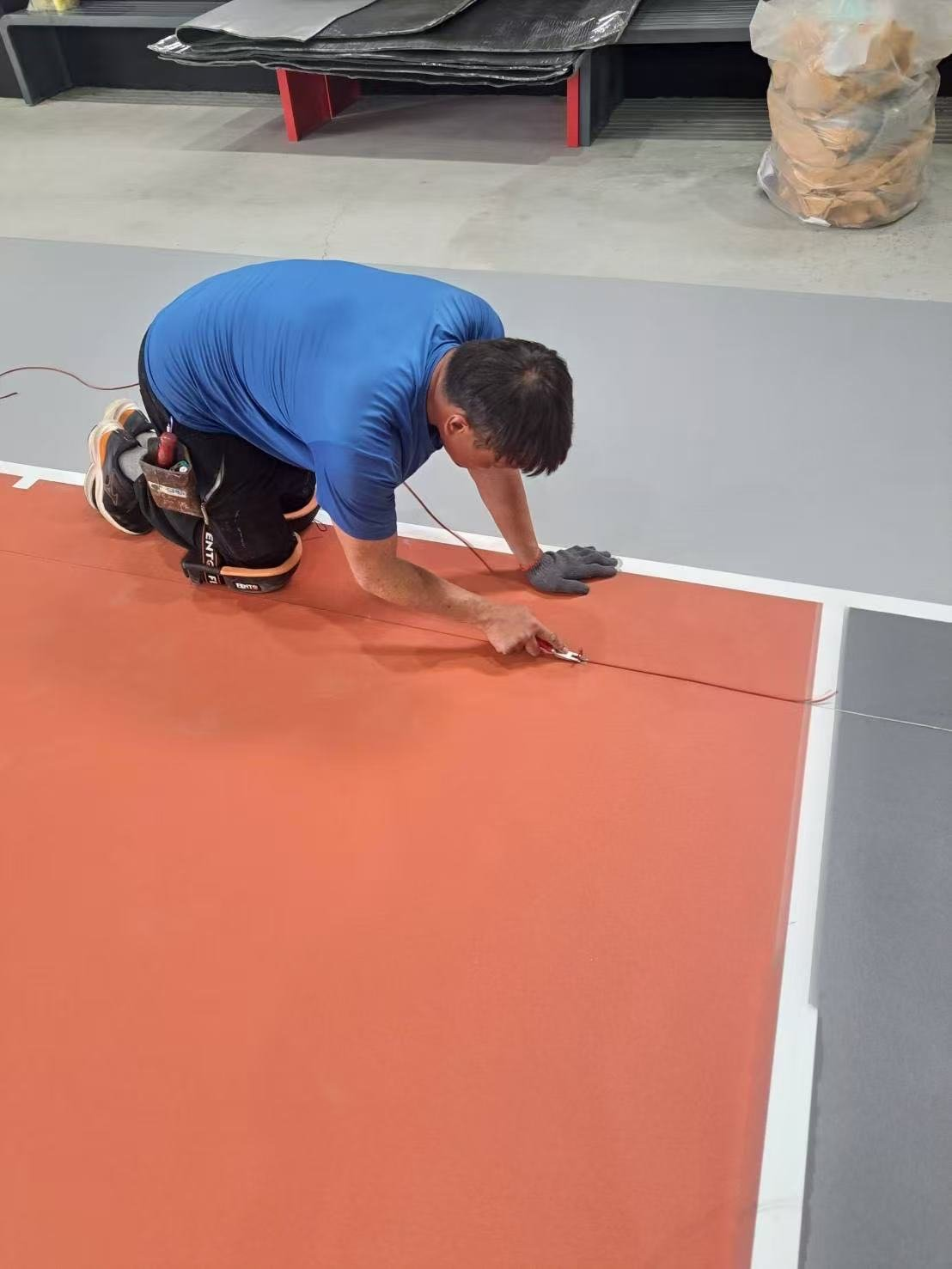
Even the most expensive material in the world will “tank” if the installation is handled by amateurs who don’t understand sub-floor preparation. Professional installation involves rigorous moisture testing and the application of specialized vapor barriers to prevent the “bubbling” that can destroy an acrylic finish. Ensuring that joints are seamless and that the “keying” of the surface is consistent requires a level of craftsmanship that only experienced contractors can provide. A “pro-level” install guarantees that there are no microscopic ridges or depressions that could cause a ball to deviate or a player to stumble during a high-velocity lateral move.
Aesthetic Branding and Customization for Sports Facilities
Leveraging custom color palettes to align with club branding and professional aesthetics
In 2026, the visual identity of a club is just as important as the grit on the court; your floor should “pop” the moment a visitor walks through the door. Utilizing custom color palettes allows facility owners to move beyond standard “tennis green” and embrace sophisticated hues that reflect the unique energy of the KOLISTI brand. Whether you opt for a sleek “midnight blue” or a vibrant “sunset orange,” the goal is to create an immersive environment that feels premium and exclusive. High-quality pigments are UV-resistant, ensuring that your branding remains “fresh” and doesn’t fade into a dull, uninspiring shadow of its former self over time.
Optimizing court visibility: Utilizing high-contrast color combinations for professional broadcasting and photography
With the rise of social media “influencers” and televised tournaments, your court needs to be “camera-ready” at all times to maximize organic marketing. High-contrast color combinations—such as a dark “kitchen” area against a lighter “out-of-bounds” zone—significantly improve ball visibility for both players and digital sensors. This optical optimization ensures that your facility looks “spectacular” on a smartphone screen, encouraging members to share their “highlight reels” on platforms like Instagram and TikTok. A court that is designed for the lens is a court that markets itself, providing a continuous stream of free publicity for the center.
Integrating permanent court markings and professional boundary lines for a premium finish
Forget the “taped-on” lines that peel off during the first humid week of summer; professional centers require permanent, crisp boundary markings that are integrated into the acrylic layers. These lines must be applied with mathematical precision to ensure they are perfectly “square,” preventing the “wonky” look that can immediately devalue a high-end facility. Utilizing high-solids line paint ensures that the markings remain bright and visible even after years of aggressive foot pivots and power washes. This attention to detail is the “cherry on top” that signals to your members that they are playing in a world-class venue where no corners were cut.
Financial Planning: Budgeting for Long-Term Performance and ROI
Comparing initial procurement costs versus the total cost of ownership over a five-year period
Many facility managers “choke” when they see the upfront price of premium acrylic, but the real “money ball” is the total cost of ownership over several years. A “cheap” floor might save you 30% today, but if it requires a full resurface in eighteen months, you are actually “hemorrhaging” cash in the long run. Professional-grade materials offer a much longer “service life,” reducing the frequency of maintenance cycles and the associated labor costs. When you factor in the “opportunity cost” of closing your courts for repairs, the premium option almost always emerges as the most fiscally responsible choice for a 200 million RMB revenue target.
Scaling for growth: Cost-effective strategies for adding multiple courts to expanding sports centers.
If your business is “crushing it” and you need to expand, having a scalable flooring strategy is essential to prevent your growth from “flatlining.” Purchasing materials in bulk for multiple courts can significantly reduce your per-square-foot cost, allowing you to build out a “mega-center” with better margins. It is wise to work with a partner who can provide consistent material batches, ensuring that your new courts “match” the existing ones perfectly in both color and playability. This foresight prevents your facility from looking like a “patchwork quilt” of different brands and ages, maintaining the cohesive professional image that high-paying members expect.
Evaluating the impact of high-quality flooring on membership retention and premium court rental fees
In the “subscription economy” of 2026, membership retention is the “lifeblood” of your sports center, and nothing drives people away faster than a “beaten-up” floor. Players will gladly pay a “premium” rental fee for a court that feels fast, safe, and looks like a professional stadium. High-quality surfacing reduces the risk of player injury, which is a major factor in keeping your “silver sneakers” and competitive athletes coming back week after week. By investing in the floor, you are essentially investing in a “retention engine” that stabilizes your monthly recurring revenue and justifies a higher price point in a competitive market.
The 2026 Maintenance Framework: Ensuring Surface Longevity
The essential daily and weekly cleaning protocols for high-traffic commercial environments
To keep your courts “pristine,” you need a maintenance “game plan” that is as disciplined as a pro athlete’s training schedule. Daily removal of abrasive dust and debris prevents the “sandpaper effect” that can prematurely wear down the acrylic’s texture and shine. A weekly deep scrub with pH-neutral cleaners—avoiding “harsh” chemicals that can break down the molecular bonds—is necessary to remove sweat salts and rubber scuff marks. Providing your staff with the right “tools of the trade,” such as specialized court squeegees and soft-bristle scrubbers, ensures the job is done effectively without damaging the surface.
Preventative care: Protecting the surface from UV damage, extreme temperatures, and debris
Outdoor courts are in a constant “slugfest” with the elements, making UV protection a critical component of your preventative care strategy. High-quality acrylics contain advanced “light stabilizers” that prevent the colors from “bleaching” under the relentless summer sun. For indoor facilities, maintaining a stable “climate zone” prevents the thermal expansion and contraction that can lead to surface cracking or delamination. Managing the “debris field” by installing high-quality walk-off mats at every entrance ensures that external “grit” never makes it onto your professional playing surface in the first place.
Long-term resurfacing cycles: Planning for the future to maintain peak performance levels
Even the best floors will eventually need a “refresh,” and the most successful managers “bake” this into their long-term financial forecasts. A professional resurface every 5 to 7 years ensures that your facility never hits a “performance plateau” and stays ahead of the competition. By maintaining a “sinking fund” for this future expenditure, you avoid the “sticker shock” of a major capital project and can execute the refresh during a planned slow period. This proactive approach ensures that your courts are always “fresh out of the box,” maintaining the high standards that your brand was built upon.
Conclusion: Future-Proofing Your Sports Center Investment
Summarizing the link between elite flooring choices and the success of a commercial sports hub
The floor is the “foundation” of your business, and choosing elite surfacing is the most direct path to securing a “home run” in the 2026 sports market. Every “dink” and “drive” is a testament to the quality of the material you’ve laid down, and your members will “vote with their feet” based on that experience. A professional-grade surface is not an expense; it is a “strategic asset” that drives retention, justifies premium pricing, and builds a “bulletproof” brand reputation. By prioritizing technical specifications and player safety, you ensure that your sports center is not just a place to play, but a destination for excellence.
The role of professional partnerships in sourcing and maintaining international-grade surfaces.
You don’t have to “go it alone”; building a relationship with an expert partner like KOLISTI ensures you have access to the latest “global intelligence” in flooring technology. A professional partner provides more than just a product; they provide the “playbook” for installation, maintenance, and long-term asset management. These partnerships are the “secret sauce” that allows a trading company to deliver “factory-direct” value with “boutique-level” service and technical support. In the fast-moving world of 2026, having an expert in your corner is the best way to avoid “rookie mistakes” and stay at the top of your game.
Final checklist for facility managers selecting their 2026 pickleball flooring system.
Before you “pull the trigger” on a new flooring system, run through a final “sanity check” to ensure all your bases are covered. Does the material carry an ITF certification? Is the thickness a true 3mm? Have you accounted for the 7-language maintenance protocols? Do you have a clear plan for ROI and resurfacing? If the answer to these questions is a resounding “yes,” then you are ready to “bring the noise” and launch a sports center that will dominate the market for years to come.
Related Posts
How to Convert a Tennis Court to Pickleball Courts
Can You Put a Pickleball Court on a Driveway? A Complete Guide
How to Install Roll-Out Pickleball Court Flooring