Table of Contents
Categories

KOLISTI Team
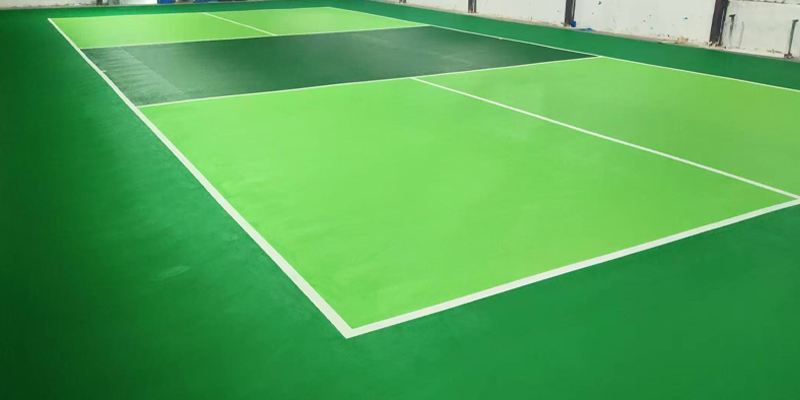
Pickleball is booming, but not every facility has enough space for permanent courts. A moveable pickleball court offers a practical alternative, allowing sports centers, schools, clubs, gyms, and event venues to use existing floor space for pickleball and then convert it back to another purpose when needed.
From roll-out flooring to modular systems and portable court equipment, there are several ways to create a moveable pickleball court. Understanding the differences, costs, installation requirements, and long-term considerations can help facility owners choose the right solution.
What Is a Moveable Pickleball Court?
Definition and Key Features
A moveable pickleball court is a court system designed to be installed, removed, relocated, or stored without permanently converting the facility into a dedicated pickleball venue. Depending on the system, it may include moveable flooring, court lines, a portable net, and other accessories.
The key difference is flexibility. Instead of permanently modifying the floor, a facility can install the court when pickleball is scheduled and remove it when the space is needed for basketball, tennis, exhibitions, fitness classes, or other activities.
Why Moveable Courts Are Becoming More Popular
Many pickleball projects are built in parks, retirement communities, schools, and shared residential areas. If residents feel that a new court will negatively affect their daily lives, the project may face complaints or delays.
Maintaining an appropriate distance from homes can make the project easier to approve. Good planning shows respect for both players and the surrounding community.
When a Moveable Court Makes Sense
Moveable courts are particularly useful for temporary pickleball programs, tournaments, demonstrations, community events, and facilities that are testing local demand. They can also be a good fit for venues that simply do not have enough space to build dedicated permanent courts.
If a facility already has a large, flat indoor floor, installing a moveable pickleball surface may be considerably more practical than undertaking permanent construction. For multi-purpose venues, flexibility can be a major advantage.
Types of Moveable Pickleball Courts
Roll-Out Pickleball Court Flooring
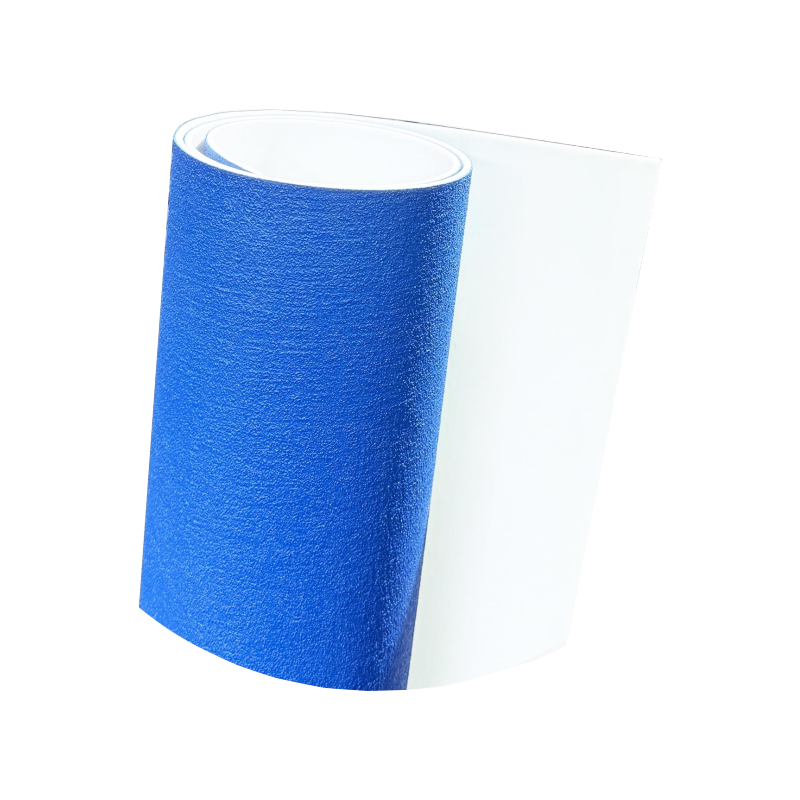
Roll-out pickleball court flooring is supplied in large rolls that can be transported, unrolled, aligned, and secured on a suitable floor. Once installed, it provides a dedicated playing surface without permanently changing the underlying substrate.
After use, the flooring can be removed and rolled up for storage. This makes roll-out systems particularly attractive for indoor gyms, sports centers, event venues, and other facilities where the same floor needs to serve multiple purposes.
Modular and Interlocking Court Systems
Modular systems generally consist of individual tiles or panels that connect through an interlocking mechanism. Installation involves assembling the pieces across the designated playing area, while removal requires the sections to be disconnected and stored.
One advantage of modular flooring is that individual sections can potentially be replaced if damaged. Roll-out flooring, however, has fewer individual pieces and can provide a more continuous surface, making it a compelling option when quick installation and removal are priorities.
Portable Court Kits and Temporary Setups
Portable pickleball court kits usually include equipment such as portable nets, posts, boundary markers, and court lines. They are useful for recreational play, demonstrations, parks, driveways, and temporary events where a dedicated playing surface is not required.
However, portable equipment does not automatically solve the flooring problem. If the existing surface is slippery, uneven, rough, or otherwise unsuitable, adding a portable net alone will not create a high-quality court.
How Much Does a Moveable Pickleball Court Cost?
Main Factors That Affect the Price
The cost of a moveable pickleball court varies considerably depending on the flooring system, court dimensions, number of courts, accessories, and installation requirements. A single recreational court and a commercial facility with eight courts are obviously very different projects.
Surface preparation can also affect the budget. A smooth and suitable concrete floor may require little preparation, while an uneven or damaged substrate could require additional work before the flooring can be installed properly.
Please visit the link below to know the rough cost of a a movable pickleball court flooring
Typical Cost Components
The total project cost may include flooring, nets, court lines, transportation, installation labor, surface preparation, storage, and future removal or reinstallation. For international projects, shipping and import-related costs can represent a significant portion of the final investment.
For this reason, it is better to compare complete project costs rather than simply looking at the flooring price per square meter. A lower material price does not necessarily mean a lower total cost once freight, installation, and other expenses are added.
Moveable Court vs. Permanent Court Costs
Permanent courts can require substantial construction work, including substrate preparation, surfacing, drainage for outdoor applications, line painting, and other site improvements. A moveable system can reduce the need for permanent modifications when a suitable existing floor is already available.
However, permanent courts may become more economical when a facility expects continuous pickleball use for many years. Moveable courts are generally more compelling when flexibility, space optimization, and multi-purpose usage are more important than having a permanently dedicated court.
How to Install a Moveable Pickleball Court
Preparing the Existing Floor
The existing floor should be clean, sufficiently flat, structurally sound, and free from debris or sharp projections. Concrete is a common substrate for indoor roll-out flooring, although the suitability of other surfaces depends on the specific flooring system.
Moisture should also be considered, particularly in humid environments. Condensation, excessive moisture, major surface defects, or unsuitable environmental conditions can affect flooring performance, so proper preparation should never be treated as an afterthought.
Installing Roll-Out or Modular Flooring
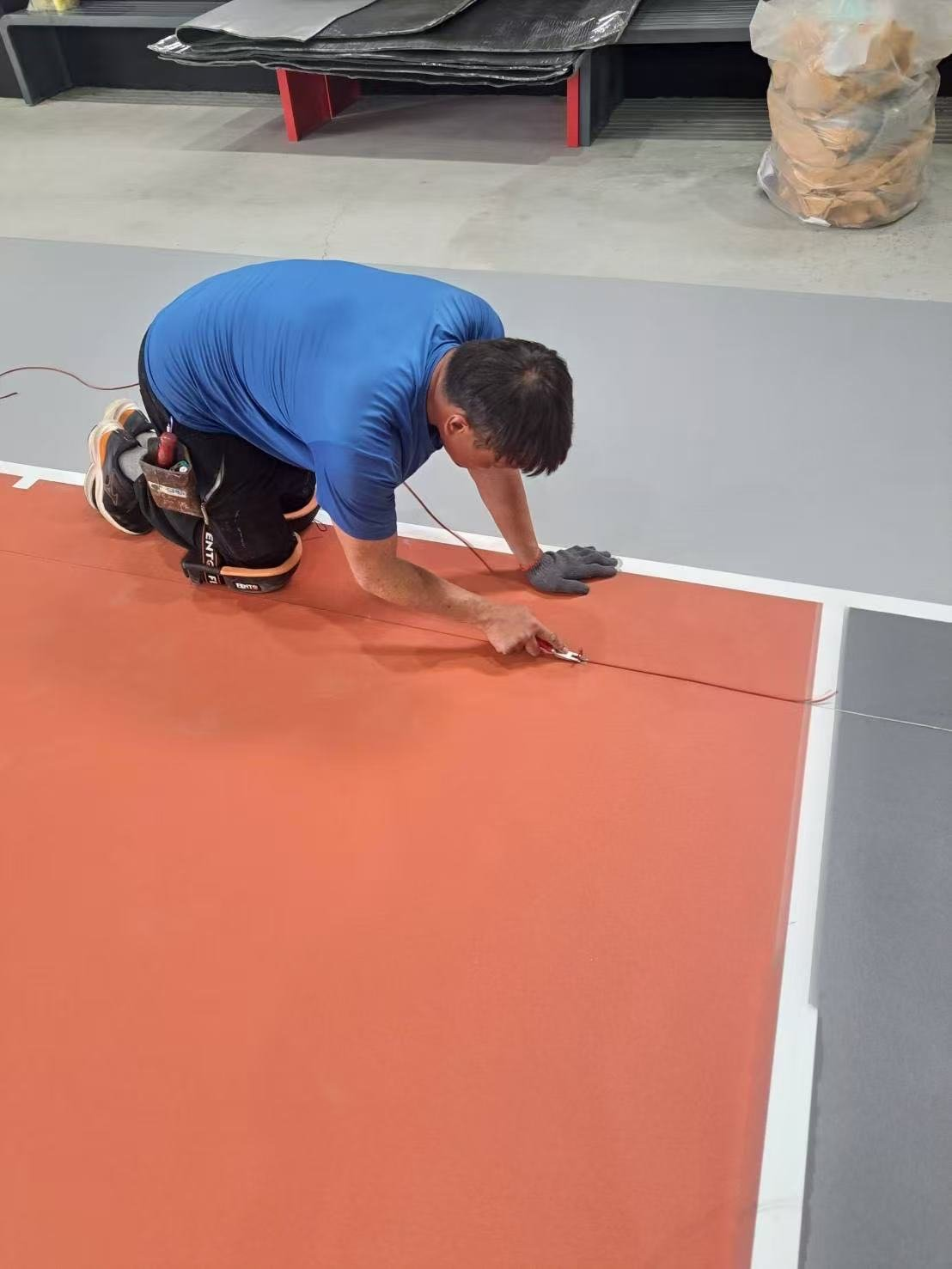
Roll-out flooring installation normally starts by positioning and unrolling each section across the prepared floor. The rolls are carefully aligned, and the seams are secured using the installation method recommended for the specific product.
For outdoor applications or installations where water protection is important, hot welding can be used on suitable flooring systems to create a secure connection between adjacent sections. Indoor applications may use other methods, such as appropriate double-sided tape, depending on the product and facility requirements.
Installing Lines, Nets, and Accessories
After the flooring is positioned, court markings and the net system can be installed according to the required court layout. A standard pickleball court measures 20 feet by 44 feet, while additional surrounding clearance should be considered when planning the overall facility.
Before play begins, check the court dimensions, surface condition, seams, net position, and surrounding clearance. A final inspection is especially important for commercial facilities and tournament venues where consistency and safety matter.
Where Can You Use a Moveable Pickleball Court?
Indoor Sports Facilities and Gyms
Indoor gyms are one of the most natural applications for moveable pickleball courts. A large basketball or multi-purpose court can potentially be converted into several pickleball courts when needed and returned to its original function afterward.
Community recreation centers can use the same approach to create more flexible scheduling. Rather than dedicating valuable floor space to a single sport all day, operators can switch between different activities according to demand.
Schools, Clubs, Hotels, and Resorts
Schools can use moveable courts for physical education, after-school programs, tournaments, and recreational activities without constructing dedicated pickleball facilities. Tennis and racquet sports clubs can also introduce pickleball while retaining their existing facilities for other sports.
Hotels and resorts can benefit from similar flexibility. A gym, event hall, or recreational area can be converted into a pickleball venue during busy periods and returned to its original purpose afterward.
Events and Temporary Pickleball Venues
Temporary tournaments, exhibitions, community festivals, and promotional events often require courts that can be installed quickly and removed afterward. A moveable system allows organizers to transform an ordinary indoor venue into a functioning pickleball space without permanent construction.
For event organizers, logistics are crucial. Transportation, installation time, removal procedures, storage, and protection of the existing floor should all be considered before choosing a system.
Moveable vs. Permanent Pickleball Courts
Installation and Mobility
The biggest advantage of a moveable court is, naturally enough, its mobility. Depending on the system, flooring can be installed and removed much faster than constructing a permanent court, while the components can be stored for future use.
Permanent courts offer little flexibility once construction is complete. They are better suited to facilities with dedicated space and consistent long-term pickleball demand.
Playing Performance and Durability
A moveable court should not be judged solely by its ability to be moved. Surface traction, ball response, player comfort, seam performance, and wear resistance all influence the actual playing experience.
For commercial facilities, durability is especially important because the flooring may experience frequent installation, removal, storage, and heavy player traffic. The product should therefore be evaluated based on its intended application rather than assuming that every moveable surface performs the same way.
Which Option Is Right for Your Facility?
A moveable court is usually a strong choice when a facility needs flexibility, temporary programming, or multi-purpose use. A permanent court is generally more appropriate when dedicated pickleball space is available and the facility expects continuous use for many years.
Before deciding, consider installation frequency, available storage, existing floor conditions, expected player traffic, climate, maintenance requirements, and long-term business plans. The right solution is ultimately the one that matches how the facility will actually operate.
How to Maintain and Store a Moveable Pickleball Court
Cleaning and Routine Maintenance
Regular cleaning helps preserve the surface’s appearance, traction, and playing characteristics. Dirt, dust, grit, and other debris should be removed using cleaning methods recommended for the particular flooring material.
Harsh chemicals and abrasive cleaning equipment should be avoided unless specifically approved by the manufacturer. Routine inspections are also worthwhile because small problems with seams, edges, or surface wear are generally easier to address before they become major issues.
Rolling, Folding, and Storage
Roll-out flooring should be removed and rolled according to the manufacturer’s instructions. Dragging, sharply folding, or improperly stacking the material can create unnecessary stress, creases, or deformation.
Storage conditions matter just as much. A clean, dry storage area protected from excessive heat, moisture, and direct sunlight can help preserve the flooring between installations.
Expected Service Life and Warranty
The service life of a moveable court depends on material quality, usage intensity, installation, maintenance, storage, and environmental conditions. Commercial facilities with heavy daily traffic should select flooring specifically designed for demanding use rather than relying on products intended primarily for occasional recreational applications.
Warranty terms should also be reviewed carefully. Buyers should confirm the warranty period, covered defects, installation requirements, exclusions, and claim procedures before placing an order.
How to Choose the Right Moveable Pickleball Court
Evaluate Your Facility and Usage
Start with the available floor dimensions, substrate condition, indoor or outdoor environment, expected usage frequency, and number of courts required. An eight-court commercial facility has very different requirements from a school that needs one temporary court a few times per month.
Consider how frequently the flooring will be installed and removed as well. If it will be moved every day, quick installation and efficient storage become critical; if it will remain in place for several months, durability may be the higher priority.
Compare Flooring, Performance, and Installation Options
Compare the flooring construction, thickness, surface finish, traction, durability, seam connection method, and installation requirements. Ask whether the product is designed specifically for repeated rolling and unrolling and whether it requires tape, adhesive, welding, or another installation method.
Playing characteristics should also be taken seriously. A quality moveable court should provide reliable traction, consistent ball response, and comfortable play while remaining practical to install and maintain.
Final Checklist Before Purchasing
Before purchasing, confirm the court dimensions, number of rolls or modules, line configuration, net requirements, shipping method, installation procedure, and storage requirements. For international projects, request a complete quotation that clearly separates product costs, freight, installation, and other applicable expenses.
Finally, evaluate the supplier as carefully as the product itself. Warranty coverage, technical support, installation guidance, quality control, production capability, and experience with similar projects can make a meaningful difference over the life of the court.
Conclusion
A moveable pickleball court can be an effective way to introduce pickleball without permanently surrendering valuable multi-purpose floor space. Whether the solution is roll-out flooring, modular tiles, or a portable court system, the right choice depends on the facility, frequency of use, playing requirements, installation method, and available storage.
For facilities looking for a practical balance between mobility and playing performance, roll-out pickleball court flooring is worth serious consideration. With proper installation, maintenance, and storage, it can turn an existing sports floor into a flexible pickleball venue while keeping the door open for other activities.
Related Posts
How to Convert a Tennis Court to Pickleball Courts
Can You Put a Pickleball Court on a Driveway? A Complete Guide
How to Install Roll-Out Pickleball Court Flooring