
Table of Contents
Categories

KOLISTI Team
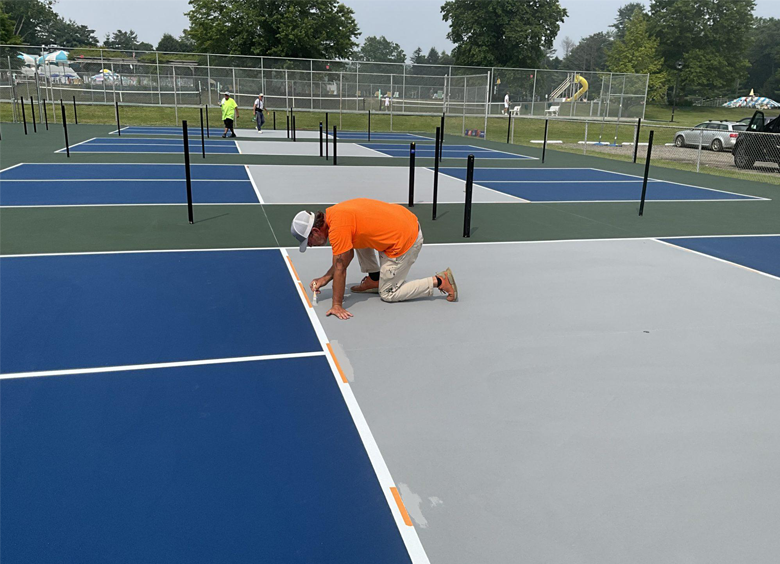
Converting a tennis court into pickleball courts can be a practical way to make better use of an existing sports facility. Schools, community centers, sports clubs, and recreational venues can add pickleball without necessarily building an entirely new court area.
However, a successful conversion involves more than adding a few lines and setting up a net. The available space, existing surface, safety clearances, and plans for future use all affect which approach makes sense.
This guide explains the main conversion options, what to check before starting, and when roll-out pickleball court flooring may be worth considering.
Why Convert a Tennis Court to Pickleball Courts?
Make Better Use of Existing Sports Facilities
An existing tennis court can provide a convenient starting point for introducing pickleball. The facility already has a playing surface and surrounding infrastructure, so there may be no need to construct a completely new sports area.
For schools, community centers, and sports clubs with limited space, converting part of an existing facility can help accommodate more activities. The most suitable approach depends on how frequently the court is used for tennis and whether permanent changes are acceptable.
Accommodate the Growing Demand for Pickleball
Pickleball attracts players of different ages and experience levels, making it an appealing addition to recreational facilities. A tennis club may want to offer beginner sessions, while a community center might use its existing courts for family activities and organized events.
Before making changes, consider the expected number of players, peak usage times, and whether pickleball will become a permanent offering or remain an occasional activity. These factors influence how many courts to plan for and which conversion method to choose.
Keep Your Facility Flexible for Multiple Sports
Not every facility wants to replace tennis with pickleball. Some need to accommodate both sports, sometimes within the same day.
In this situation, flexibility becomes an important consideration. Temporary lines, portable nets, and removable court surfaces may help a facility switch between activities without committing to a permanent redesign. The right solution should fit the venue’s operating schedule rather than simply maximize the number of marked courts.
How Many Pickleball Courts Fit on One Tennis Court?
Understand the Difference Between Playing Area and Total Court Space
A standard pickleball court measures 20 × 44 feet (6.10 × 13.41 meters), including its boundary lines. This is the playing area, not the full space needed for comfortable and safe play.
Additional room is needed beyond the baselines and sidelines so players can move without immediately encountering another court, a fence, or an obstruction. For a more detailed explanation of official dimensions and recommended playing space, see our pickleball court dimensions guide.
Can Four Pickleball Courts Fit on One Tennis Court?
Four pickleball courts can fit within the playing-area footprint of a standard tennis court under a suitable geometric layout. However, this does not automatically mean that four courts can be used safely and comfortably.
Once clearance space around each court is considered, the available area may be insufficient for a practical four-court arrangement. The result also depends on the actual dimensions of the existing tennis court, the orientation of the pickleball courts, and the space available around the perimeter.
For this reason, four courts should be treated as a possible layout to evaluate, not a guaranteed outcome. A site assessment is the best way to determine how many courts the facility can accommodate.
Choose a Layout Based on Available Space and Intended Use
The best layout depends on how the facility intends to use its courts. A venue running casual recreational sessions may have different requirements from one hosting competitive matches or organized leagues.
Consider player movement, separation between adjacent courts, access routes, net placement, and any existing fencing or fixed equipment. It is also worth checking whether the proposed arrangement will interfere with the original tennis court lines.
A layout that accommodates fewer courts but provides a more comfortable playing environment may be a better long-term choice than squeezing in the maximum possible number.
Three Ways to Convert a Tennis Court to Pickleball Courts
Option 1: Permanent Pickleball Court Lines
Permanent line marking is worth considering when pickleball will be a regular part of the facility’s operations. The lines can be incorporated into a planned court layout, providing a consistent playing area without requiring temporary markers before every session.
The main consideration is how the new lines will interact with the existing tennis court markings. Too many overlapping lines can make it harder for players to distinguish boundaries during a game. The marking method should also be compatible with the existing surface and any facility requirements.
This option is generally more suitable when the venue has decided to dedicate the court, or a clearly defined portion of it, to pickleball for the long term.
Option 2: Temporary Lines and Portable Pickleball Nets
Temporary lines and portable nets offer a straightforward way to introduce pickleball while keeping the existing tennis court available for other activities. They can be useful for community events, introductory sessions, and facilities that only need pickleball courts at certain times.
The main advantage is that the setup can be changed when necessary. However, temporary markings need to remain visible and secure during play, and the original tennis lines may still cause confusion.
The net setup also requires attention. A standard tennis net and a pickleball net have different height requirements, so the facility should use a suitable net arrangement rather than assuming the existing tennis net will work without adjustment.
Option 3: Roll-Out Pickleball Court Flooring
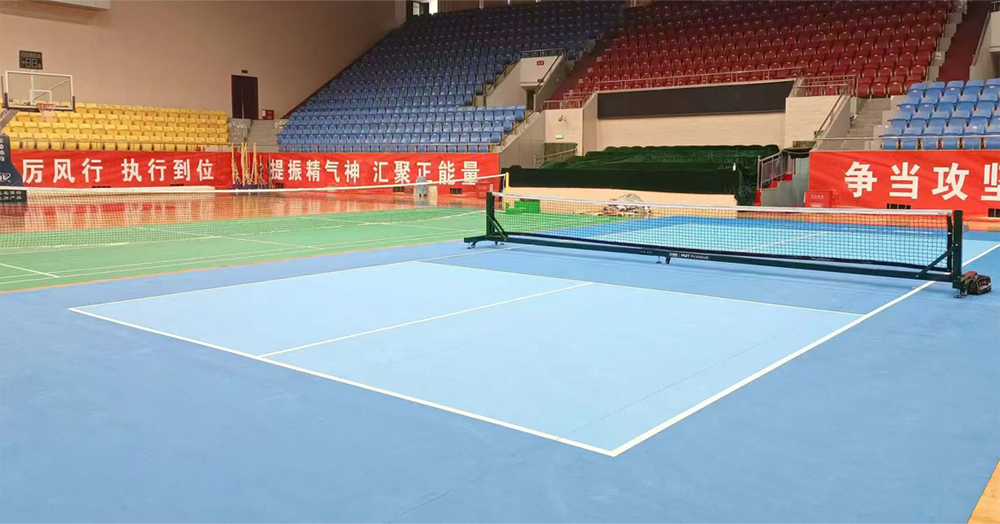
Roll-out pickleball court flooring provides another option for facilities that want a dedicated playing surface without permanently changing the underlying court. The flooring is laid over a suitable existing surface and can be removed and stored when the facility needs the space for another purpose.
This approach may be useful for multipurpose indoor venues, temporary installations, and facilities that want to preserve the option of returning to tennis. Depending on the product and installation method, the flooring can be secured with suitable tape or joined using a more permanent installation technique.
Before choosing this option, check the existing surface, installation requirements, storage arrangements, and total project cost. Roll-out flooring is not automatically the best choice for every court, but it can be worth evaluating when flexibility is a priority.
How to Prepare an Existing Tennis Court for Pickleball
Inspect the Existing Court Surface
Start by checking the condition of the current tennis court. Look for cracks, uneven areas, loose material, drainage problems, and other defects that could affect play or installation.
The requirements depend on the conversion method. A court intended for permanent line marking may need different preparation from one receiving roll-out flooring. For roll-out acrylic flooring, the underlying concrete, asphalt, or other approved base should be dry, clean, and level, in accordance with the product’s installation requirements.
If the surface has significant defects, address them before proceeding. A new playing surface will not automatically correct problems in the underlying base.
Plan Court Layouts, Lines, and Net Placement
Once the surface has been assessed, determine where the pickleball courts will sit within the available area. Measure the usable space rather than relying only on the published dimensions of a standard tennis court.
The layout should account for boundaries, player movement, separation between courts, access points, and the position of existing posts or fencing. If tennis and pickleball will share the space, plan how players will distinguish the different sets of lines.
Net placement also matters. Make sure the selected equipment suits the intended court arrangement and can be set up securely without obstructing adjacent playing areas.
Check Installation Requirements Before Choosing Flooring
Different flooring products have different installation requirements. Some are designed for temporary use, while others are intended for longer-term installation.
For roll-out flooring, confirm the recommended base materials, surface preparation, fixing method, and conditions for indoor or outdoor use. If tape is used, check that it is appropriate for the surface and intended environment. For joined sections, follow the manufacturer’s instructions for seam treatment.
It is also sensible to plan how the flooring will be handled after use. Individual rolls can be heavy and bulky, so staff, handling equipment, and a suitable storage area may be needed.
Is Roll-Out Pickleball Flooring Right for Your Tennis Court?
When Removable Court Flooring Makes Sense
Removable flooring may suit facilities that need to change how a space is used over time. An indoor sports hall, for example, may host pickleball on certain days and use the same area for other activities at other times.
It can also be considered for temporary events where organizers want a defined pickleball playing surface without permanently repainting the original court. The ability to remove and store the flooring can be useful when the underlying surface needs to remain available for its original purpose.
However, removability alone does not determine suitability. The product must also be appropriate for the base, environment, frequency of use, and available storage space.
Roll-Out Flooring vs. Direct Court Marking
The choice between roll-out flooring and direct court marking depends on the intended use of the facility. Direct marking may be more practical when pickleball will remain on the court permanently and the existing surface is suitable. It avoids the need to handle, store, and reinstall a separate playing surface.
Roll-out flooring may be worth considering when a facility wants a distinct pickleball surface that can be removed when needed. However, it involves purchasing the flooring and planning for transportation, installation, and storage. The best option should be selected after comparing the full costs and operational requirements, not just the initial installation expense.
What to Consider Before Ordering Roll-Out Flooring
Before requesting a quotation, confirm the number of courts, preferred dimensions, available installation area, and whether the project is indoors or outdoors. These details help determine the required flooring quantity and the most suitable installation approach.
You should also consider how the flooring will be secured, whether the court layout requires custom dimensions, and how the rolls will be transported and stored. Shipping can be a significant part of the total cost, particularly for international projects.
KOLISTI supplies roll-out acrylic pickleball court flooring for facilities evaluating flexible court installation options. If you are considering this approach, you can [explore our roll-out pickleball court flooring] to review the product and determine whether it suits your project.
What to Consider Before Converting a Tennis Court
Budget and Installation Costs
The cost of converting a tennis court varies according to the scope of work. Permanent marking, temporary lines, portable nets, and roll-out flooring involve different material and labor requirements.
For a fair comparison, include more than the initial purchase price. Consider surface preparation, installation, shipping, storage, maintenance, and any equipment needed for regular operation. If the court will be used for both tennis and pickleball, also account for the time and labor required to switch between setups.
Requesting a quotation based on the actual site dimensions and intended use will provide a more useful estimate than relying on a general price per court.
Indoor vs. Outdoor Court Requirements
Indoor and outdoor conversions can have different requirements. Indoor facilities may need to coordinate the court layout with existing sports hall markings, other activities, and storage arrangements.
Outdoor courts require particular attention to drainage, weather exposure, and the condition of the existing surface. A flooring product intended for indoor use should not be assumed suitable for outdoor installation.
Before selecting a solution, confirm the manufacturer’s recommendations for the intended environment and consider how local weather and site conditions may affect installation and maintenance.
Maintenance, Storage, and Long-Term Use
Think about the daily operation of the facility after conversion. Permanent markings may require periodic maintenance, while temporary setups require staff to position lines and nets before play.
Roll-out flooring introduces additional handling and storage requirements. The rolls need to be removed, handled, and stored according to the product’s instructions to help protect the material between uses.
The most suitable option is the one that fits the facility’s normal operating routine. A solution that looks economical initially may be less convenient if it requires substantial labor every time the space changes purpose.
Frequently Asked Questions
Can You Play Pickleball on a Tennis Court Without Changing the Original Lines?
Yes. Pickleball can be played on a suitable tennis court without permanently changing the original markings. Temporary lines and portable nets are common options for facilities that want to preserve tennis use.
The layout should still provide adequate playing space and clear boundaries. Existing tennis lines can sometimes cause confusion, so plan the markings carefully before regular play begins.
Can You Convert a Tennis Court Back After Installing Pickleball Flooring?
That depends on the flooring and installation method. A roll-out system designed for removal can generally be taken up and stored when the court is needed for another activity.
However, removability should be confirmed before purchasing. Ask about the fixing method, handling requirements, and any limitations associated with the existing surface. A permanently bonded installation may not offer the same flexibility as a removable system.
How Long Does It Take to Convert a Tennis Court to Pickleball Courts?
The time required depends on the scope of work and the condition of the existing court. A simple temporary setup involving portable nets and temporary lines may require much less preparation than a project involving surface repairs, permanent markings, or a new flooring system.
For roll-out flooring, allow time for surface inspection, preparation, delivery, installation, and any necessary seam work. The installation schedule should be confirmed after the product specifications and site conditions have been reviewed.
Planning a Tennis Court Conversion?
The right conversion method depends on your available space, the condition of the existing court, and whether you need a permanent or flexible setup.
If you are considering roll-out acrylic pickleball court flooring, KOLISTI can help you review your proposed court dimensions and flooring requirements.
Visit www.kolistisports.com or email sales@kolistisports.com to discuss your project.
Related Posts
How to Convert a Tennis Court to Pickleball Courts
Can You Put a Pickleball Court on a Driveway? A Complete Guide
How to Install Roll-Out Pickleball Court Flooring