Skip to content
Table of Contents
Categories

Charles Wong

Why Flooring Material Decisions Directly Impact Brand Reputation
Customer experience expectations in commercial pickleball courts
In today’s pickleball boom, players walk onto a court with expectations that are already calibrated by social media, televised tournaments, and premium club experiences. If the surface feels inconsistent underfoot or the ball response is erratic, players notice immediately, and word travels fast in this tight-knit community. For brands investing in courts, flooring is no longer a background detail—it’s part of the first impression, the vibe, and the credibility of the venue.
Long-term brand risk from surface failures and complaints
Surface-related complaints rarely stay isolated, because flooring failures tend to cascade into safety concerns, downtime, and reputational damage. A slippery zone, premature wear, or visible surface defects can turn into negative reviews and strained client relationships. Once a brand is associated with “problem courts,” recovery is slow and expensive, especially in competitive regional markets.
Why material choice matters more than short-term cost savings
It’s tempting to chase lower upfront pricing, but flooring material decisions ripple across the entire lifecycle of a court. Short-term savings often translate into long-term liabilities, including higher maintenance costs, replacements, and lost bookings. Smart brands recognize that the right material acts as insurance, protecting margins and reputation long after installation day.
Overview of Common Pickleball Flooring Materials on the Market
Overview of Common Pickleball Flooring Materials on the Market
The market offers a wide array of pickleball flooring materials, from snap-together modular tiles to rubberized mats, PVC sports floors, and acrylic-based systems. Each comes with its own engineering logic, performance envelope, and risk profile. Understanding these differences is critical before aligning a material with your brand promise.
Typical use cases and positioning of each material type
Modular tiles are often positioned for quick installs and recreational use, rubber and PVC systems target multipurpose indoor facilities, while acrylic-based surfaces dominate professional and competitive environments. Some materials shine in flexibility, others in durability, and some mainly in marketing aesthetics. The key is knowing where each system performs well—and where it quietly struggles.
Strengths and limitations from a brand procurement perspective
From a procurement standpoint, the real comparison goes beyond brochures and sample swatches. Brands must weigh consistency, scalability, supply reliability, and long-term performance rather than isolated specs. A material that looks attractive on paper may expose operational weaknesses once deployed across multiple projects.
Performance Factors Brands Must Evaluate Beyond Marketing Claims
Ball bounce consistency and surface responsiveness
Consistent ball bounce is the heartbeat of a quality pickleball court, and it directly influences player trust in the surface. Inconsistent rebound or “dead spots” disrupt play and undermine the perception of professionalism. Acrylic-based systems, particularly controlled roll-out formats, are engineered to deliver predictable ball response across the entire court footprint.
Traction, slip resistance, and player safety considerations
Traction is a delicate balance—too slick and players lose confidence, too abrasive and fatigue sets in quickly. Flooring materials must maintain stable slip resistance under varying humidity and usage conditions. Brands that prioritize player safety through material choice build goodwill and reduce liability exposure.
Visual finish quality and perceived professionalism
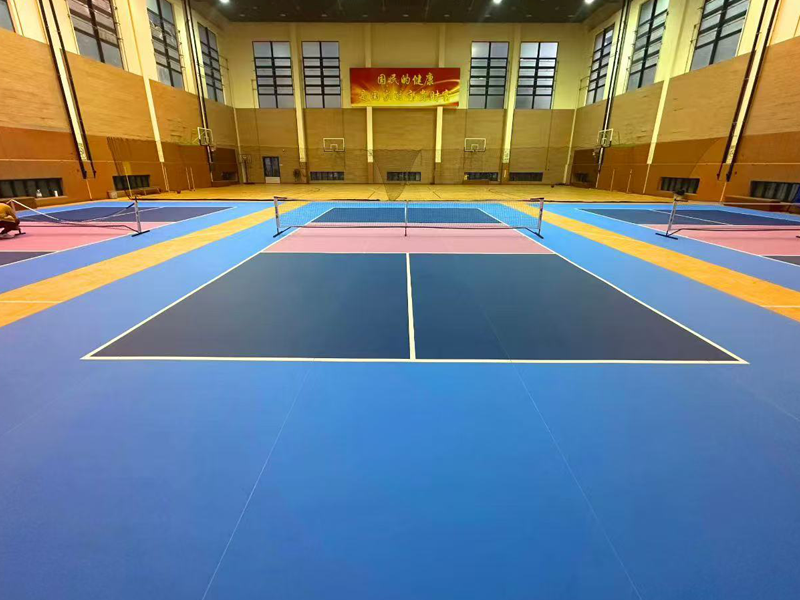
Visual cues matter more than many procurement teams expect, especially in commercial and hospitality-driven environments. A clean, uniform surface with consistent coloration signals quality and care, while patchy or uneven finishes raise doubts instantly. Roll-out acrylic flooring offers a refined, broadcast-ready appearance that aligns well with premium brand positioning.
Durability and Lifecycle Cost Considerations
Wear resistance under daily play and event use
Pickleball courts often endure relentless daily play, league nights, and special events that accelerate surface wear. Materials with weak abrasion resistance quickly show traffic patterns and degradation. Durable acrylic systems are formulated to withstand repeated impact while maintaining performance characteristics over time.
Maintenance frequency and long-term upkeep costs
Maintenance is where hidden costs quietly accumulate, especially for brands managing multiple sites. Frequent cleaning, repairs, or partial replacements disrupt operations and inflate budgets. Flooring systems designed for low-maintenance upkeep allow operators to focus on programming and revenue instead of constant surface fixes.
Replacement risk and impact on total project ROI
Premature replacement is one of the most expensive outcomes of poor material selection. It affects not only capital expenditure but also scheduling, customer satisfaction, and brand perception. Choosing a material with proven longevity protects total project ROI and stabilizes long-term planning.
Installation Risk and Operational Reliability
Subfloor tolerance and installation complexity
No two subfloors are identical, and materials vary widely in how forgiving they are during installation. Systems that require perfect site conditions increase the risk of delays and rework. Roll-out acrylic flooring reduces this uncertainty by shifting much of the quality control to the factory environment.
Downtime, rework risk, and project scheduling impact
Every extra day of installation or correction represents lost revenue and mounting frustration. Brands running tight project schedules need flooring solutions that install predictably and efficiently. Minimizing on-site variables is one of the most effective ways to keep projects on track.
Portability, storage, and repeat deployment challenges
For events and temporary courts, portability becomes a decisive factor. Flooring that is cumbersome to store or degrades during repeated roll-up cycles introduces operational headaches. Purpose-built roll-out acrylic systems are engineered to handle repeated deployment without compromising performance.
Quality Control and Manufacturing Consistency
Material formulation stability across production batches
Inconsistent material formulation leads to unpredictable performance across projects, which is a nightmare for brand consistency. Buyers must evaluate whether a supplier can deliver the same surface characteristics batch after batch. Stable acrylic formulations help ensure courts feel the same whether installed this month or next year.
Thickness control, surface uniformity, and curing standards
Small variations in thickness or curing can have outsized effects on playability and durability. Precision manufacturing processes are essential for maintaining surface uniformity at scale. Factory-controlled roll-out acrylic flooring offers tighter tolerances than many site-applied alternatives.
Traceability, inspection records, and supplier accountability
Professional brands demand accountability, not vague assurances. Traceable production records and documented inspections signal a supplier that understands long-term partnerships. These practices reduce risk and create transparency throughout the supply chain.
Why Roll-Out Acrylic Flooring Is a Brand-Safe Material Choice
Controlled factory production versus on-site variability
On-site installations are vulnerable to weather, labor skill variance, and time pressure. Factory-produced roll-out acrylic flooring minimizes these risks by standardizing production conditions. This shift dramatically improves predictability and reduces unpleasant surprises during installation.
Consistent performance across temporary and permanent setups
One of the standout advantages of roll-out acrylic systems is their versatility across use cases. Whether deployed as a permanent indoor court or a temporary event surface, performance remains consistent. This flexibility allows brands to scale offerings without changing material standards.
Reduced risk for multi-location and scalable projects
Brands expanding across regions need flooring solutions that replicate reliably. Roll-out acrylic flooring supports this scalability by delivering uniform performance across locations. It’s a pragmatic choice for brands thinking beyond single-site installations.
Matching Flooring Material Choices to Different Brand Scenarios
Clubs, academies, and commercial indoor facilities
High-traffic facilities require surfaces that balance durability, playability, and professional aesthetics. Roll-out acrylic flooring aligns well with these demands, offering consistent performance with manageable maintenance. It supports serious play while maintaining a polished, club-ready appearance.
Events, pop-up courts, and temporary installations
Temporary courts live or die by setup speed and teardown efficiency. Materials that wrinkle, shift, or degrade quickly undermine the event experience. Roll-out acrylic systems are engineered for repeat use, making them ideal for tournaments and promotional activations.
Hospitality, mixed-use venues, and premium developments
In hospitality-driven spaces, flooring must perform while complementing upscale design narratives. Visual consistency, comfort, and reliability are non-negotiable. Acrylic roll-out solutions integrate seamlessly into premium environments without sacrificing play quality.
Building a Material Selection Framework That Protects Your Brand
Defining non-negotiable performance and quality benchmarks
Brands should begin by defining clear, measurable standards for performance, safety, and durability. These benchmarks act as filters, eliminating materials that fail to meet real-world demands. A structured framework reduces emotional decision-making and focuses on outcomes.
Aligning material decisions with brand positioning and clients
Every flooring choice communicates something about your brand, whether intentional or not. Aligning materials with your target clientele ensures consistency between promise and delivery. Roll-out acrylic flooring supports brands positioning themselves as reliable, professional, and forward-thinking.
Working with suppliers as long-term partners, not vendors
The most successful projects emerge from collaborative supplier relationships rather than transactional purchasing. Suppliers who understand your brand goals can help refine material choices over time. This partnership mindset is essential for scaling pickleball flooring programs with confidence.
Related Posts
Removable Sports Flooring to Reduce Total Cost
Roll Out Gym Flooring Buyers Trust for Fast Scaling

Indoor Pickleball Court Flooring That Cuts Landed Cost